Why is Toilet Not Unclogging? Quick Troubleshooting Guide
Quick, practical steps to diagnose and fix a toilet that won’t unclog. Learn common causes, safe fixes, tools you need, and how to prevent future clogs with our expert advice from Unclog Drain.


The most likely reason a toilet won’t unclog is a partial clog paired with slow venting. For a quick fix, start with a tight-seal plunger and steady push-pull strokes, then move to a toilet auger if needed. If water backs up or you hear gurgling, stop and call a plumber for a full assessment.
Why the phrase 'why is toilet not unclogging' matters
When a toilet won’t flush or clear a clog, homeowners often panic. The question itself signals a blockage that refuses to release with normal flushing. According to Unclog Drain, the underlying cause is rarely a single simple blockage; more often it's a combination of a partial clog and venting limitations that prevent air from rushing through the drain. Understanding the mechanics helps you choose the right fix without turning a small annoyance into a bigger problem. In most homes, the symptom points to a flow issue near the bowl, not a full drain failure. This block can be stubborn because toilets operate with high suction and variable water levels. By approaching the problem methodically, you can restore function quickly and safely and avoid over-reliance on chemical cleaners.
Top culprits at home
Most stubborn toilet clogs start with a partial blockage from toilet paper buildup or foreign objects, but venting problems can masquerade as a clog. A toilet that regularly backs up often indicates multiple issues: a slow drain, a partially obstructed trap, or a blocked sewer line in rare cases. Household habits matter: flushing inappropriate items and excessive paper accelerate block formation. Mineral buildup from hard water can also narrow the passage inside the porcelain, making it harder for water to flow freely. By knowing the usual suspects, you can target your efforts without unnecessary tests.
Tools you need and safety reminders
Before you touch anything, gather the basics: a flange plunger, a toilet auger, disposable gloves, towels, a bucket, flashlight, and eye protection. Keep a clear workspace to avoid slips; never mix cleaning chemicals with other cleaners. Put on gloves to protect your hands and use a flashlight to inspect the rim jet and trap area. If you see sewage or a strong odor, stop and call a professional to avoid exposure and contamination.
Diagnostic flow overview
This section outlines a logical path from symptom to solution, so you don’t waste time on ineffective fixes. Start with the simplest checks (plunger seal, water level, and obstruction in sight) and move toward less obvious causes (venting and sewer-line issues). If any step reveals a risk or if the problem persists after basic fixes, escalate to the recommended professional route. The goal is to identify whether the issue is local (toilet components) or systemic (vent or sewer-related). This diagnostic mindset reduces trial-and-error and speeds up a safe resolution.
Step-by-step fixes for the typical culprits
-
Prepare the area and safety: Put down towels, wear gloves, and remove items around the toilet. Gather your tools and protect the floor. Begin with simple checks before any aggressive intervention.
-
Check the plunger seal and technique: Use a flange plunger for the best seal and minimal air leakage. Stand in a stable stance, place the cup squarely over the drain, and push straight in smooth cycles for 15–20 seconds. Pro tip: keep the plunger fully submerged for maximum suction.
-
Plunge with purpose: If the toilet isn’t moved by 3–4 strong plunges, re-seat and try again. Maintain a firm seal, use long strokes, and avoid fast, jerky motions. If water breaches the seal, pause and reset to avoid splashing.
-
Try a toilet auger: Insert the auger gently, cranking slowly as you encounter resistance. Stop if you feel the line clear, and pull back to avoid jamming the snake. Pro tip: rotate the handle slowly and keep it aligned with the drain axis.
-
Inspect the venting path: A blocked vent can prevent air from entering the plumbing system, causing poor drainage. If you’re comfortable on a roof or attic access, check for debris; otherwise, contact a professional to inspect and clear the vent. Pro tip: never attempt a roof climb in wet or icy conditions.
-
Check flange and trap seals: A damaged flange or worn seal can mimic a clog and reduce flushing efficiency. If needed, reseat or replace the seal and verify that the toilet is securely anchored to the floor. Pro tip: ensure wax ring integrity when removing and reattaching the toilet.
-
When to escalate: If water continues to back up into the bowl or if you detect a sewer odor near the fixtures, stop and call a licensed plumber. Persistent issues may indicate a mains-side problem that requires expert equipment and inspection.
Prevention and maintenance to avoid future clogs
Proactive maintenance—like mindful disposal habits, regular vent checks, and occasional FORCE-free flush tests—can keep toilets flowing smoothly. Use an appropriate amount of toilet paper and avoid flushing items like wipes, sanitary products, and paper towels. Periodically inspect the trap and flange for signs of wear, and consider a yearly professional check of the vent system and sewer lines to catch issues before they block the flow.
Steps
Estimated time: 30-60 minutes
- 1
Prepare the area and safety
Clear the area around the toilet, lay down towels, and put on gloves and eye protection. Gather a flange plunger, a toilet auger, a bucket, and a flashlight. Ensure children and pets are out of the way.
Tip: Have towels ready to catch splashes and avoid cross-contamination. - 2
Check plunger seal and technique
Use a flange plunger and ensure a tight seal around the drain. Position your body to apply even pressure and start with firm up-down strokes for 15–20 seconds.
Tip: A poor seal or sideways placement reduces suction dramatically. - 3
Plunge with purpose
If the toilet doesn’t budge after several plunges, pause and reposition the seal. Re-check the water level and ensure the bowl is adequately filled.
Tip: Keep your strokes smooth and consistent to prevent splashing. - 4
Try a toilet auger
Insert the auger into the drain and rotate slowly as you encounter resistance. Stop at the obstruction and pull back to retract the snake. Flush to test.
Tip: Avoid forcing the auger; gentle pressure reduces risk of damage. - 5
Check venting and drainage
If you hear gurgling or if water drains slowly from other fixtures, a vent problem could be the cause. Inspect if accessible or call a pro to inspect the vent path.
Tip: Vent issues require professional assessment if height or roof access is involved. - 6
Escalate if needed
If the toilet still won’t unclog after these steps, or if you notice sewage backup, stop and contact a licensed plumber for deeper inspection and safe resolution.
Tip: Do not force repairs that involve electrical or gas lines.
Diagnosis: Toilet won't unclog despite plunging and basic fixes
Possible Causes
- highPartial clog deeper in the drain or u-bend trap
- mediumBlocked vent pipe restricting air intake
- lowSewer line backup or main blockage
- mediumToilet flange or trap seal issues causing poor flushing
Fixes
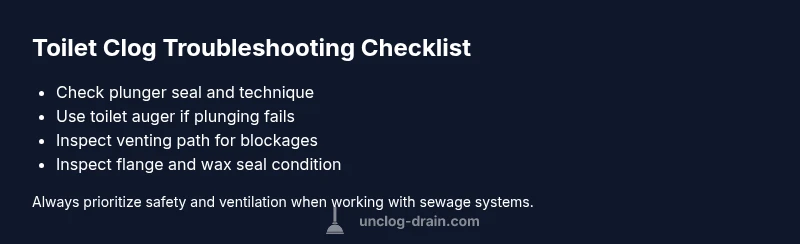
- easyRe-seat the plunger and maintain a tight seal for multiple, steady plunges
- easyUse a toilet auger to clear blockages beyond the trap
- mediumInspect and clear the vent pipe if accessible or hire a pro to inspect vents
- mediumCheck flange and wax seal integrity; replace if worn
Common Questions
What is the first thing I should try when a toilet won't unclog?
Begin with a flange plunger to create a strong seal and attempt several steady plunges. If this doesn’t clear the clog, move to an auger and inspect for deeper obstructions.
Start with a flange plunger and several steady plunges, then move to an auger if needed.
Can a clogged vent cause a toilet not to unclog?
Yes. A blocked vent can prevent air from entering the system, making flushing less effective and clog-prone. Inspect or have a pro check the vent.
A blocked vent can make flushing weak, so check the vent if clogs persist.
Is it safe to use chemical drain cleaners in a toilet?
Chemical cleaners can damage toilet components and sewer lines and may release harmful fumes. Prefer mechanical methods (plunger, auger) first and consult a professional before using cleaners.
Chemicals can be risky—try plungers and augers first, and ask a pro before using cleaners.
When should I call a plumber?
Call a plumber if water backs up, you suspect a main sewer blockage, or clogs recur despite proper attempts. Professionals have access to specialized tools for safe resolution.
Call a plumber if backup occurs or if clogs keep returning despite fixes.
How can I prevent clogs in the future?
Dispose of non-flushables properly, use a reasonable amount of toilet paper, and consider periodic vent/system checks. Regular maintenance reduces the risk of future clogs.
Be mindful of what you flush and schedule regular checks to prevent clogs.
Why does the toilet fill and then drain slowly?
Slow filling or draining often points to a partial blockage, venting issue, or wax/seal wear. Address the blockage, inspect vents, and ensure the toilet is securely installed.
A partial blockage or vent issue can cause slow draining; fix those to restore flow.
Watch Video
Key Points
- Start with a tight-seal plunger and patient plunging.
- If plunging fails, use a toilet auger to clear deeper obstructions.
- Vent problems can mimic clogs—check vents if issues persist.
- Identify the right cause to guide safe, effective fixes.
- Prevent future clogs with mindful disposal and routine maintenance.