Why is My Toilet Unclogging? A Practical Troubleshooting Guide
Urgent toilet clog troubleshooting: discover common causes, safe fixes, and prevention tips to resolve 'why is my toilet unclogging' fast and avoid overflows.


Why is my toilet unclogging? The most likely cause is a partial blockage in the toilet trap or main sewer line, sometimes worsened by a clogged vent. Start with a flange plunger, then try a toilet auger to break the clog. If water continues to rise or won’t drain, stop and call a professional to avoid overflows.
Why toilets clog and why they sometimes unclog
If you’re wondering why is my toilet unclogging, you’re not alone. Most clogs begin as a partial blockage that slows water flow, not a complete stop. The toilet trap, the connecting drain line, and even the vent stack all influence how efficiently waste travels through your system. A surge of flushable wipes, excess toilet paper, or an unusual flush can momentarily move the blockage enough to allow water to drain, giving the impression that the problem is solved. In reality, the underlying issue can persist and recur after another heavy flush. This guide walks you through practical, safe steps you can take at home to restore function quickly, while outlining when it’s wise to call a professional.
According to Unclog Drain, many homeowners underestimate the impact of a slow vent or a minor trap clog. A small disruption in any part of the system can cascade into a bigger backup during peak flushing, especially when multiple fixtures are used at once. Keeping a calm, systematic approach is the fastest path to a lasting fix.
Common causes of toilet clogs (and why they may clear)
To understand why a toilet might unclog temporarily, it helps to know the most frequent culprits. A partial blockage in the toilet trap or main sewer line is the primary driver of slow drainage. In many homes, a buildup of toilet paper or non-flushable items can create a dam that holds back water until the force of a subsequent flush pushes it past the barrier. A blocked vent stack can also slow drainage and cause gurgling or slow refills. Less commonly, a sewer line issue from heavy rain, a cracked pipe, or a full septic tank can back up into the bowl, mimicking a simple clog. Recognizing the likely cause guides you to the right fix without unnecessary trial and error.
Typical causes in order of frequency:
- Partial blockage in trap/main line (high likelihood)
- Vent stack obstruction (medium likelihood)
- Sewer line backup or septic tank full (low likelihood, but critical when present)
- Flushed solids or wipes that create a stubborn dam (medium likelihood)
Based on Unclog Drain research, addressing the most common culprits first yields the fastest resolution and reduces risk of overflow.
Immediate steps to take when you notice a clog
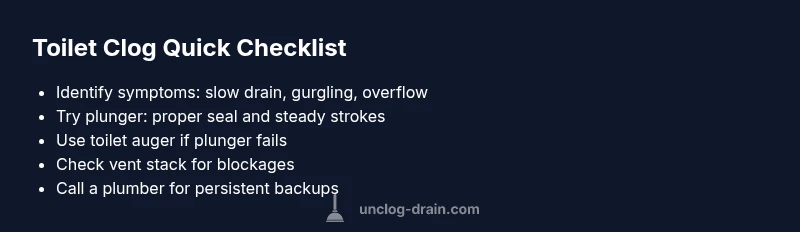
Start with the simplest, safest actions first. If you’re unsure about water level or overflow risk, don’t hesitate to pause and prepare. Here’s a practical sequence you can follow:
- Turn off the inlet valve behind the toilet if there’s any overflow risk. This prevents sudden spills while you work.
- Put on gloves and rescue a few towels for cleanups.
- Attempt a flange plunger with a proper seal. Create firm suction and use consistent, vertical strokes without forcing large bursts of water.
- If plunging doesn’t clear the blockage, use a toilet auger (also called a toilet snake) to dislodge the clog.
- After each fix, retest by flushing to see if water drains normally.
If the water level rises above the bowl rim or you notice sewage backing up into other fixtures, stop and call a licensed plumber immediately. Pushing forward in these conditions risks an overflow and additional damage.
Tools and techniques to clear a toilet clog
A methodical homeowner approach uses two main tools: a flange plunger and a toilet auger. These are designed specifically for toilet clogs and minimize the chance of damaging the porcelain or seals. Here’s how to use them effectively:
- Flange plunger:
- Ensure the rubber flange is inserted into the drain, creating a tight seal.
- Press down gently to expel air, then pull up with a steady force to drive the clog downward.
- Repeat 6–10 cycles, then flush to test.
- Toilet auger:
- Feed the cable slowly into the drain, turning the handle to dislodge the blockage.
- Stop if you feel resistance and rotate gently; forcing can damage the trap.
- Retrieve the cable and test flush.
If you still encounter resistance after these steps, it may indicate a deeper blockage or a vent issue that a pro should assess. For complex clogs or recurring problems, professional plumbing is the safest path.
Safety and chemical cautions: what to avoid
Many homeowners consider chemical drain cleaners, but these products can cause fumes, pipe damage, or interact negatively with sewage gases. The safest path is mechanical clearing (plunger and auger) first. Never mix chemical cleaners with other cleaners or with household bleach; this can create dangerous gases. If you choose to use chemical products, read the label carefully, use minimal amounts, and ventilate the area.
Electrical devices near wet areas pose a serious shock hazard. Never use power tools or electrical devices to assist with flushing or draining. If you smell gas, hear unusual hissing, or notice water damage near outlets, evacuate the area and call emergency services.
Prevention and maintenance to reduce future clogs
Prevention is the best medicine for recurring toilet issues. Consider a few practical routines:
- Only flush human waste and toilet paper; avoid wipes, sanitary products, or floss down the toilet.
- Use an appropriate amount of toilet paper per flush; avoid “overloading” the bowl.
- Install a toilet screen or waste basket for non-flushables in bathrooms without a trash can.
- Schedule periodic inspections of vent pipes and the main sewer line, especially after heavy rains.
- If you have recurring clogs, have a plumber check the trap seal, vent stack, and main line for proper function.
These steps reduce the chances of future clogs and keeps your plumbing running smoothly.
Steps
Estimated time: 45-60 minutes
- 1
Assess the situation and prepare
Inspect the toilet and surrounding area for overflow signs. Remove excess water with towels and shut off the supply valve if needed. This protects your bathroom and sets up a controlled repair environment.
Tip: Keep a bucket and towels handy for quick cleanup if water starts to rise. - 2
Attempt the simplest fix first
Position a flange plunger over the drain and create a tight seal. Use decisive, vertical strokes to push the blockage through the trap. Avoid frantic, rapid pumping which can splash and waste water.
Tip: Seal is essential—if air leaks, the plunger won’t work effectively. - 3
Use a toilet auger if plunging fails
Insert the auger into the drain and twist while feeding the cable. When you feel resistance, pull back slightly and rotate to dislodge the clog. Test by flushing after removal.
Tip: Don’t force the cable; resistance may indicate a deeper problem. - 4
Test the system
Flush again to confirm the drain is clear. If water still backs up, consider repeating the auger or moving to vent inspection. Do not flush aggressively when a partial blockage remains.
Tip: A single flush can reveal whether the clog is truly cleared. - 5
Decide on next steps
If the toilet remains slow or backs up quickly after attempts, stopping DIY fixes and contacting a professional is the safer path. Document symptoms for the plumber to save time.
Tip: Professional help is advisable for recurring issues.
Diagnosis: Toilet gurgles, slow drain, or overflows when flushed.
Possible Causes
- highPartial blockage in trap or main sewer line
- mediumVent stack blockage causing slow drainage
- lowSewer line backup due to heavy rain or septic tank issues
Fixes
- easyUse flange plunger to dislodge the blockage
- easyTry a toilet auger (snake) to break up the clog
- mediumCheck and clear the roof vent or vent pipe if accessible
- hardIf backup occurs in multiple fixtures, call a plumber
Common Questions
Can chemical drain cleaners help unclog a toilet?
Chemical drain cleaners can sometimes clear minor clogs, but they’re not a reliable solution for persistent or partial blockages. They can damage pipes and emit fumes, and they may not reach clogs in the main sewer line. Safer, mechanical methods (plunger and auger) are recommended first.
Chemicals aren’t a guaranteed fix and can be risky; start with a plunger and auger for most clogs.
What should I do if my toilet overflows while trying to unclog it?
If overflow occurs, stop, remove excess water, and avoid flushing again. Turn off the water supply and call a plumber if the overflow continues. Do not attempt to force more water through a backed-up system.
If it overflows, stop and call a plumber to prevent water damage.
When should I call a professional plumber?
Call a plumber if plunging and snaking don’t clear the clog, if multiple fixtures are affected, if the toilet backs up after attempts, or you notice sewage smell. Professional evaluation can prevent property damage and identify vent or main line issues.
If it doesn’t clear after you try basic methods, it’s time to call a plumber.
Is a wet/dry vacuum safe to use on a toilet clog?
Using a wet/dry vacuum is not generally recommended for toilet clogs due to risk of water exposure and backup into the vacuum. It’s safer to rely on plungers and augers designed for toilet drains.
A vacuum isn’t usually the best tool for toilet clogs; go with a plunger or auger.
How can I prevent future toilet clogs?
Practice responsible flushing: only waste and paper go down the toilet; avoid wipes and non-flushables. Regularly check vents and avoid chemical cleaners for routine maintenance. A simple weekly check can prevent escalations.
Flush wisely and keep an eye on venting to prevent future clogs.
Watch Video
Key Points
- Take a calm, methodical approach to unclogging
- Start with plunging, then move to an auger if needed
- Avoid chemical cleaners and call a pro for persistent backups
- Prevent future clogs with proper disposal habits
- If you’re unsure, professional help is safest