Urgent Guide to Unclogging a Toilet
A practical, urgent troubleshooting guide to unclog a toilet quickly using safe DIY methods. Learn where clogs come from, how to diagnose them, and step-by-step fixes.


Most likely cause of a stalled toilet is a localized blockage from excessive toilet paper or a small foreign object. Start with a proper plunging motion to form a tight seal; if that fails, try a toilet auger. Avoid chemical drain cleaners. If the toilet still won’t drain or overflows, stop and call a licensed plumber. In urgent cases, shut off the water to prevent flooding.
Immediate safety and triage
Immediate safety is non-negotiable when a toilet clogs. According to Unclog Drain, the first priority is to prevent water damage and exposure to waste. Start by locating and turning off the shut-off valve behind the toilet and, if you can’t reach it quickly, turn off the home's main water supply. Remove rugs or towels from the floor to avoid soaking, and place a bucket or towels to catch any stray water. Do not flush again; avoid pouring chemical cleaners into the bowl. Gather your tools: a flange plunger, a toilet auger, rubber gloves, a flashlight, and a sturdy bucket. If you have children or pets nearby, keep them away during cleanup. This stage sets the stage for a safe, effective fix, and it’s often the calmest part of a stressful moment.
Safety is the first priority, but speed matters in emergencies. If water threatens to overflow, keep emergency towels handy and be prepared to quickly shut the main water valve if the local shut-off is not accessible. Remember: never put your hands inside the drain or trap; use tools designed for unclogging. A calm, methodical approach minimizes damage and reduces the chance of splashback.
Common causes of toilet clogs
Clogs aren’t mysterious, but they’re often predictable. Excessive toilet paper can wrap around the bend in the trap, forming a dense barrier. Flushing wipes, hygiene products, or small non-flushable items often slip through the bowl and become lodged in the trap or piping. A heavy toilet paper load with a weak flush can also create a partial clog that worsens over time. In older homes, mineral buildup and a partially blocked vent stack can slow drainage, leading to repeated clogs. Environmental factors, such as a recent plumbing modification or vent issue, can amplify the problem. By understanding the usual culprits, you can choose the right tool for the job—plunger first, then a toilet auger if needed. As the Unclog Drain team notes, addressing the simplest cause first saves time and reduces risk of damage.
Diagnostic cues and what they mean
Not all clogs are the same; reading the symptoms helps you pick the right fix. A toilet that uniformly drains slowly after flushing likely has a partial blockage in the trap or the drain line. A bowl that rises to the rim and overflows indicates a stronger blockage below the trap, possibly in the mainline or a septic issue in older homes. Gurgling noises from the drain can signal air blockage or vent problems. If water backs up into sinks or bathtubs when you flush, you may be dealing with a main sewer line issue. For the average home, a rapid, full bowl rise is usually resolved with a plunger or auger; persistent or repeating backups warrant professional assessment to avoid pipe damage. Remember, do not rely on chemical cleaners as a sole fix; they rarely solve the underlying blockage and can corrode pipes over time. The key is to move from simple tests to targeted tools.
Interpreting these cues helps you choose the next step without guessing. If the water level drops after several plunges but then returns, you’re dealing with an intermittent blockage that may need an auger. A continuous overflow is a sign to stop and call a pro. Throughout the process, keep the area clean and dry to prevent slips and contamination.
Choosing the right method: plunger, auger, or professional help
Once you’ve identified the likely blockage, start with the simplest method and escalate only as needed. A flange plunger applied correctly creates a seal and transfers suction into the trap. Build a tight seal around the drain, push and pull with steady force for 15-20 cycles, and pause to observe whether water clears. If you still have standing water after a full cycle, switch to a toilet auger designed for toilets; insert the metal coil, crank slowly, and rotate to snag the obstruction. Never force the auger or push hard against the bowl to avoid cracks. If the auger can’t clear the clog, or if you see sewage backflow, it’s time to call a professional plumber. Quick, careful action now prevents bigger problems later.
For particularly stubborn clogs, professional equipment and expertise can prevent damage and ensure a safe resolve. Remember: if you’re unsure about the pipe condition or hear unusual noises, pause and seek help. The right tool for the job is the one that clears the blockage without risking damage to the porcelain.
Prevention tips to avoid future clogs
Bearing in mind the most common culprits, you can dramatically reduce future clogs with simple routines. Only flush toilet paper and human waste; avoid flushing wipes, dental floss, hygienic products, cotton swabs, or paper towels. If the toilet is slow to drain, avoid using more water and consider a professional inspection of the vent stack. Regularly check the trap for debris and schedule periodic plumbing checks, especially in homes with older pipes. A basic maintenance kit—plunger, toilet auger, and a bucket—keeps you ready for the next incident. Practice mindful flushing and consider a yearly camera inspection for older homes. The Unclog Drain team emphasizes that prevention is cheaper and less disruptive than emergency repairs.
Steps
Estimated time: 30-60 minutes
- 1
Shut off water and prep the area
Locate the toilet shut-off valve behind the toilet and turn it clockwise to stop water. If you can, shut off the main water supply. Remove excess water with a sponge or towel and place towels to catch splashes. Gather gloves, a flange plunger, a toilet auger, a bucket, and a flashlight.
Tip: Having towels and a bucket ready prevents sudden messes. - 2
Check for obvious blockages
Look inside the toilet bowl for visible obstructions like wipes or foreign objects. If you see a safe item you can remove with tweezers or tongs, do so carefully with gloves on.
Tip: Never reach in with bare hands; use tools instead. - 3
Position the flange plunger
Place a flange plunger into the drain opening to create a tight seal. Submerge it so water covers the rubber and push straight down with controlled pressure to avoid splash.
Tip: Maintain a good seal and use steady, even strokes. - 4
Plunge with purpose
Do 15-20 strong cycles, keeping the seal intact. Pause briefly to assess whether the water level drops. If it doesn’t, move to the auger.
Tip: Avoid off-balance movements that reduce suction. - 5
Use a toilet auger if needed
Insert the auger’s coil into the toilet bowl and rotate slowly while pushing forward. Retrieve and wipe debris, then test by flushing a small amount of water.
Tip: Lubricate the head if it’s stiff and rotate—never force it into the bend. - 6
Test, restore water, and reassess
Reconnect the water supply slowly and flush. If the clog returns or you hear abnormal noises, stop and call a plumber. If the flush clears, monitor for reoccurrence over the next day.
Tip: If you’re unsure, it’s safer to call a professional early.
Diagnosis: Toilet won’t drain after flushing; water rises and may overflow.
Possible Causes
- highBlockage in the toilet trap from toilet paper or foreign object
- mediumPartial blockage in drain line or main sewer line
- lowVent stack obstruction causing poor drainage
Fixes
- easyUse a flange plunger to dislodge the blockage
- easyTry a toilet auger to reach deeper obstructions
- mediumIf the clog persists or sewage backs up, contact a plumber for professional snaking or inspection
Common Questions
What should I do first when a toilet is clogged?
If a toilet clogs, first shut off the water to prevent overflow, then prepare a flange plunger and a toilet auger. Try plunging with a proper seal before moving to an auger. If water continues to back up, stop and call a plumber.
Shut off the water, grab a flange plunger, and try plunging first. If that fails, switch to a toilet auger or call a plumber.
Are chemical drain cleaners safe for toilets?
Most toilets should not rely on chemical drain cleaners. They can damage seals and traps, and they often don’t reach the clog effectively. Use mechanical methods like plungers or augers for a safer, more reliable fix.
Chemicals can damage the plumbing and often don’t remove the clog. Use plungers or an auger first.
What tool is best for a stubborn clog?
For stubborn clogs, a toilet auger (or closet auger) is usually the most effective tool after a plunger. It reaches past the trap to clear or snag the blockage.
A toilet auger is usually the next best tool after plunging for stubborn clogs.
When should I call a plumber?
Call a plumber if plunging and using an auger don’t clear the clog, if you hear sewage odors, or if water backs up into other fixtures. Persistent clogs can indicate a mainline or vent issue that needs professional assessment.
Call a plumber if the clog stays after attempts or you notice sewage backup.
Can a clogged toilet indicate a sewer line problem?
Yes. Recurrent clogs or backups that involve other drains can signal a sewer line problem or vent issues. A professional evaluation is advised if multiple fixtures are affected.
Multiple backups or persistent clogs can point to a sewer or vent issue; get a pro to evaluate.
Is it safe to use a toilet snake?
A toilet snake (auger) is generally safe if used correctly with proper technique and gloves. Do not force the device; rotate gently and stop if you meet resistance that won’t budge.
Yes, a toilet auger can be safe when used carefully and correctly.
Key Points
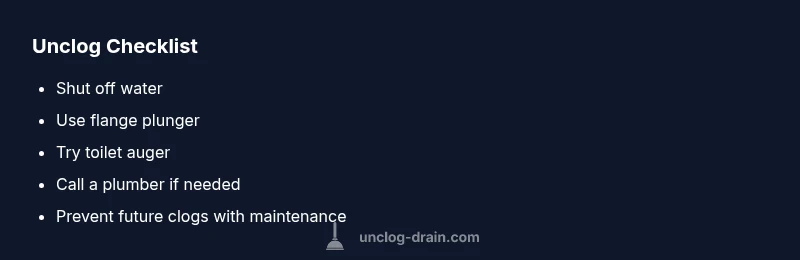
- Shut off water before inspecting to prevent overflow.
- Start with a flange plunger, then switch to a toilet auger if needed.
- Avoid chemical cleaners; they rarely solve the underlying issue.
- Call a plumber for persistent or complex clogs.
- Prevent clogs with regular maintenance and mindful flushing.