Need Help Unclogging Toilet: Fast DIY Troubleshooting Guide
Urgent guide to unclogging a toilet safely with DIY steps. Learn fast checks, tool use, and when to call a pro from Unclog Drain. Fix toilets quickly and prevent future clogs.


Most toilet clogs begin with a local blockage in the trap or drain line. The fastest fix is a plunger followed by a toilet auger if needed. Avoid chemical drain cleaners, which can damage seals and pipes. If the toilet still won’t clear or is overflowing, shut off the water and call a professional; Unclog Drain can guide you step by step.
Why Toilets Clog
Toilets clog for a few common reasons: a heavy buildup of toilet paper, a foreign object accidentally flushed, or a partial blockage in the traps and sewer line. According to Unclog Drain, the majority of residential clogs start small and grow when flushed items accumulate. This is why the fastest path to relief is a methodical approach that starts with safe, mechanical fixes before turning to chemical solutions. Remember, urgency matters here, but safety comes first—wet towels and a bucket should be ready to manage overflows while you diagnose. By understanding the typical culprits, you’ll know what to test first and what to avoid. The goal is to restore steady drainage without risking damage to the porcelain, seals, or pipes.
Quick Checks to Start
Before you dive into tools, perform a few quick checks that solve many clogs on the first pass. Ensure you have a flange plunger (not a cup plunger) for a proper seal. Check the toilet for overflow, then turn off the water at the base if it looks like it might spill. Inspect the drain opening for visible blockages—sometimes a foreign object or a wad of paper is within reach with a gloved hand or tongs. If the water drains slowly after plunging, you’re likely close to a complete clearance; if not, proceed to the auger. Document each step to avoid repeating moves that don’t work. Unclog Drain recommends documenting actions so you can retrace steps if needed.
Common Clog Scenarios and Causes
Toilet clogs vary by scenario, which dictates the fix. A typical paper-heavy clog is often cleared with plunging and a follow-up auger. A solid obstruction—like a child’s toy or a too-large diaper wipe—may require more effort or professional intervention. A slow drain can indicate partial blockages lower in the line or a venting issue, which sometimes causes poor airflow and stalling drains. If your home’s main sewer line is blocked, you’ll notice multiple fixtures backing up—don’t ignore this sign. By distinguishing between a local trap clog, a branching line issue, and a potential sewer problem, you can choose the right tool and avoid costly mistakes.
Safe Use of Tools vs. Harsh Chemicals
Mechanical methods (plungers, augers) are the safest first line for toilet clogs. Chemical drain cleaners might seem convenient, but they can corrode metal and plastic components, damage seals, and create toxic fumes—especially around children and pets. Always wear gloves and eye protection when operating tools, and never mix cleaners with plungers or augers. If you must use a chemical, choose products designed for toilets and follow label directions precisely, then flush with plenty of water afterwards. Unclog Drain emphasizes safety, as the wrong chemical reaction can escalate problems rather than solve them.
Advanced Remedies If Basic Fails
If the basic plunging and snaking don’t resolve the clog, you have additional options, but they come with greater risk. A toilet auger with extra length or a toilet auger designed for deep reaching can dislodge deeper blockages. When using an auger, rotate slowly and avoid forcing the tool, which can crack the porcelain. If the blockage remains after multiple cycles, the issue may lie in the sewer line or vent system, which are not easily solved with DIY approaches. In these cases, contact a licensed plumber. The Unclog Drain team notes that professional assessment is often the quickest path to a durable fix when DIY methods stall or the problem recurs.
Safety, Prevention, and When to Call a Pro
Safety is non-negotiable. If you feel water rising toward the overflow or you encounter a stubborn clog that resists multiple attempts, stop and shut off the water. Do not repeatedly use chemical cleaners in an overcrowded bowl or while the valve is off—this can create hazardous conditions. For prevention, teach all household members what should and should not be flushed, install a wastebasket near the toilet for non-flushables, and perform a periodic check of the drain line integrity. If you’re unsure about the sewer line or if you notice frequent clogs across the house, it’s wise to call a pro. The Unclog Drain team recommends scheduling a quick diagnostic with a qualified plumber to prevent recurring issues and protect your home’s plumbing.
Steps
Estimated time: 30-60 minutes
- 1
Shut off water and clear the bowl
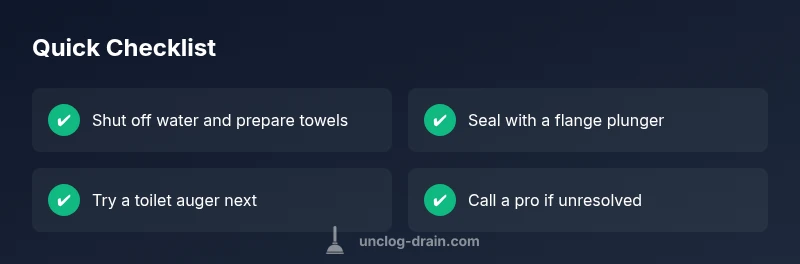
Turn off the toilet valve and flush to empty the bowl. Wipe around the base and prepare towels for potential overflow. This prevents spills and makes plunging safer.
Tip: Have a bucket and towels ready to manage any splashes. - 2
Create a proper seal with a flange plunger
Position the plunger so the rubber bell covers the drain opening completely. Push and pull steadily to create suction and loosen the clog.
Tip: Keep the plunger vertical; avoid angled strokes that spill water. - 3
Plunge with firm, consistent motions
Use quick, controlled thrusts for 15-30 seconds, then pause to see if the water drains. Repeat several cycles.
Tip: If the water level rises high, pause and check for leaks. - 4
Try a toilet auger for deeper reach
Feed the auger into the bowl and rotate clockwise while pushing gently. When you meet resistance, loosen and pull back slightly to retrieve the blockage.
Tip: Don’t force it; apply steady pressure to avoid damaging the toilet. - 5
Assess after each cycle and rinse
If the clog clears, flush slowly to ensure the water flows freely. Check the bowl for any remaining debris.
Tip: Run a small amount of water to test the drain before full use. - 6
If it remains clogged, call a pro
A persistent clog may indicate a deeper issue. A licensed plumber can diagnose sewer lines and prevent overflow.
Tip: Avoid chemical drain cleaners; they can damage porcelain and pipes.
Diagnosis: Toilet is clogged with partial or full overflow during flush
Possible Causes
- highBlockage in the toilet trap or drain line
- lowSewer line blockage or main drain issue
- mediumForeign object or excessive toilet paper buildup
Fixes
- easyUse a flange plunger to attempt clearing the clog
- easyFeed and rotate a toilet auger if plunging fails to reach the blockage
- hardIf the clog persists or you suspect sewer problems, call a professional
Common Questions
What is the quickest way to unclog a toilet?
Start with a flange plunger and use steady plunging. If that fails, try a toilet auger. Avoid chemical cleaners that can damage seals.
Start with a flange plunger, then try a toilet auger. Avoid harsh chemicals.
Are chemical drain cleaners safe for toilets?
Most are not recommended for toilets; they can corrode seals and damage the porcelain. Use mechanical methods instead.
Chemical cleaners can damage seals and porcelain, use plungers or augers instead.
When should I call a plumber for a clogged toilet?
If plunging and snaking fail or you suspect a sewer-line problem, contact a licensed plumber promptly.
Call a plumber if plunging or snaking doesn't work or you think you have a sewer issue.
Can paper towels or wipes cause clogs?
Yes, flushing non-flushable items like paper towels or wipes can cause blockages. Only flush toilet paper.
Flushing non-flushable items can clog the toilet. Only flush toilet paper.
How can I prevent future toilet clogs?
Regular maintenance, avoid flushing non-flushables, and consider drain maintenance checks twice a year.
Prevent clogs by flushing only toilet paper and keeping a maintenance routine.
Watch Video
Key Points
- Start with safe, simple fixes before tough methods
- Never mix chemicals with plunging
- A persistent clog may signal sewer-line trouble
- Call a pro when in doubt or if overflowing continues