Toilet Won't Unclog: Quick Troubleshooting and Step-by-Step Guide
Urgent troubleshooting guide to fix a toilet won t unclog. Learn quick checks, the right tools, a step-by-step fix, safety tips, and when to call a plumber.


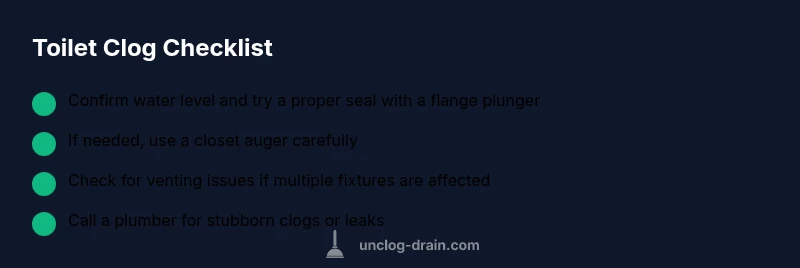
When a toilet won t unclog, the most likely culprit is a partial blockage or buildup that resists flushing. Start with a flange plunger to create a strong seal, then use a toilet auger if plunging alone fails. If water rises toward the rim or plunging doesn’t clear the bowl, stop and seek professional help.
Assessing the Situation
Before you reach for tools, note how the toilet behaves. Is the water level rising, steady, or dropping? A gentle, controlled flush that barely moves water usually signals a partial blockage. Look for a consistent clog pattern: is it in the bowl or beyond, is the waste line making gurgling noises, and are other drains affected? According to Unclog Drain, many clogs begin with normal use and progress when toilet tissue accumulates. Document what you observe so you can choose the right method and avoid over-treating the problem.
Tip: Keep a bucket and towels handy; avoid splashes that can spread contamination. Wear gloves and eye protection when dealing with turbid water.
Common Causes Behind a Toilet Won't Unclog
A toilet that won t unclog is often caused by a mix of paper buildup, too much toilet paper at once, or waste that clumps and resists a flush. Other culprits include a partial blockage in the drain line, a venting issue in the plumbing system, or a wax ring that allows air in and disrupts siphoning. When several fixtures share the same drain, a partial clog can feel worse because water has fewer paths to travel. Identifying whether the problem is local to the toilet or part of a bigger blockage helps you pick the right tool for the job. Unclog Drain notes that many clogs respond to straightforward DIY tactics, but stubborn cases may require professional sizing and clearing tools.
Quick DIY Checks to Try Before Tools
Start with safe, low-effort checks. Confirm the shutoff valve behind the toilet is fully open if present. Inspect the plunger for a proper seal and use a flange plunger, not a cup plunger. If the plunger doesn’t seal, add a small amount of dish soap to the water to improve suction. For bowl-level blockages, a toilet auger (closet auger) can reach beyond the bowl trap and break up the clog. Do not force the auger aggressively; gentle continuous rotation is better than brute force.
How to Assess Drain Force and Water Level
Observe how the water behaves during flushing attempts. If the water rises in the bowl and sits without draining, you may have a blockage downstream of the trap. If the water level remains very high after a flush, the clog might be more than just toilet tissue — consider using an auger rather than multiple plunges. A vent issue can also mimic a clogged toilet while hiding a more systemic problem; if you hear gurgling from other fixtures, the vent stack could be involved. Always proceed step by step to avoid creating a bigger mess.
Choosing the Right Tool for Your Toilet Clog
The right tool depends on the blockage’s location and severity. A flange plunger creates a seal and offers maximum suction for toilet clogs near the trap. A closet auger is designed to reach into the toilet drain without damaging porcelain and can clear many clogs that plungers miss. If neither tool works, you may need professional help to avoid causing damage or displacing the toilet. Always inspect for visible signs of damage or leakage before applying any tools.
Steps
Estimated time: 30-60 minutes
- 1
Prepare the area and safety gear
Put on gloves and protective eyewear. Lay down towels or a disposable sheet to catch spills. If possible, turn off the water supply briefly to the toilet to minimize overflow risk, then flush once to empty the bowl and reduce mess.
Tip: Have a bucket and old towels within reach; a dry, clean area reduces cleanup time. - 2
Seal the plunger and start plunging
Choose a flange plunger and position it to seal the drain. Push gradually to create suction, then pull back with steady force without breaking the seal. Repeat 15–20 times, maintaining the seal, and pause if water begins to rise too high.
Tip: A good seal makes the difference; if air leaks, readjust the rim and try again. - 3
Try the closet auger if plunging fails
Insert the auger slowly into the drain, rotating as you push to avoid kinking. When you feel resistance, gently work back and forth to break the blockage. Retract slowly and flush to test.
Tip: Don’t force it; damaging the porcelain is more costly than replacing a tool. - 4
Flush and verify the drain is clear
After the blockage clears, run a few water flushes to confirm it’s back to normal. Check for slow drainage elsewhere in the home that might indicate a broader issue. Clean the area thoroughly to prevent contamination.
Tip: If water still rises, stop and reassess before continuing. - 5
Assess the need for professional help
If plunging and the auger don’t clear the clog, or you notice recurring leaks, it’s time to contact a plumber. A professional can assess venting, pipe integrity, and potential sewer-line blockage without risking further damage.
Tip: Persistent clogs even after multiple attempts often indicate a bigger problem.
Diagnosis: Toilet won't unclog
Possible Causes
- highPartial blockage from toilet paper or waste
- mediumDownstream clog in drain line
- lowVent stack blockage causing poor drainage
- lowWax ring issues or improper toilet seal
Fixes
- easyUse a flange plunger with proper seal and alternate vigorous plunging with steady pressure
- easyReach beyond the bowl with a closet auger to clear the trap and immediate drain
- mediumInspect venting and ensure other fixtures drain properly; if venting is blocked, call a professional
- hardCheck wax ring and toilet stability if persistent leaks or movement occurs; replace if necessary
Common Questions
What should I do first when my toilet won t unclog?
Begin with a flange plunger and check for a proper seal. If plunging doesn’t clear the clog, move to a closet auger. Avoid using harsh chemicals as a first option and monitor for overflow.
Start with a flange plunger, then try a closet auger if needed. Avoid harsh chemicals as a first choice and watch for overflow.
Are chemical drain cleaners safe to use in toilets?
Chemical cleaners can damage toilet seals and plumbing and may not reach the clog effectively. They can also create hazardous fumes. Use mechanical methods first and consult a plumber for persistent issues.
Chemicals can harm seals and fixtures and often don’t reach the clog. Use plungers or augers first, and call a pro if needed.
When should I call a plumber for a toilet that won t unclog?
If plunging or using an auger fails, or if you notice leaks, poor drainage in other fixtures, or repeated clogs, it’s time to call a plumber. A professional can diagnose venting problems, wax-ring issues, or sewer line blockages.
Call a plumber if plunging or an auger doesn’t work or if you notice leaks or other drainage problems.
Can a plunger damage my toilet?
Using a plunger correctly is safe for most toilets. Excessive force or a poor seal can crack porcelain or dislodge components. Always use the correct flange plunger and steady pressure.
A proper plunger use is safe; avoid brute force that can crack the porcelain.
Why is water rising in the bowl when I try to flush?
Water rising often indicates a downstream blockage or a partial clog that isn’t releasing. Stop flushing further, try alternative methods such as an auger, and reassess. If it persists, call a professional.
If water keeps rising, it’s likely a bigger blockage; stop and reassess or call a pro.
How can I prevent clogs in the future?
Avoid flushing large quantities of toilet paper at once and dispose of nonflushable items properly. Consider a toilet-cleaning routine to minimize buildup and inspect vent stacks if you notice recurring drainage issues.
Prevent clogs by flushing responsibly and keeping nonflushables out of the toilet.
Watch Video
Key Points
- Start with the simplest fix: a flange plunger
- Upgrade to a closet auger if plunging fails
- Watch for downstream or venting issues
- Call a professional if the clog persists or you fear damage