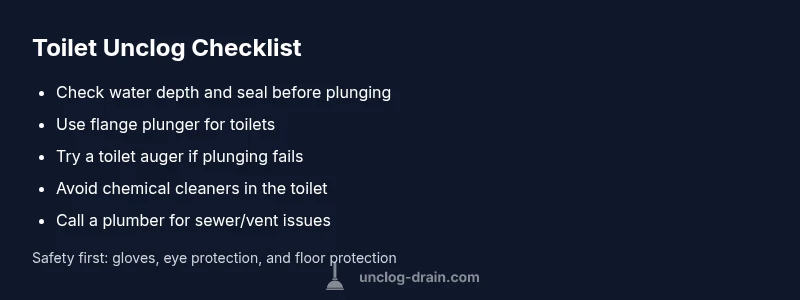
Why the Plunger Won’t Unclog Your Toilet: A Troubleshooting Guide
Stuck with a stubborn toilet clog? This hands-on troubleshooting guide from Unclog Drain explains why plungers fail and how to fix safely, fast, and prevent future clogs.


Why is plunger not unclogging toilet? The most common reason is a partial or deep clog buried farther down the drain, beyond a basic pump. A poor seal, insufficient water level, or using the wrong plunger type can also undermine efforts. Follow this quick troubleshooting flow from Unclog Drain to diagnose quickly and apply the right fix safely and effectively.
Why is plunger not unclogging toilet
Why is plunger not unclogging toilet? Many homeowners face a stubborn blockage that won’t yield to a simple pumping motion. The most common reason is a partial or deep clog buried farther down the drain or in the toilet trap. A poor seal between the plunger and the bowl, insufficient water to create suction, or using the wrong plunger type can also defeat attempts. According to Unclog Drain, a reliable seal and deliberate, steady motion are essential, but progress slows when water remains still or there’s air leakage around the rim.
To diagnose, start with the basics: check water depth in the bowl, ensure the plunger’s rubber cup forms a tight seal, and confirm you’re using a standard flange plunger designed for toilets. If the water recedes or the cup never creates a bubble on thrust, you’re not creating proper suction. In that case, you might be up against a deeper blockage or a vent/pipe issue that requires a different approach. The goal is to move material by generating a sustained, pulsed force that breaks the obstruction without overflowing the toilet or risking damage.
Check the Basics: Water Level, Seal, and Plunger Type
Before you chase the clog deeper, verify three simple factors. First, water level: there should be enough water to cover the plunger cup by at least 2-3 inches; if the bowl is almost empty, add water gradually from a bucket. Second, seal: make sure the rubber cup sits flush against the porcelain, with no gaps around the rim. Third, plunger type: for toilets, a flange plunger (with a narrow extension) performs better than a cup-style plunger. If you’re using the wrong tool, even strong pumping won’t clear the drain. After adjusting these, pump with firm, controlled strokes, keeping the handle vertical to maximize suction. Some clogs respond to a series of 10-15 deliberate pumps, then a quick push to test if the water level drops and the bowl begins to drain. If you still see no movement, move to more advanced methods like trying a different technique or a toilet auger.
Diagnostic Steps: Identify the Type of Clog
Not all clogs are the same, and identifying the clog type guides the fix. A surface clog near the rim may respond quickly to plunging, while a deeper, slower-moving obstruction requires a longer-range tool. Look for signs: water level behavior (rising after plunging suggests a block further down), noise, and whether the toilet gurgles. If plunging never reduces the water height or seems to push water back up, you’re likely dealing with a deeper or more complex clog. If you can safely access a toilet auger, insert it gently until you feel resistance, then rotate and pull back to retrieve fragments. If you suspect a vent or sewer-line issue, you may notice frequent backups in other drains or slow drainage in your home. In those cases, calling a plumber is prudent.
Safe Alternatives When the Plunger Fails
If plunging stalls, don’t push harder with the same technique. Switch to safer alternatives in a stepwise fashion. First, try a toilet auger (snake) designed for toilets; insert and rotate to dislodge the blockage. Second, using hot water or enzymatic cleaners is not recommended for porcelain toilets, as hot water can warp components and chemical cleaners may damage seals. Third, consider a wet/dry vac only if you’re confident; this can be risky but may remove visible materials if used with caution. Fourth, if the clog seems tied to a waste line or a shared sewer, a professional inspection helps avoid overflow and property damage. Remember to wear gloves and eye protection, turn off the water supply, and protect flooring and pets during the process.
Safety Precautions and Common Mistakes to Avoid
Safety is the compass for any DIY unclogging project. Always shut off the toilet’s water supply before starting, wear rubber gloves and eye protection, and lay towels or a bucket to catch overflow. Common mistakes include using chemical drain cleaners in a toilet, mixing cleaners with a plunger, applying excessive force, or using metal tools that can scratch the porcelain. If you’re unsure, pause and seek guidance from a professional. By following proper steps and avoiding shortcuts, you minimize the risk of damage to the fixture or sewer line and reduce messy overflows.
Prevention: Keeping Your Toilet Flowing
Prevention is easier than fixing a stubborn clog. Regularly check for and remove hair, wipes, or residue near the trap, avoid flushing non-flushables, and use enzyme-based cleaners sparingly to maintain a healthy drain line. Periodically inspect your vent stack for blockages—blocking vents can create pressure that makes plunging less effective. If your home experiences frequent clogs, consider a preventive snaking every 12-18 months and schedule a professional inspection to identify hidden issues in the main sewer line.
Steps
Estimated time: 90-120 minutes
- 1
Shut off water and prep area
Turn off the toilet supply valve and flush to reduce water level. Place towels around the base and have a bucket ready. Put on gloves before handling water and tools to prevent contact with waste.
Tip: Keep your phone away from the area to avoid splashes triggering a mess. - 2
Reassess tools and water level
Ensure you have the right plunger (flange type) and enough water to cover the cup. Adjust water to the recommended depth and reseal the plunger for maximum suction.
Tip: A poor seal or dry cup is a common cause of failure. - 3
Perform adjusted plunging technique
Place the flange into the drain, create a tight seal, and pump with controlled, steady strokes. Pause briefly to allow suction to work, then push with consistent force. Test after 10-15 pumps.
Tip: Keep the handle upright to maintain an effective seal. - 4
Try a toilet auger if needed
Insert the auger into the drain, rotate slowly, and push forward until you feel resistance. Then pull back to dislodge material. Repeat a few times as needed.
Tip: Do not force the auger; resistance can indicate a rigid clog or wrong area. - 5
Test flush and clean up
After clearing, refill water to normal level and flush to ensure the drain is clear. Clean and sanitize tools and area; dry the floor to prevent slips.
Tip: If overflow occurs, stop and reassess before attempting again.
Diagnosis: Toilet won't unclog after multiple plunger attempts
Possible Causes
- highPartial or deep clog deeper in trap or drain
- mediumVent stack blockage affecting drainage
- lowSewer line issue or blockage outside the home
Fixes
- easyUse a toilet auger/snake to reach and clear deeper clogs
- mediumCheck and clear vent stack access (or call a pro if needed)
- mediumIf block persists, schedule professional evaluation of sewer lines
- easyAvoid chemical toilet cleaners that can damage seals or pipes
Common Questions
What should I do first when the plunger won’t work?
Start by checking the water level, ensuring a tight seal, and using the correct flange plunger. If there’s no progress after several attempts, move to a toilet auger. Always avoid overflowing the bowl.
First, check water depth and seal, then switch to a toilet auger if plunging fails.
Is it safe to use chemicals to unclog a toilet?
Chemicals are usually not recommended for toilets; they can damage seals, pipes, and the vent system, and may create hazardous fumes. Use mechanical methods first.
No, avoid chemical cleaners in toilets; use plungers or a toilet auger instead.
When should I call a plumber?
If plunging and a toilet auger fail, or you suspect a sewer-line or vent issue, call a licensed plumber to prevent overflows and property damage.
If the clog persists after safe methods, it’s time to call a professional.
Can vent problems affect plunging success?
Yes. A blocked vent stack can prevent proper drainage by creating pressure that hinders the flush. Address vent blockages if accessible or have a pro inspect.
Blocked vents can make plunging ineffective; you may need vent clearance.
Will a toilet auger scratch the porcelain?
Used correctly, a toilet auger minimizes risk to porcelain. Improper use can scratch the surface, so proceed slowly and avoid forcing past resistance.
An auger is safe when used properly; don’t force it against heavy resistance.
Watch Video
Key Points
- Verify proper seal and water depth before plunging
- Deeper clogs often require a toilet auger
- Avoid chemical cleaners in toilets
- If there’s suspected vent or sewer issues, call a pro
- Prevent future clogs with regular maintenance