Why My Toilet Won't Unclog with a Plunger: Fast Solutions
Struggling with a stubborn toilet clog when using a plunger? This urgent guide covers why plungers fail, quick checks, diagnostic flow, and step-by-step fixes to restore flow fast—plus safety tips and when to call a pro.


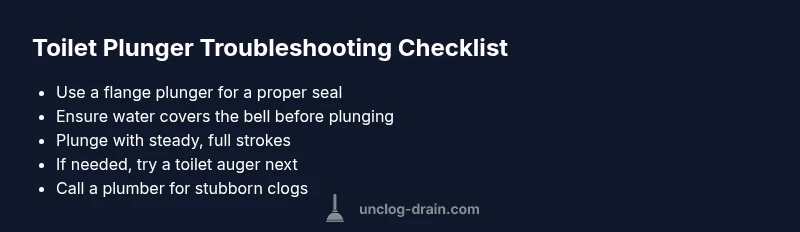
Toilet not unclogging with a plunger is usually due to a partial clog or a poor seal. Use a flange plunger, ensure a tight seal, and plunge with steady, forceful strokes. If that fails, try warm water with dish soap or a toilet auger, and if still stuck, shut off the supply and call a plumber.
Problem Overview: Why a toilet may resist a plunger
When you ask why is my toilet not unclogging with a plunger, the most likely reason is a blockage that’s partially or fully out of reach of a simple cup plunger. A plunger creates suction and pressure, but if the blockage sits farther down the drain or the seal is leaky, the toilet won’t drain. The right tool—a flange plunger that matches a toilet’s flange—helps create a solid seal and transfers force effectively. If your plunger seal leaks, you might pump air instead of pushing waste through, which yields no progress.
In many homes, water in the bowl isn’t deep enough to maintain a seal, or the plunger is too small to seal around the toilet’s discharge opening. Modern toilets also have longer trapways; these can host clogs that are beyond the reach of a basic plunger. Before you escalate to chemicals or a cable auger, verify you’re using the correct plunger, that you have a proper seal, and that the water level is adequate. If you confirm these basics and still see no improvement, the blockage may be deeper in the line or partially obstructed, requiring more advanced steps or a professional assessment.
From here, you’ll want a simple diagnostic plan that starts with safe, mechanical steps and progresses to targeted tools if the blockage persists.
Immediate checks you can perform before plunging again
- Check water depth: If the bowl is not full to the highest drain, the plunger won’t seal properly. Add water from a bucket until the cup is submerged.
- Inspect the plunger: Use a flange-style toilet plunger (not a generic cup plunger). Ensure the rubber bell forms a tight seal over the drain opening.
- Clear the rim of debris: A ring of mineral buildup or debris around the drain can prevent a proper seal. Wipe the rim and wipe the bell.
- Look for concurrent leaks: If water is leaking around the base or seal, the problem is not seal-related and needs a different approach.
- Plan your approach: Decide whether you will attempt a standard plunge first, then switch to warm water and soap or a toilet auger if needed.
Why plungers fail: common mistakes
Common mistakes include using a nonflange cup plunger, not filling the bowl enough, applying weak strokes, or using the wrong angle. Another error is plunging with a dry seal or lifting the plunger too quickly, which releases suction. Some people repeatedly plunge fast as if pumping air through the line; this can compress waste rather than move it. Finally, relying on chemical cleaners before trying mechanical fixes can complicate the blockage and create hazardous fumes if mixing cleaners with other products.
When to move to a deeper fix: auger and professional help
If you’ve exhausted basic plunging with no success, you may be dealing with a deeper clog, a misaligned trap, or a blockage in the main line. An auger (snake) can reach past the bend in many toilets; use a toilet auger rather than a generic drain snake. If that fails, or if you notice repeated clogs, seek professional help. A licensed plumber can diagnose venting issues, pipe integrity, or a stubborn blockage using camera inspection and specialized equipment.
Steps
Estimated time: 30-45 minutes
- 1
Prep and safety
Put on gloves and protect the floor with towels. Clear the area and have a bucket nearby. This prevents mess and makes the fix safer.
Tip: Keep a towel ready for any splashes. - 2
Choose the right plunger
Switch to a flange plunger designed for toilets. The extended rubber bell forms a better seal over the drain opening.
Tip: If you only have a cup plunger, consider delaying plunging until you acquire a flange style. - 3
Create a tight seal
Submerge the bell completely and press the plunger into the drain to create a tight seal. Ensure the plunger is vertical for optimal suction.
Tip: Avoid tilting the plunger; a straight seal works best. - 4
Plunge with rhythm
Push down firmly, then pull up slowly to maintain suction. Repeat 15–20 times, keeping your wrist straight and controlled.
Tip: Do not rush; steady pressure yields better results. - 5
Assess progress
Lift the plunger to test if the water begins to drain. If not, add a small amount of warm water with a drop of dish soap and try again.
Tip: Limit soap to prevent excessive suds. - 6
Escalate if needed
If repeated plunging doesn’t work, move to a toilet auger and carefully insert it into the bowl to reach the blockage.
Tip: Rotate the auger slowly and don’t force through bends.
Diagnosis: Toilet won’t clear after standard plunger use
Possible Causes
- highPartial or deep clog beyond the reach of a cup plunger
- highInadequate or leaky seal around the drain opening
- mediumBlockage in the trapway or venting issues
- lowStubborn blockage requiring auger or professional help
Fixes
- easyVerify and improve seal using a flange plunger with full water coverage; plunge with steady, controlled strokes
- easyAdd warm water and small amount of dish soap to help lubricate the blockage before re-plunging
- mediumUse a toilet auger to reach past the trap; avoid forcing materials with a general drain snake
- hardIf no progress, stop and call a licensed plumber for deeper assessment (main line, venting, camera inspection)
Common Questions
Why won't my toilet unclog with a plunger after several attempts?
Several attempts with a nonflange plunger or an insufficient water seal can prevent progress. Recheck the tool, seal, and water level. If the clog remains after trying a flange plunger and warm-water prep, proceed to an auger or call a plumber.
If plunging doesn’t work after multiple tries, verify the tool and seal, then move to an auger or a professional.
Should I fill the toilet with hot water before plunging?
Warm water helps soften some clogs and improves seal, but avoid boiling water. Add enough hot water to cover the plunger bell and repeat the plunge sequence.
Warm water can help; just don’t use boiling water and ensure the seal stays intact.
Can using a snake or auger damage the toilet?
Using a toilet auger correctly is safe and effective for deeper clogs. Do not force the tool or bend it sharply; rotate gently as you advance.
A toilet auger is designed for toilets; use it carefully and rotate while advancing.
When should I call a plumber instead of DIY?
If the clog recurs, there are multiple fixtures affected, or you notice slow drainage in other drains, a plumber should assess for venting issues, pipe damage, or main sewer problems.
Call a plumber if the problem repeats or affects other drains.
Is it safe to use chemical drain cleaners on toilets?
Chemicals can damage porcelain and pipes and may create hazardous fumes. Avoid mixing cleaners with plungers and only use them as a last resort following manufacturer instructions.
Avoid chemical cleaners; they can hurt pipes and cause fumes. Use mechanical methods first.
What’s the difference between a cup plunger and a flange plunger?
A flange plunger has an extended rubber bell that fits the toilet drain opening for a better seal, while a cup plunger is best for flat sinks. For toilets, always use a flange plunger.
Flange plungers seal toilets much better than cup plungers.
Watch Video
Key Points
- Seal the plunger properly before plunging.
- Use the right tool: flange plunger for toilets.
- Progress to auger if plunging fails.
- Call a plumber if block persists beyond basic fixes.