Toilet Clogged with Poop: Plunger Won't Work? Fixes
Learn fast, safe steps to unclog a toilet when poop blocks the drain and a plunger won't work. This DIY guide covers quick fixes, tools, safety tips, and when to call a pro.


Most likely the blockage is solid waste or a poorly seated trap, not a weak plunger. Start by lowering the water level, use a flange plunger for a tight seal, and plunge with several firm, vertical strokes. If the clog persists, switch to a toilet auger and check for vent issues or leaks.
Why Plunging Sometimes Fails
If your toilet clogged with poop plunger won t work, you’re seeing the classic sign that the blockage is more stubborn than a routine bubble flush. The reason plungers fail isn’t a bad plunger; it's usually the blockage type, the seal quality, and how the trap and vent interact. A ceramic bowl can create a poor seal when the rim is dry or if you’re using the wrong plunger type. Flange plungers seal the drain better than cup plungers, especially when the water level is high. Also, air trapped in the drain path can reduce the effectiveness of plunging, allowing waste to compress into the trap rather than break free. In short, the failure may be due to physics, not willpower. According to Unclog Drain Analysis, 2026, many DIY solutions work when followed in a structured sequence.
- Common causes include a solid blockage, a mis-seated trap, or a partial clog lower in the line.
- The right tool (flange plunger) and a clean seal at the rim dramatically increase effectiveness.
- Vent stack issues or an overfilled tank can undermine plunging success and cause re-clogs.
Quick Checks You Can Do Before Tools
Before you reach for tools, perform a few quick checks that solve many clogs without risk:
- Confirm the water level is not too high; a bowl full of water reduces suction.
- Inspect the rim and underside of the toilet for a tight seal and clear the path of visible debris.
- Try a few gentle hot water flushes from the tank (not boiling) to loosen a small soft blockage.
- Ensure the plunger is the correct type (flange over a flat cup) for a better seal.
If these steps don’t move the blockage, proceed with mechanical aids. The Unclog Drain Team notes that most stubborn clogs respond to a proper seal and persistent plunging, but never force beyond the point of safe operation.
How a Trap, Wax Ring, and Vent Affect Plunging
The trap and wax ring create a critical seal that affects suction. If the seal is compromised, plunging delivers less force and can push waste deeper rather than clearing it. A dry seal or a loose wax ring can also cause slow drainage. Vent stack blockages force air back down into the bowl, reducing suction and creating a false sense of relief when you think the clog is gone. When a toilet is blocked, you’re fighting physics: water flow, gravity, and pressure differ from one installation to another. The most effective strategy accounts for all these variables and uses the right tool at the right time. The Unclog Drain Team emphasizes diagnosing the blockage’s location—whether in the bowl, trap, or sewer line—to choose the most efficient fix.
Tools That Help: Plunger, Auger, and Safe Cleaners
Selecting the right tools matters as much as technique. A flange plunger with a stout handle creates a better seal on most toilets than a generic cup plunger. An adjustable toilet auger (snake) can reach past the trap and break up or hook the clog without damaging the porcelain. When choosing cleaners, avoid caustic chemical products that might corrode the wax seal or damage the drain line. Safe alternatives, such as a mixture of hot water and dish soap or a professional-grade enzymatic cleaner, can help in some cases but are not universal cures. Always follow product instructions and wear gloves. If the blockage is beyond the trap or if you notice sewer gas, stop and call a pro. According to Unclog Drain’s guidance, staying within safe, mechanical methods first reduces risk and saves money over time.
Safety and Safe Handling to Avoid Damage
Safety is non-negotiable in toilet troubleshooting. Never use corrosive drain cleaners in enclosed spaces—the fumes can harm you and corrode pipes. Always turn off the water supply when extracting a stubborn blockage to prevent overflow. If you must remove the toilet to access the trap, shut off the water at the supply line and cover the floor to avoid spills. Wear gloves and eye protection when dealing with waste, and never mix chemical cleaners with each other. If you feel resistance while plunging or observe cracks in the bowl, cease immediately and contact a licensed plumber. These precautions protect you and your home while you troubleshoot.
When to Call a Pro and How to Document the Problem
If you’re facing repeated clogs, a yo-yo effect where the toilet clears temporarily and returns to a clog, or signs of sewer backup, professional help is the safest course. A plumber can inspect the vent stack, check for a main sewer issue, and assess trap and wax seal integrity. To prepare for a call, document: the steps you tried, the tools used, water level observations, any noise or gurgling, and whether the toilet leaks after plunging. This information helps the technician diagnose quickly and reduces diagnostic time. The Unclog Drain Team recommends contacting a pro when there’s any sign of sewer gas, persistent backups, or unusual water behavior beyond basic plunging.
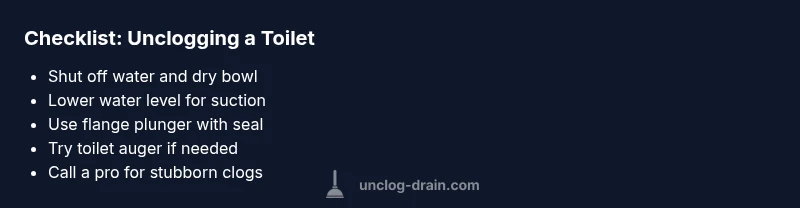
Steps
Estimated time: 30-60 minutes
- 1
Shut off water and remove excess water
Turn off the toilet’s supply valve and flush once to empty the bowl, removing as much water as possible without creating a splash. A towel or small container helps protect the floor. This minimizes overflow risk when you plunge.
Tip: Have towels handy and wear gloves to stay clean. - 2
Lower the water level for better suction
If the water is just below the rim, the plunger can seal more effectively. If needed, dip water from the bowl into a bucket to create a shallow pool that allows the flange to seal tightly.
Tip: Low water improves suction dramatically. - 3
Seal with a flange plunger and plunge
Place the flange into the drain opening, push down to create a tight seal, and perform multiple strong, vertical plunges without lifting the plunger completely between strokes. Maintain pressure and keep the seal intact.
Tip: A tight seal matters more than brute force. - 4
Try a toilet auger if plunging fails
Insert the auger into the toilet and rotate to extend the cable past the bend in the trap. If you feel resistance, rotate slowly and gently guide the cable to break up the clog, then retract.
Tip: Do not force the auger; gentle pressure is safer. - 5
Check for issues beyond the bowl
If plunging and augering don’t work, inspect for a higher-level clog that may require professional equipment. Look for gurgling in drains or sewer smells, which indicate broader problems.
Tip: Safety first—back away if odors are strong. - 6
Know when to call a pro
Persistent clogs, repeated backups, or signs of sewer gas mean it’s time to call a licensed plumber. They can diagnose vent, trap, and main sewer problems with specialized tools.
Tip: Professional help saves time and protects your home.
Diagnosis: Toilet won’t clear after multiple plunges and water remains high or bubbles rise
Possible Causes
- highSevere blockage in the trap or lower drain
- mediumVent stack blockage causing air pressure issues
- lowImproper seal or wax ring leading to poor suction
Fixes
- easySwitch to a flange plunger and reseal the rim; plunge with controlled strokes.
- easyUse a toilet auger to break through the blockage.
- mediumInspect the trap and vent lines; if the clog persists, call a professional.
Common Questions
Why won't my plunger clear the toilet after multiple attempts?
Most commonly the blockage is deeper in the drain or the seal is not tight enough. Recheck water level, use a flange plunger, and try a few controlled plunges before moving to an auger. If there’s still no progress, the clog may be beyond the trap.
If your plunger won’t clear after several tries, the blockage may be deeper or the seal poor. Recheck the water level, reseal, and plunge with control; consider using an auger if needed.
Should I use chemical drain cleaners on a toilet clog?
Chemical cleaners can damage seals and pipes and create dangerous fumes in enclosed bathrooms. It’s safer to use mechanical methods like plunging or an auger first, and only consult a licensed plumber if the clog persists.
Chemicals can harm seals and release fumes, so mechanical methods are safer first steps.
What tools do I need for a stubborn toilet clog?
A flange plunger, a toilet auger (snake), rubber gloves, towels, and a bucket. These tools address most clogs without damaging the toilet.
You’ll want a flange plunger, a toilet auger, gloves, towels, and a bucket ready for a stubborn clog.
When should I call a plumber for a toilet clog?
Call a plumber if plunging and augering don’t resolve the clog within an hour, if you hear sewer gas, or if you notice water backing up into other drains.
Call a plumber if the clog persists after using an auger or if you smell sewer gas.
Can a clogged toilet lead to a sewer backup?
Yes—persistent clogs can push back into the main sewer line, especially during heavy drainage. If you notice multiple drains slow or gurgle, stop and get professional help.
Yes, a clog can back up the pipes; slow drains across the house mean you should call a pro.
Key Points
- Start with a flange plunger and proper seal.
- Lower water level to improve suction and reduce splash.
- Use a toilet auger if plunging fails.
- Do not force tools; if resistance grows, stop and call a pro.
- Safety > speed—protect yourself and your home