How to Unclog a Toilet Quickly and Safely
Urgent, practical DIY guide to resolve a toilet clog caused by poop with safe steps, diagnostics, and prevention tips. Quick fixes, tools, and safety notes for homeowners.


Most likely cause is a toilet drain blockage. Quick fix: Step 1—use a flange plunger with a proper seal and plunge firmly; Step 2—if water rises or won’t drain after 60 seconds, stop and prepare to call a plumber or use a toilet auger. Safety first. Avoid chemical cleaners and keep children away.
Why a toilet clogs and what to do immediately
A toilet clog can feel urgent and messy, but you can regain control quickly with calm, methodical steps. If you’re currently dealing with a problem, you might mutter my toilet is clogged with poop under your breath—that phrase captures the moment many homeowners face. The first move is safety: avoid flushing again to prevent overflow, turn off the toilet's water supply, and protect the floor with towels or a shallow pan. Gather tools you’ll likely use: a proper flange plunger, a toilet auger, and disposable gloves. According to Unclog Drain, most residential clogs respond to a correct plunge technique, followed by a targeted tool if needed. Once you’re prepared, set a plan, work patiently, and keep the area clean. If you ever feel unsure, especially if sewage backs up into other fixtures or you smell sewer gas, stop and seek professional help immediately. This moment-to-moment approach reduces mess, protects your home, and speeds up resolution. The goal is to restore normal drainage with minimal risk of overflow or damage.
Common causes of toilet clogs
Clogs occur for a variety of reasons, but most residential blockages start with everyday waste and paper that accumulate in the trap and drain line. Common culprits include excessive toilet paper, hygiene products, wet wipes (even flushable ones), or foreign objects flushed by mistake. In some homes, long-term buildup in the trap or drain pipe narrows passages, making flushing a heavy effort. If you’ve recently installed a new toilet or changed venting, misalignment or vent blockage can also trap air and hinder flow. Understanding these causes helps you plan the right response: start with the least invasive fix, like plunging, before moving to rodding or an auger. According to Unclog Drain, many clogs originate at the trap or bend where solids collect, so addressing the closest blockage often resolves the problem quickly. Remember, frequent clogs may indicate a bigger issue in the sewer line or vent system and warrant professional evaluation.
Quick checks you can do now (before plunging)
Before diving into mechanical fixes, perform a quick triage to avoid wasteful attempts. Check the water level in the bowl: if it’s high and rising, there’s a partial blockage; if it’s low, you may have a different issue. Gently jiggle the toilet handle to ensure the flapper is sealing; a weak seal can cause poor drainage and trickle-level flow. Look for obvious flushable items or wipes visible in the bowl. If the level doesn’t drop after a careful 15–30 seconds of flushing, stop and move to plunging rather than trying multiple times. Ensure the rim or seal around the base is dry—water around the base can mean leaks or a cracked bowl. Keep the area ventilated and child-free. If you can get a plunger to seal, place the rubber cup over the drain with a straight, vertical line and give several firm, steady thrusts. Do not tilt the plunger sideways, which reduces suction. This phase is about evaluating speed, angle, and seal to maximize your success rate before escalating.
Diagnostic flow at a glance
Here's a simple diagnostic flow you can follow to identify the likely cause and choose the right fix: 1) Symptom: toilet empties slowly or not at all; 2) Quick check: is water level rising? If yes, likely a partial clog in the trap or drain; if no, the issue might be air or a vent problem. 3) Test: plunge for 20–40 seconds; if drainage improves, the clog is near the rim; 4) Next step: if plunging fails, use a toilet auger to reach deeper into the drain and break the blockage; 5) After fix: flush to confirm full drainage and inspect for leaks; 6) If the problem persists or you hear gurgling from other fixtures, stop and call a professional; blocked vents or sewer line issues require licensed help.
Step-by-step fixes: from plunger to auger
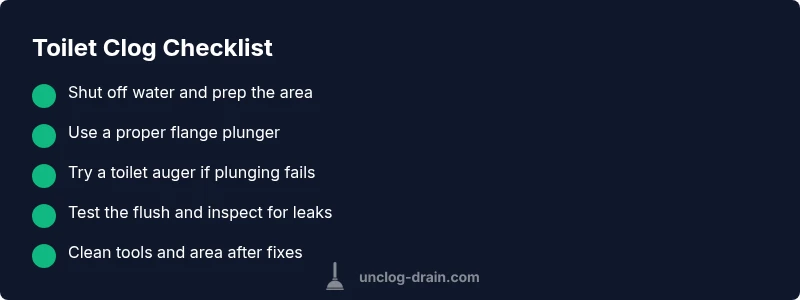
Step 1 — Prepare and safety first: Shut off the water supply to the toilet, remove excess water with a cup or sponge, and lay towels on the floor. Tip: Have a bucket handy for overflow and wear gloves. Step 2 — Plunge with purpose: Use a proper flange plunger, seal the cup around the drain, and push straight down with controlled force. Do not rush or tilt. Tip: Maintain a tight seal and pace. Step 3 — If needed, try a toilet auger: Insert the auger into the drain and rotate the handle to dislodge the blockage. Tip: Stop if you meet strong resistance you cannot safely overcome. Step 4 — Test the flush: Remove the plunger/auger, turn the water back on, and flush. If water drains slowly, repeat once or gently extend the auger. Tip: Clean tools thoroughly after use. Step 5 — Evaluate results: If the toilet still won’t drain or you notice gurgling elsewhere, stop and call a professional. Tip: Document what you tried for the plumber.
Safety, aftercare, and prevention
Safety comes first: wear gloves and eye protection, never mix household cleaners, and ventilate the bathroom. After clearing a clog, clean and sanitize the area to prevent contamination, and wash hands thoroughly. Inspect for leaks around the base and tank. Use basic prevention measures: don’t flush wipes, sanitary products, or non-toilet items; use the correct amount of toilet paper; check the vent system if multiple fixtures are affected. Regular maintenance includes periodic checks for leaks, seals, and gradual buildup in traps. Consider scheduling a professional inspection if your home has older pipes or recurring clogs.
When to call a professional and what to expect
If you’ve tried plunging and an auger with no success, or you hear strong gurgling from other fixtures, it’s time to call a plumber. Persistent clogs can indicate a deeper issue in the main sewer line or a blocked vent, which requires specialized tools and expertise. A licensed professional will assess the clog’s location, check for sewage backups, and may perform snaking, hydro-jetting, or camera inspection. Expect a diagnostic visit to include questions about your water usage, recent flushes, and any odors or leaks. The Unclog Drain team emphasizes safety, so call a pro if you’re unsure or if there are signs of sewage exposure.
Steps
Estimated time: 20-40 minutes
- 1
Shut off water and prep
Locate the fill valve behind the toilet tank and turn the handle clockwise until tight. This prevents overflow during plunging. Remove standing water with a sponge or towel so you can see what you’re doing.
Tip: Keep a bucket or pan handy for any overflow. - 2
Seal and plunge
Place a proper flange plunger over the drain and seal firmly. Push straight down with steady, vigorous thrusts; avoid side-to-side motion which reduces suction.
Tip: Maintain continuous pressure and keep the seal intact. - 3
Try a toilet auger
If plunging doesn’t clear the clog, insert a toilet auger and rotate the handle to extend the cable into the drain. Gently push through resistance rather than forcing it.
Tip: Take your time; forcing the auger can damage the teeth or the bowl rim. - 4
Flush test
Remove tools, turn the water back on, and flush once to test drainage. If it still won’t clear, repeat once more or move to professional help.
Tip: Observe for any unusual noises or odors during the test. - 5
Clean up and prevent
Disinfect the area, wash your hands, and consider preventive practices to avoid future clogs like controlled toilet paper use and no wipes.
Tip: Keep a small trash can in the bathroom for non-flushable items.
Diagnosis: Toilet won't drain or backflows after flushing; water rises to rim
Possible Causes
- highClog in toilet trap or bend
- mediumBlockage further down drain line
- lowSewer line issue or vent blockage
Fixes
- easyCheck outlet and attempt plunge to clear the clog
- mediumUse a toilet auger to reach deeper into the drain
- hardCall a licensed plumber for sewer/vent problems
Common Questions
Why does my toilet clog so easily?
Toilets clog due to a combination of waste, toilet paper usage, and sometimes foreign objects. Repeated clogging can indicate vent or sewer line issues that require professional assessment.
Common clogs come from excessive toilet paper or items that shouldn’t be flushed; persistent clogs may signal vent or sewer problems.
Can I use chemical drain cleaners in a toilet?
Most professionals advise avoiding chemical drain cleaners in toilets because they can damage seals, degrade pipes, and create safety hazards. Mechanical methods are safer and more effective for toilet clogs.
Chemical cleaners can damage your toilet and vents; stick to plungers and augers for safety.
Is a toilet auger safe to use?
Yes. A toilet auger is designed to reach blockages beyond the trap while protecting the porcelain. Follow the manufacturer’s directions and avoid aggressive twisting.
A toilet auger is safe when used carefully and according to instructions.
What if plunging doesn’t work?
If plunging fails, try a toilet auger. If there’s still no improvement, the clog may be deeper in the system or you may have vent/sewer issues requiring a plumber.
If plunging doesn’t work, use an auger or call a plumber if the situation doesn’t improve.
How can I prevent clogs in the future?
Avoid flushing non-flushables like wipes and excessive toilet paper; fix leaks; consider routine maintenance and vent checks if multiple fixtures are affected.
Prevent clogs by not flushing wipes and items that aren’t toilet paper.
When should I call a plumber?
Call a plumber if clog persists after auger attempts, if you hear gurgling in other fixtures, or if you smell sewage—these indicate deeper sewer or vent problems.
Call a plumber if the clog won’t clear or you notice sewage or gurgling in other fixtures.
Key Points
- Plunge first with a proper flange plunger
- Shut off water if overflow risk is present
- Use a toilet auger only if plunging fails
- Call a plumber for persistent or complex clogs