Clogged Toilet with Poop: Quick DIY Troubleshooting Guide
Learn safe, proven DIY steps to fix a clogged toilet with poop quickly. Plunge, auger, and prevent future clogs with practical tips from Unclog Drain.


A clogged toilet with poop is usually caused by a local blockage in the trap or waste line. Start with the simplest fix: a strong plunge, then try a toilet auger if needed. If the blockage remains after 2–3 attempts, stop and proceed to a more thorough diagnostic flow or call a plumber. Safety first, then step-by-step action.
Understanding the Problem
A clogged toilet with poop can escalate quickly if not handled calmly. In most homes the blockage forms at the trap or bend beneath the toilet bowl, or in the waste line just beyond the siphon. When you flush, water can back up, rise toward the rim, and threaten overflow. The Unclog Drain team notes that the fastest relief comes from starting with safe technique and staying organized. By identifying the likely source early, you avoid waste spreading and reduce the risk of damage to floors or fixtures. Keep a bucket handy for spills, paper towels, and a towel to protect the floor. If you’re dealing with sewage odors or a backflow that reaches other fixtures, stop and call a professional immediately. According to Unclog Drain, quick, safe action minimizes mess and damage. This is especially important in 2026 when plumbing systems have higher use and diverse household waste patterns.
Safety and Immediate Steps
Safety is non-negotiable. Before you begin, turn off the toilet’s water supply at the shutoff valve behind or beside the toilet. Put on sturdy gloves, eye protection if you have splashes, and non-slip footwear. Do not mix chemical drain cleaners with ammonia or bleach; mixing chemicals can create dangerous fumes. Remove any flushable wipes or bulky items you can see in or around the bowl with a gloved hand or a durable grabber. Place towels or a tray to catch spills. If the water level rises toward the rim or you smell sewage, stop and call a plumber. Remember: never force a blockage through with excessive pressure, which can crack the porcelain or push waste into the sewer line. Unclog Drain emphasizes gentle but persistent methods first.
Common Causes of a Clogged Toilet with Poop
The most frequent culprit is a combination of toilet paper and solid waste creating a tight seal in the trap. Solid waste that expands when wet can trap more debris, especially in homes with older plumbing or low-flow toilets. A weak flush or partial clog can allow waste to accumulate, worsening the blockage. Venting issues can also cause slow drainage, as a blocked vent stack reduces air flow and slows water movement. Less common but possible causes include foreign objects accidentally flushed, or a partially blocked main sewer line. Unclog Drain analysis shows that most clogs stem from everyday use and poor maintenance rather than rare emergencies. Be mindful that the exact cause varies by home and pipe layout.
Diagnostic Checklist: Before You Dig In
- Check the water level in the bowl; if it rises too high, stop and try a controlled plunge rather than aggressive pumping.
- Look for visible obstructions in the bowl that can be removed with a gloved hand or a tool.
- Verify the flush handle and fill valve operate normally; a weak flush can signal a partial clog rather than a full blockage.
- Check other fixtures for drainage issues; simultaneous backups may indicate a main sewer line problem.
- If you smell strong sewer gas, leave the area and call a professional.
- Have a toilet plunger and a toilet auger ready for the next steps. Unclog Drain recommends documenting your observations to share with a plumber if needed.
Step-by-Step Fix: From Plunge to Auger
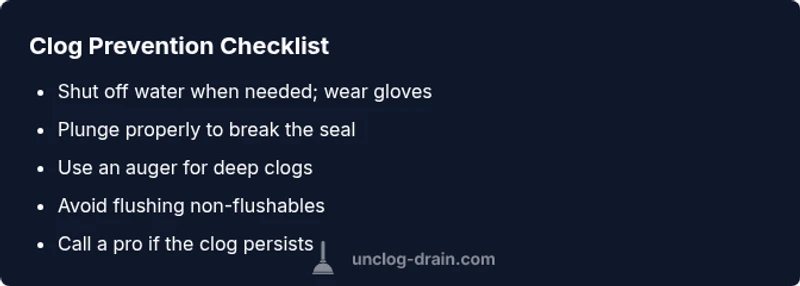
- Prepare the area: Clear the space, wear gloves, and have towels ready. Position the plunger so the rubber bell covers the outlet fully, then give a firm, consistent push and pull.
- Plunge with purpose: Use short, forceful strokes to break the seal and move the clog. Avoid a rapid, weak motion that doesn’t push the blockage.
- Test the drain: After a few rounds of plunging, flush to see if water drains properly. If not, proceed to the auger.
- Use a toilet auger: Insert the auger and rotate slowly while pushing to extend the cable into the trap. This helps break up or hook the clog.
- Manual clearance if accessible: If the auger reaches a visible obstruction, carefully extract it with the auger’s tip or grabber tool.
- Re-test and seal: Once drainage is clear, slowly run water to check for leaks and flush again to confirm success. If water still backs up, do not force it; call a professional. Tip: Keep a bucket nearby during the process to catch any overflow and minimize mess. If you’re unsure about disassembly, skip to professional help.
Maintenance and Prevention to Avoid Future Clogs
Preventing clogs starts with mindful use and regular maintenance. Never flush non-flushable items like wipes, sanitary products, or paper towels. Use a moderate amount of toilet paper per flush and consider switching to a higher-quality, slower-dissolving brand if you have hard water or an older system. Regularly inspect the flush mechanism and check for slow drainage in other fixtures, which can indicate vent or sewer issues in the system. A simple monthly routine—check water level in the bowl, ensure the fill valve stops, and run a test flush—can prevent many problems. Unclog Drain recommends keeping a dedicated plunger in the bathroom for quick response and performing an annual drain check to catch minor issues before they become big problems.
When to Call a Professional
If you cannot clear the blockage after 2–3 solid attempts with a plunger and auger, or if you notice sewage odors, leaks, or repeated backups, stop DIY efforts immediately. A professional plumber has specialized tools, such as bathroom-safe power augers and camera inspections, to locate and relieve stubborn clogs without damaging your toilet or pipes. In some cases, the issue lies in the main sewer line or vent stack, which requires a licensed technician and possibly permits. The Unclog Drain team recommends erring on the side of caution when steam, heat, or foul odors are present. Early professional involvement can limit water damage and costly repairs.
Quick Maintenance Routine You Can Do Monthly
- Inspect the toilet for cracks or leaks and replace a faulty wax ring if you’ve removed and reinstalled the bowl.
- Clean the rim holes and siphon jets with a toilet brush and mild cleaner to maintain optimal flush flow.
- Do a controlled test flush with a small amount of toilet paper, observing the drainage rate.
- Schedule an annual professional check if your home has older plumbing or frequent near-clog incidents.
- Consider a vent check if you notice slow drainage in multiple fixtures.
This routine helps prevent future clogs and keeps your drainage system operating smoothly. According to Unclog Drain, consistency is key to long-term reliability.
Steps
Estimated time: 60-90 minutes
- 1
Shut off water and prep
Locate and close the shutoff valve behind the toilet to stop new water from entering the bowl. Put on gloves and lay towels to catch spills. This protects you and makes cleanup easier if the bowl overflows during the fix.
Tip: Keep a bucket handy for overflow and a trash bag for used wipes or paper. - 2
Plunge with purpose
Place the plunger so it fully covers the outlet, then use firm, controlled pushes. Maintain constant pressure to break the suction seal and push the clog upward and forward. Do not twist the plunger; straight pushes are more effective.
Tip: Use a flange plunger designed for toilets for a better seal. - 3
Assess the result
Remove the plunger and flush briefly to test drainage. If water drains slowly or not at all, proceed to step 4. Do not flush aggressively if you still see backflow risk.
Tip: If you see standing water or backflow toward you, pause and consider a professional call. - 4
Operate the toilet auger
Insert the auger into the toilet drain and gently push while turning the handle clockwise. Extend the cable until you feel resistance, then back off slightly and pull to disengage the clog. Repeat as needed until the water clears.
Tip: Keep the auger straight to avoid kinking the cable. - 5
Re-test and reseal
Turn the water back on and run a controlled flush. If the bowl empties normally, you’re done. If not, repeat the auger step or consider replacing the wax ring if the toilet was removed.
Tip: Check for leaks around the base after restoration. - 6
Know when to escalate
If repeated plunging and augering fail, stop and call a plumber. A blocked main line or vent issue can require professional equipment and expertise.
Tip: Document observations like water level, odors, and backup pattern to help the pro diagnose faster.
Diagnosis: Toilet drains slowly or backs up after flushing; water rises toward the rim or overflows.
Possible Causes
- highPoop and paper buildup in trap or bend
- mediumVent stack blockage causing poor drainage
- lowNon-flushable objects or foreign material
- lowMain sewer line blockage
Fixes
- easyBegin with a proper plunger technique to break the seal and move the clog
- easyUse a toilet auger to engage and clear the obstruction beyond the trap
- mediumAvoid caustic chemical drain cleaners which can damage porcelain and pipes
- easyIf unresolved after 2–3 attempts, call a licensed plumber
Common Questions
What should I do first if my toilet is clogged with poop?
First, don’t flush repeatedly. Put on gloves, turn off the water supply, and attempt a controlled plunge. If the water level rises, stop and proceed to the diagnostic flow.
Start by turning off the water and trying a controlled plunge; if it rises, stop and continue with the checks.
Can I use chemical drain cleaners to fix this?
Most chemical drain cleaners are not recommended for toilets because they can damage porcelain and trap gases. They may also fail to reach the clog if it’s deep in the drain.
No—chemical cleaners can harm the toilet and often don’t clear the clog.
How do I know if the main sewer line is blocked?
If multiple fixtures drain slowly or back up at the same time, a main sewer line issue is possible. In that case, call a licensed plumber for camera inspection and professional cleaning.
If several fixtures back up together, you likely have a main line issue that needs a pro.
Is it safe to flush after using a plunger or auger?
Yes, but only after you’re confident the blockage is cleared. Flush slowly at first and watch the bowl for signs of continued drainage before a full flush.
Yes, but test with a slow, cautious flush to confirm the clog is gone.
When should I call a professional?
Call a professional if you cannot clear the clog after several attempts, if you notice sewage odor, or if the blockage recurs quickly. A plumber can identify vent, sewer, or wax-ring issues.
Call a pro if the clog won’t budge after several tries or if you smell sewage.
Key Points
- Act quickly to prevent overflow and water damage
- Plunging is the first-line fix; augers handle deeper blockages
- Avoid chemical drain cleaners; call a professional if unresolved
- Maintain a monthly preventive routine to minimize future clogs