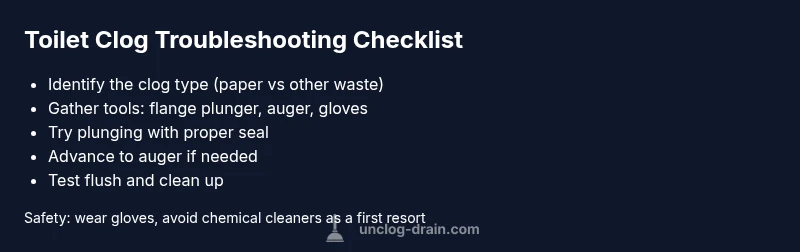
Toilet Clogged with Toilet Paper and Poop: Troubleshooting Guide
Urgent, step-by-step troubleshooting for a toilet clogged with toilet paper and poop. Learn quick fixes, safety tips, and when to call a pro today.


A toilet clogged with toilet paper and poop is usually a partial blockage caused by paper buildup and waste. Start with a sturdy flange plunger, then move to a toilet auger if needed. If it still won’t drain after two attempts, avoid forcing more waste and call a plumber.
What causes a toilet clogged with toilet paper and poop
A toilet clog described as a toilet clogged with toilet paper and poop typically forms from a combination of tissue buildup and waste that narrows the trapway. In most homes, the main culprit is excess toilet paper or flushed materials that do not dissolve quickly enough. Over time, this creates a partial blockage that resists normal flushing. When you flush, the water level rises and slows, signaling a clog. If left unchecked, the clog can worsen, leading to overflow or sewage odors. Factors like pipe age, low-flow toilets, and high-water usage can aggravate the problem. Recognizing the specific type of blockage helps you choose the right tool—plunger first, followed by a flexible auger if needed. The Unclog Drain team notes that quick action within the first flush can prevent a minor clog from turning into a bigger issue.
Immediate safety steps and what to do first
Safety comes first when dealing with a toilet clogged with toilet paper and poop. Put on rubber gloves and protective eyewear, and keep kids and pets away from the bathroom. Do not mix chemical drain cleaners with other cleaners, and never pour hot or boiling water into a clogged toilet, as it can crack porcelain or force waste back up. If you notice sewage backing up into the tub or shower as well, evacuate the area and contact a professional promptly. For a typical residential clog, the quickest path to relief is a physical method that doesn’t rely on harsh chemicals. Begin by reducing splashback and preparing the area with towels or a mat, then proceed to the first mechanical step. Quiet, deliberate action reduces mess and protects your pipes.
Tools and setup you need
Before you attack the clog, assemble the essential tools: a flange plunger (not a flat cup plunger), a pair of thick gloves, a bucket, a toilet auger (also called a toilet snake), old towels, and a flashlight. If you don’t have an auger, many hardware stores rent one. Clear the area around the toilet and lay down towels to catch water. Ensure the toilet paper and waste line can be reached with the auger by removing the toilet tank lid to verify the flush mechanism isn’t malfunctioning. A clean working surface will help you see the clog and monitor the water level as you work.
Plunging: how to do it right
Plunging is the first line of defense for a toilet clogged with toilet paper and poop. Use a flange plunger and create a tight seal around the drain opening. Push down firmly with a slow, steady motion to push air into the trap, then pull up with the same force to lift the clog. Maintain the seal and avoid twisting the plunger. If the water doesn’t rise, add a little water to the bowl to improve suction and repeat for 15–20 seconds, then pause to check. A successful flush should clear the bowl and allow normal draining. If plunging yields only a partial improvement, proceed to the auger. Remember, never use metal tools to poke beyond the trap as they can damage the porcelain.
Using a toilet auger or snake
When plunging isn’t enough, a toilet auger can be effective for breaking apart a toilet paper and poop clog. Feed the auger tip into the drain, crank the handle to extend it past the blockage, then pull back while rotating slowly to grab the clog. Repeat as needed, then pull out the snake and flush. If you feel resistance that won’t budge, stop to reassess; forcing the auger can push the blockage deeper or damage the inner workings. After removal, slowly pour a bucket of water into the bowl to test drainage. If the water remains high or drains slowly, do not flush again; call a professional. A cautious approach reduces splashback and keeps your plumbing intact.
When chemical cleaners help versus hazards
Chemical drain cleaners should be used sparingly and only as a last resort for a toilet clogged with toilet paper and poop. They can soften organic matter, but they also risk pipe damage, fumes, and residues that may harm septic systems. If you choose to use a cleaner, follow the label precisely and never mix products. Rely on mechanical methods first, such as plunging and using an auger, which are safer and often more effective for toilet paper and poop blocks. For septic systems, avoid harsh chemical cleaners entirely, as they can disrupt beneficial bacteria. If you’re unsure about your system, consult a pro before applying cleaners.
What to do if the toilet still won't drain
If the toilet remains blocked after plunging and augering, don’t flush repeatedly, which can cause overflow. Stop and reassess, perhaps with a professional camera inspection to identify if the issue is a deeper sewer line or venting problem. While you wait for help, avoid turning on water in other fixtures to prevent pressure changes. A persistent clog may indicate a more serious plumbing problem beyond a simple bathroom toilet, and a licensed plumber can perform a thorough diagnosis and safe restoration. In the meantime, keep the bathroom clean and ventilated to minimize odors.
Prevention tips to avoid future clogs
Preventing clogs starts with mindful disposal and regular maintenance. Use only a reasonable amount of toilet paper per flush and avoid flushing items like wipes, feminine products, or paper towels. Consider upgrading to a high-quality plunger and keeping a small auger on hand for emergencies. Regularly inspecting your toilet's flush mechanism and vent stack can prevent slow drains that contribute to clogs. If you have a septic system, schedule periodic professional maintenance and avoid chemical additives that disrupt the bacteria balance. Small habits and routine checks significantly reduce the risk of future clogs.
Testing and cleanup after fix
After clearing a toilet clog, run clean water through the bowl to ensure consistent drainage. Check the bowl for any remaining resistance and confirm the water level drops normally after flushing. Clean the area with a disinfectant, and wash your hands thoroughly after removing gloves. Reinstall the tank lid and verify that the fill valve stops at the proper level. If you notice recurring slow drainage, it may be a sign that a more extensive problem is present and warrants professional evaluation. Regular maintenance can help you catch issues early and prevent bigger emergencies.
Steps
Estimated time: 45-60 minutes
- 1
Gather tools and prep the area
Collect a flange plunger, toilet auger, gloves, towels, and a bucket. Clear the area around the toilet and protect the floor. This preparation reduces mess and keeps you safe as you work through the clog.
Tip: Wear gloves and keep a waste basin nearby in case of overflow. - 2
Plunge with proper technique
Seal the plunger against the drain and push straight down with steady, controlled pressure. Maintain the seal and pull up with the same force to create suction. Repeat for 15–20 seconds, then check drainage.
Tip: Add a small amount of water to improve suction if the bowl is low. - 3
Try a toilet auger if plunging fails
Insert the auger into the drain and rotate the handle to extend the snake. When you feel resistance, pull back slowly to retrieve or break the clog. Repeat several times.
Tip: Go slowly; forcing the auger can scratch porcelain or push the clog deeper. - 4
Test the flush
Slowly flush to test drainage. If the water recedes normally, continue flushing a few times to ensure the line is clear.
Tip: If you see water rising again, stop and reassess before flushing again. - 5
Consider chemical cleaners as a last resort
If the clog remains, you may consider a manufacturer-recommended enzyme cleaner or water-based cleaner, but do not mix cleaners and follow safety instructions.
Tip: Avoid harsh chemical cleaners in septic systems. - 6
Call a professional if needed
If the toilet still won’t drain or backups occur in other fixtures, contact a licensed plumber. Persistent clogs can indicate deeper sewer or venting problems.
Tip: Document symptoms (backup in other fixtures, gurgling sounds) to help the plumber diagnose quickly.
Diagnosis: Toilet clogged with toilet paper and poop after flushing
Possible Causes
- highPartial clog from toilet paper and waste
- mediumExcessive toilet paper or non-dissolving material
- lowVent or sewer line issue causing slow drainage
- lowForeign object or severe pipe buildup
Fixes
- easyStart with a flange plunger to create a tight seal and plunge firmly.
- easyIf plunging fails, use a toilet auger to break up or hook the clog.
- mediumIf water remains in the bowl after attempts, don’t flush again; move to professional help.
- easyCall a licensed plumber if the clog persists or there are backups in other fixtures.
Common Questions
Can I use chemical cleaners to unclog a toilet clogged with toilet paper and poop?
Chemical cleaners can damage porcelain and septic systems and may not clear a paper-based clog. Mechanical methods—plunging and augering—are usually safer and more effective. If you must use a cleaner, follow the label precisely and avoid mixing products.
Chemicals can be risky; mechanical methods are safer and usually work better for paper-based clogs.
What is the difference between a partial clog and a full clog?
A partial clog slows drainage but still drains gradually; a full clog blocks drainage entirely. In a partial clog, plunging or augering often resolves the issue, while a full clog may require more aggressive action or professional help.
Partial clogs drain slowly; full clogs block drainage and may need a plumber.
What should I do if the toilet backup worsens after trying to fix it?
Stop attempting to flush and avoid running more water through the system. If backups spread to other fixtures, evacuate the bathroom and call a plumber promptly. A worsening backup can indicate a sewer line problem.
If backups get worse, stop, and call a plumber—don’t push more water through the system.
How long should I wait after using an enzyme cleaner?
Follow the product’s label for dwell time, typically several hours or overnight. Enzyme cleaners work slowly by digesting organic material and should not be rushed before testing drainage.
Wait as directed by the product label to let the enzymes do their job.
When is it necessary to call a plumber?
Call a plumber if the clog persists after plunging and augering, if there are backups in other fixtures, or if you suspect a sewer or venting problem. A professional assessment prevents further damage.
If it doesn’t clear after trying plunger and auger, call a plumber.
Key Points
- Start with plunging to address most clogs.
- If plunging fails, try a toilet auger before chemicals.
- Avoid mixing cleaners or flushing harmful items.
- Call a plumber if backups persist or other fixtures are affected.