What to Do If You Clogged the Toilet with Poop: A DIY Guide
A practical, step-by-step guide for homeowners dealing with a toilet clog caused by poop. Learn safe techniques, the right tools, and when to call a plumber for backup.


If your toilet is clogged with poop, start with a plunger, using a proper cupped rubber seal. If that fails, try a toilet auger to dislodge the blockage, then flush cautiously. Avoid chemical drain cleaners and repeated flushing. If the clog remains after 20-30 minutes, stop and call a plumber.
Understanding the Toilet Clog and Safety
If you're wondering what to do if you clogged the toilet with poop, here's a practical, safety-first approach. According to Unclog Drain, safety and containment come first to prevent sewage exposure and potential water damage. A toilet clog can overflow quickly, so act deliberately rather than frantically. Put on rubber gloves and eye protection if available, and keep children and pets out of the bathroom. If the water level rises, surround the bowl with towels and prepare to shut off the supply valve behind the toilet. Locate the shut-off valve and turn it clockwise until it stops to stop more water from entering the bowl. Do not flush again while you manage the blockage, as repeated flushing can push the clog deeper or trigger an overflow. Most clogs arise from too much toilet paper, wipes, or solids. Understanding the cause helps you choose the right method and prevents damage to your toilet. With this context, you can move to the recommended tools and plan for a controlled cleanup.
Essential Tools and Materials You Might Need
Before you start, gather the key tools and materials. A flange plunger designed for toilets provides the best seal, followed by a toilet auger for stubborn blockages. Add rubber gloves, old towels or a mop, a bucket, and a disinfectant for post-cleanup. Optional items include a flashlight for visibility and an old brush for clearing debris. Have dish soap and hot water ready to help loosen residues if needed. If overflow happens, keep towels handy and a trash bag for disposal. The right tools reduce mess and make the process safer and more efficient.
Plunger Mastery: The First Line of Defense
The plunger is your first line of defense. Use a flange plunger for a tight seal and ensure the rim is fully under water. Position the plunger to cover the drain opening and push with steady, full strokes to build suction. Maintain pressure for 15-20 seconds, then pull back with a quick, sharp motion. Repeat until the clog shows movement or clears. Pro tip: keep the plunger submerged during the entire process to maximize suction and avoid splashing. If you feel resistance, pause and adjust the angle for a better seal, then resume plunging. After the water starts to drain, flush once quickly to verify clearance, but only if the water level returns to normal.
When Plunger Fails: Using a Toilet Auger
If plunging doesn’t clear the blockage, a toilet auger can reach past the trap and break up the clog. Extend the auger gently into the drain, rotating the handle to feed the cable. When you feel resistance, gently crank to break free the obstruction. Retract slowly to avoid damaging the porcelain. Remove any debris with the provided scoop or gloves, then flush a small amount of water to test. Pro tip: keep a light pressure while feeding the cable to prevent kinking. If the auger doesn’t budge the clog after several attempts, stop and consider professional help to prevent damage.
Safe Cleaning Tactics and Why to Avoid Harsh Chemicals
Many home remedies tempt people to reach for chemical drain cleaners, but these substances can damage porcelain, pipes, and septic systems, especially in toilets. Avoid mixing cleaners with bleach or ammonia due to toxic gases. If you must use a cleaner, choose a product labeled for toilets and follow the manufacturer’s instructions precisely, and never mix with hot water. For most clogs, mechanical methods (plunger or auger) are safer and equally effective. In the cleanup phase, use gloves and a disinfectant to sanitize any surfaces that may have been contaminated, and rinse the area thoroughly after the work is done.
Containment, Overflow Prevention and Cleanup
Containment is crucial to prevent spills and contamination. After you clear the clog, keep working with the shut-off valve in case another surge occurs. Wipe down surrounding surfaces with a disinfectant, and launder any towels used. Place disposable gloves and wipes into a sealable bag before discarding. If overflow happened, inspect the floor for water damage and dry areas promptly to prevent mold. Finally, sanitize the toilet bowl exterior and the handle, and store tools away after they are dry. This step reduces odor, bacteria, and recurring clogs by ensuring your bathroom remains clean and safe.
Timing, When to Call a Professional
If the toilet remains clogged after persistent attempts with a plunger and auger, or if you experience repeated clogs, sewage backup, or a persistent foul odor, it’s time to call a professional plumber. Do not force a blockage that resists standard techniques, as forcing can damage the flapper, seals, or the drain line. A licensed plumber can diagnose issues such as a deeper blockage in the main line, a broken toilet trap, or venting problems that require specialized equipment. The decision to call should consider the potential cost of repeated DIY attempts versus professional repair.
Prevention Tips to Avoid Future Clogs
Prevention saves time and reduces stress. Avoid flushing items other than toilet paper and human waste; substances like paper towels, wipes (even 'flushable' ones), feminine products, and dental floss can rapidly accumulate. Use a quality toilet paper that dissolves quickly and avoid overloading the bowl with flushes when there’s resistance. If your toilet is older or prone to clogging, consider upgrading to a more efficient model or adding a toilet plunger station in the bathroom for quick access. Regular maintenance, including a simple drain check and avoiding chemical stack-up, helps keep your plumbing flowing smoothly.
Tools & Materials
- Plunger (flange plunger)(Choose a flange model for a better seal.)
- Toilet auger (plumbing snake)(Long enough to reach the trap.)
- Rubber gloves(Protect hands from germs and waste.)
- Mop or old towels(Absorb overflow and protect flooring.)
- Bucket(For collecting spills or holding water.)
- Disinfectant(Sanitize after cleanup.)
- Flashlight(Improve visibility in dark bathrooms.)
- Dish soap(Optional aid for lubrication or loosening residue.)
Steps
Estimated time: 20-40 minutes
- 1
Shut off the water supply
Locate the wall valve behind the toilet and turn it clockwise until it stops. This stops new water from entering the bowl and reduces overflow risk during attempts.
Tip: Take a few seconds to verify the valve fully seats to prevent water from leaking. - 2
Contain potential overflow
Place towels around the base of the toilet and have a bucket handy. If water rises, remove the tank lid slowly to avoid splashes and expect a possible backup.
Tip: Do not mix cleaning products; this can create hazardous fumes. - 3
Position the plunger for maximum suction
Use a flange plunger and ensure the rubber is fully submerged. Place it to seal the drain and press straight down with controlled force to create a suction seal.
Tip: Keep the seal tight and avoid tilting the plunger sideways. - 4
Plunge with purpose
Pump with 15-20 steady strokes, then pull up sharply to break the clog. Repeat 6-10 cycles, pausing briefly if water level drops.
Tip: If the water level doesn’t move, reposition the plunger for a better seal. - 5
Use a toilet auger if needed
Feed the auger into the toilet drain, rotating the handle to move the cable past the bend. When you meet resistance, gently advance or retract to break the blockage.
Tip: Avoid forcing the cable; forcing can scratch the porcelain. - 6
Test and flush
After the blockage clears, flush once to verify flow. If it doesn’t clear, repeat plunging or auger technique lightly before testing again.
Tip: Do not flush excessively during clearing; this can cause overflow.
Common Questions
What is the safest first step when a toilet is clogged with poop?
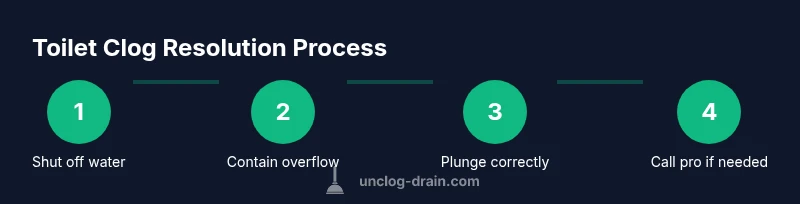
Shut off the water, contain the overflow, and start with a plunger. If the clog remains, try a toilet auger. Avoid chemical cleaners as a first course of action.
First shut off the water, stop overflow, and try a plunger; if needed, move to an auger before considering chemicals.
Can I use chemical drain cleaners in a toilet?
Chemical cleaners are generally not recommended for toilets because they can damage porcelain and pipes and may create hazardous fumes. Mechanical methods are safer for most clogs.
Chemicals are usually not a good idea for toilets; go with plungers or augers first.
How long should I try plunging before calling a pro?
If plunging doesn’t clear the clog after about 20-30 minutes of steady effort, stop and call a professional. Prolonged attempts can worsen the blockage or cause damage.
If it doesn’t clear in about half an hour, it’s time to call a plumber.
Is it safe to flush after using a plunger?
Flushing after the water level has returned to normal is safe. If the water remains high or you notice backflow, avoid flushing again and reassess the blockage.
Flush only when the water level looks normal; otherwise wait and try again later.
What signs indicate a more serious issue?
Frequent clogs, persistent gurgling sounds, or sewage smell indicate a deeper problem such as a main sewer line blockage and require a professional assessment.
If clogs repeat or you smell sewage, call a plumber.
Watch Video
Key Points
- Shut off water and contain overflow immediately.
- Start with a flange plunger, then move to a toilet auger if needed.
- Avoid chemical drain cleaners for toilets; mechanical methods are safer.
- Call a professional if the blockage persists beyond 20-30 minutes or if sewage backs up.
- Implement simple prevention habits to minimize future clogs.