Toilet Clog Troubleshooting: Plunger Won t Work
Urgent DIY guide to diagnose and fix a toilet clog when the plunger won t work, with safe alternatives, a diagnostic flow, step-by-step fixes, and prevention tips by Unclog Drain.


Most plungers fail because the clog is deeper or harder than a standard seal can move. The likely culprits are a blocked P-trap, a deep sewer line partial, or a solid toilet clog. Start with a wide-bell plunger, create a tight seal, and pump firmly; if it still won’t budge after several attempts, switch to alternative methods or call a pro.
Why plunger won t work
When a plunger won t work, the issue is usually not the tool but what's clogging the drain or where the clog is located. A standard flange or cup plunger creates suction at the surface level, but a solid blockage or a drain curve (like a P-trap) can hide from that suction. The phrase plunger won t work is common in households; it signals you should widen your diagnostic net and switch techniques. According to Unclog Drain, many stubborn clogs lie below the bowl's rim or in the trap arm, where a plunger can't reach without a proper seal. A poor seal or a dry crown can also waste energy. Before you blame the tool, verify water depth, seal quality, and the drain pathway. If the bowl has plenty of water and the plunger still can't budge the clog after several forceful pumps, it's time to escalate with a toilet auger, dish soap and hot water, or a professional assessment.
Quick checks you can do now
Before diving into tools, run through a quick checklist to avoid wasted effort. First, confirm the water supply to the toilet is functioning and the shut-off valve is fully open. Next, make sure there is enough water in the bowl to cover the plunger when you seal it—without adequate water, suction fails. Check the plunger itself: a worn seal or a cracked rubber cup reduces effectiveness. Finally, rule out a partial blockage in other drains: if multiple fixtures drain slowly, the issue may be in the main sewer line rather than the toilet itself. If any step seems unsafe or unclear, stop and consult a professional.
Common causes behind stubborn clogs
Stubborn toilet clogs come from a few recurring sources. A buildup of toilet paper, sanitary products, wipes, or foreign objects can jam the trap. A deep clog in the drain line or a misaligned vent can cause pressure changes that thwart plunging. In some homes, especially older ones, the trap’s geometry or a corroded pipe can trap debris and resist suction. Understanding where the clog sits helps choose the right tool: plungers for surface-level action, a toilet auger for deeper reach, or professional equipment for resistant blockages.
Diagnostic flow overview (symptom → diagnosis → solution)
Working from symptom toward a solution creates a clear path. Symptom: water remains in the bowl after flushing or plunging fails to move the clog. Diagnosis: the clog is beyond the reach of a standard seal or in the trap arm. Solution: attempt a wide-bell plunger seal and firm pumps; if no movement, proceed to a toilet auger; if still blocked, involve professional help or inspect the main sewer line.
Step-by-step guide to common fixes
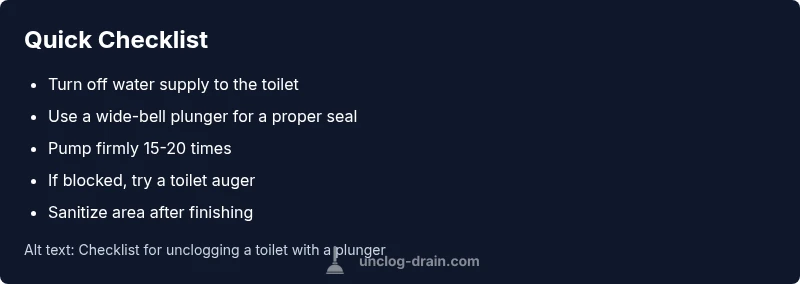
Below is a practical sequence to tackle the most frequent causes. Each step advances from easy to more involved, and includes a quick pro-tip to keep you moving. Step 1: Prep and safety — turn off the water supply, put on gloves, and clear the area. Tip: a fresh towel around the base helps catch splashes. Step 2: Verify the seal — inspect the plunger for cracks and ensure the rubber cup sits flush against the drain opening. Tip: wipe the edge clean for a better seal. Step 3: Plunge correctly — place the plunger, seal, and give 15-20 steady pumps. Tip: don’t rush, let suction build. Step 4: Reassess with the auger — if plunging fails, insert a toilet auger and rotate while pushing gently. Tip: avoid forcing; damage can occur. Step 5: Try controlled siphoning — carefully pour hot water with a squirt of dish soap from a height to create pressure waves. Tip: hot water can help but don’t scald. Step 6: Consider suction alternatives — a wet/dry vacuum can help remove standing water or lug out loosened debris, used with caution. Tip: keep the device away from the toilet seat. Step 7: When to call a pro — if nothing works after these steps, you may have a main-line issue or a severe blockage. Tip: early professional input can save time and prevent damage. Estimated time: 60-90 minutes.
Safety, prevention, and next steps
Safety comes first when you tackle clogs. Always wear gloves and eye protection, never mix chemical cleaners with plungers, and avoid forcing a tool that resists. After you clear a clog, flush and observe for several minutes to ensure the drain stays clear. To prevent future clogs, run routine maintenance: avoid flushing non-flushables, use a toilet brush to clean residue, and consider a yearly check of vent pipes with a plumber. Regular maintenance reduces the chance of a repeat clog and preserves plumbing longevity.
Steps
Estimated time: 60-90 minutes
- 1
Shut off water and prep the area
Turn off the toilet shut-off valve, flush to drain water, wear gloves, and lay towels.
Tip: Keep kids and pets away; prep space ensures cleaner work. - 2
Check the plunger seal and orientation
Inspect rubber cup for cracks, ensure a tight seal against drain opening, and remove any debris.
Tip: Wipe the rim edge for a better seal. - 3
Plunge with proper technique
Place the plunger to cover drain, seal, and give 15-20 steady pumps; avoid short tugs.
Tip: Keep water level high enough to cover the plunger. - 4
Try a toilet auger
Insert the auger into the toilet, rotate while advancing, and gently push through the clog.
Tip: Don’t force; resistance may indicate a tougher clog or pipe issue. - 5
Consider suction or flush back-up
If safe, use a wet/dry vacuum or pour hot water with dish soap to loosen debris.
Tip: Test on towels first; avoid splashes. - 6
Re-test and assess
Flush to confirm clearance and monitor for repeat clogs.
Tip: If water backs up, stop and call a pro. - 7
Final safety and prevention steps
Clean tools, sanitize area, and adopt habits to prevent future clogs.
Tip: Implement a regular maintenance routine.
Diagnosis: Toilet clog persists and plunging produces little or no movement
Possible Causes
- highMissed deeper clog in trap arm or main drain
- lowInsufficient water for a good plunger seal
- highWrong plunger type or poor technique
- mediumVent or sewer line blockage
Fixes
- easySwitch to a wide-bell plunger and re-seal before plunging again
- easyUse a toilet auger to reach deeper into the drain
- hardClear the vent stack or main line with professional help if required
- mediumCall a professional plumber if the blockage remains after attempts
Common Questions
Why won t my plunger work on a toilet clog?
A plunger may fail when the clog is deeper, the seal is faulty, or the drain path is obstructed. Check for a good seal, try a wider plunger, and consider a toilet auger if plunging remains ineffective.
A plunger might fail because the clog is deeper or the seal isn’t sealing properly; try a wider plunger or switch to an auger if plunging doesn’t budge it.
Should I use chemical drain cleaners after a failed plunge?
Chemical cleaners are risky, can damage pipes, and often don’t reach deep clogs. Avoid them as a first option; pursue mechanical methods first and only consult a pro if needed.
Avoid chemical cleaners after a failed plunge; they can harm pipes and don’t reliably clear deep clogs.
Can a wet/dry vacuum fix a toilet clog?
Yes, with caution. A wet/dry vacuum can remove standing water and loosen debris if used carefully and never directly on the sewage outlet. Follow safety guidelines and unplug if unsure.
A wet/dry vacuum can help if used cautiously, but only as a supplementary method after other options fail.
When should I call a plumber?
Call a plumber if the clog persists after several solid attempts or if you suspect a main-line issue or ventilation problem. Timely professional help can prevent damage and further delays.
If the clog won’t clear after multiple solid attempts, it’s time to contact a professional plumber.
Is it safe to flush several times after a clog is cleared?
Test cautiously. Flush once to verify clearance and watch for signs of slow drainage or backup. Re-flushing repeatedly during a stubborn clog can worsen the problem.
Flush once to test for clearance and avoid repeatedly flushing if you’re unsure.
How can I prevent future toilet clogs?
Limit toilet paper usage, avoid flushing non-flushables, and consider regular drain maintenance. A small habit change now reduces the chance of future clogs.
Prevent clogs by not flushing non-flushables and using less toilet paper; regular maintenance helps a lot.
Watch Video
Key Points
- Start with simple checks and seal the plunger properly
- Escalate to a toilet auger when plunging fails
- Avoid chemical cleaners as a first resort
- Call a pro for main-line or persistent clogs