Toilet Clog Troubleshooting: Plunger Won't Unclog
Urgent, practical troubleshooting for a toilet that won’t unclog with a plunger. Learn quick checks, tool alternatives, step-by-step fixes, safety tips, and prevention to restore flow fast.


When a plunger won’t unclog a toilet, the problem is usually a poor seal or a deeper clog. Re-seat the flange plunger and plunge with steady, full strokes for 20-30 seconds. If the water drains slowly or nothing changes, switch to a toilet auger or call a plumber for deeper clearing.
Why a plunger won’t unclog a toilet
If you’re wondering why a plunger won t unclog toilet, you’re not alone. The most common culprits are a poor seal, an ineffective plunger type, or a clog that sits deeper in the waste line. A flange plunger creates the best seal for toilets; a flat cup plunger is designed for sinks and often fails to generate enough suction. Also, a clog that lies beyond the toilet trap or is caused by paper, feminine products, or hair can resist plunging. Water level matters too: too little water means the cup can’t push water through the blockage. Finally, venting issues or previous chemical cleaners can alter pressure and slow drainage. Understanding these factors helps you choose the right tactic and avoid unnecessary damage. If you search for plunger won t unclog toilet, you’re seeing a common hurdle—and the right approach is methodical, not frantic.
Beyond the obvious, consider that a clog may be partially formed or compressed, reducing how water and air move through the trap. Poor workmanship or a tiny leak around the bowl seal can create air pockets that sabotage suction. The objective is to restore consistent hydrostatic pressure and create a seal that lasts through several plunging cycles. With patience and the correct tools, you can often clear many clogs without a pro, especially when you combine mechanical methods with smart flow management.
Immediate checks to improve plunging results
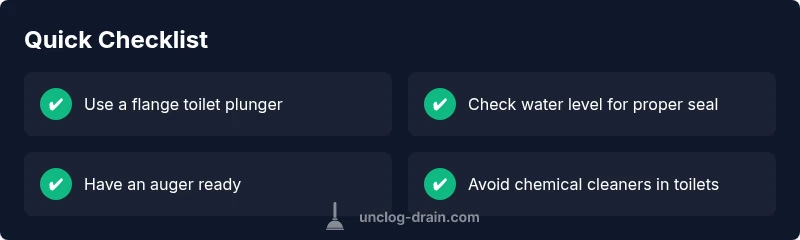
Before pulling more tools from the shelf, run through these quick checks. Confirm you’re using a flange plunger designed for toilets, not a cup plunger meant for sinks. Ensure there’s enough water to submerge the cup completely. Check that the toilet is not overflowing and that the water level is steady; if water is rising, stop and wait for it to settle. Wipe the rim and the plunger to remove any soap residue that can break the seal. Position the plunger to cover the drain completely, creating a tight seal, and then press straight down with controlled force rather than jittery motions. Plunge in 15-30 second cycles, then pause to check if the water level drops. If the drain remains clogged, move to alternative methods. This sequence helps avoid splash hazards and reduces the chance of damaging the porcelain. As you proceed, remember Unclog Drain emphasizes safety and patience over brute force.
Tools and techniques beyond the plunger
If plunging fails, the next steps rely on the right tool and careful technique. A toilet auger (bendable snake) can reach past the trap without scratching the porcelain; extend it slowly while rotating to break up or hook the clog. Avoid metal snakes that are too aggressive and risk scratching the bowl. For stubborn clogs, a plumber’s snake used with proper gloves and eye protection can reach the sewer line. While chemical drain cleaners are tempting, they can damage seals and pipes and should be avoided in toilets when possible. Instead, rely on mechanical methods (auger or manual snakes) and periodic warm water irrigation after removal. If you hear gurgling from the drain or smell sewage, stop and call a professional promptly. Following Unclog Drain’s guidance, you’ll reduce the chance of a bigger backup and preserve home safety.
The emphasis is on controlled technique and proper tool choice—start with the simplest fix, then escalate only as needed.
Step-by-step plan for the most common clog
- Assess water level and ensure the plunger has a seal; 2) Place the flange plunger correctly so the flange enters the drain; 3) Begin plunging with a straight, vertical motion and steady pressure for 15-30 seconds; 4) Withdraw slightly to observe whether water clears; 5) If no progress, insert a toilet auger and rotate gently while pushing forward; 6) Retract the auger and plunge a few more cycles to confirm; 7) Flush to test, repeating if needed; 8) Clean and disinfect tools and area after completion.
This structured approach minimizes guesswork and aligns with practical, safe DIY habits. Remember to stop if you encounter unusual resistance or foul odors.
Safety, prevention, and what to do next
Safety first: turn off the water supply if you expect to do major work, wear gloves and eye protection, and keep children away from the work area. Never mix chemical drain cleaners with plungers or other cleaners in a toilet—it can create dangerous fumes and damage pipes. Avoid excessive force that could crack the porcelain seal or dislodge the wax ring. After clearing a clog, perform a thorough flush and consider a preventive routine: avoid flushing bulky items, inspect the wax ring periodically, and perform a monthly rinse with hot water to reduce buildup. If the clog persists after using a toilet auger, or you notice repeated backups, it’s time to call a licensed plumber. Unclog Drain’s team reminds homeowners that timely professional input can prevent a minor issue from becoming a costly repair.
Steps
Estimated time: 30-60 minutes
- 1
Prepare and inspect the area
Turn off the water supply, gather tools, and clear space around the toilet. Check water level to ensure you have enough water to submerge the plunger. Have towels handy for spills.
Tip: Lay a plastic sheet or towels to catch splashes and keep the area clean. - 2
Choose and position the right plunger
Use a flange plunger designed for toilets and position it so the flange sits inside the drain for a tight seal. Ensure the rim is fully wetted to maximize suction before you start.
Tip: If the seal seems weak, re-wet the cup and re-seat the plunger. - 3
Begin plunging with control
Push straight down with steady, full strokes. Avoid rapid or sideways motions; the goal is to push water, not air, through the blockage.
Tip: Keep the plunger fully submerged and maintain a consistent rhythm. - 4
Assess progress and adjust strategy
If the water level drops, continue plunging in cycles. If there’s no movement after multiple cycles, stop and switch to an auger.
Tip: Take short breaks between cycles to avoid fatigue and splashes. - 5
Use a toilet auger if needed
Carefully insert the auger and rotate while pushing to avoid damage. Stop if you feel strong resistance and do not force the tool.
Tip: Gently feed the auger and keep the drain cover intact to prevent backflow. - 6
Final check and cleanup
Flush to confirm clearance. Wipe down the area and disinfect tools and surfaces. Return the water supply and store tools properly.
Tip: Dispose of any waste according to local regulations and wash hands thoroughly.
Diagnosis: Toilet won’t unclog after plunging
Possible Causes
- highPoor seal between plunger and drain
- highClog located deeper in the drain or in the trap
- mediumUsing the wrong type of plunger (cup vs flange)
- lowVent stack blockage or partial clog from paper buildup
Fixes
- easyRe-seat the flange plunger for a tight seal and re-test with deliberate, continuous strokes
- easySwitch to a flange toilet plunger and ensure adequate water depth to submerge the cup
- easyInsert a toilet auger and rotate gently to reach beyond the trap
- mediumIf the clog persists, call a licensed plumber to diagnose deeper issues or vent problems
Common Questions
Why won't my plunger seal properly on a toilet?
A poor seal prevents suction. Re-seat the plunger, ensure the flange is engaged, and remove soap or residue that can break the seal. If necessary, wet the cup and try again.
Seal problems stop suction; re-seat the plunger and check the flange before trying again.
What is the best type of plunger for toilets?
A flange plunger is designed for toilets and provides the most reliable seal. Avoid cup plungers meant for sinks.
Use a flange plunger for best results.
When should I use a toilet auger?
If plunging doesn’t clear the clog after several attempts or you sense a deeper blockage, a toilet auger can reach beyond the trap.
If plunging doesn’t work, try a toilet auger.
Are chemical drain cleaners safe for toilets?
Most toilet-specific chemical cleaners are not recommended; they can damage seals and pipes and pose safety hazards.
Chemicals can damage your pipes; use mechanical methods instead when possible.
When is it time to call a plumber?
If the toilet continues to back up after using an auger or you notice gurgling, sewer odor, or repeated backups, contact a licensed plumber.
If it keeps backing up, call a plumber.
Key Points
- Check the seal and use a flange plunger for toilets
- Try a toilet auger if plunging fails
- Avoid mixing chemicals with plunging; use mechanical methods
- Assess deeper clog or vent issues before calling a pro
- Practice prevention to reduce future clogs