Toilet Clog Troubleshooting: Plunger Not Working? Quick Guide
Struggling with my toilet is clogged and the plunger isn t working? This urgent, step-by-step guide helps homeowners diagnose causes, apply safe fixes, and prevent future clogs.


Most often, a toilet that won’t drain is blocked further down the line or a poor seal around the flange. If the plunger isn’t solving it, don’t force it—switch to a toilet auger or safer mixed-step approach. This Unclog Drain guide covers quick checks, proper tool use, and a practical, 1-hour plan to restore flow safely.
Why this problem happens and why a plunger isn’t enough
When a toilet clogs, the blockage is often beyond the rim and traps are filled with tissue, toilet paper, or foreign matter. A plunger creates suction, but if the clog sits past the trap or beyond the main line, a standard plunger may fail to seal properly. According to Unclog Drain, many homeowners underestimate how quickly a simple blockage can become stubborn when waste accumulates and the pipe geometry doesn’t allow easy flow. In these cases, relying on a plunger alone can give a false sense of resolution while the clog remains active. Recognizing where the blockage resides—bowl, trap, or main line—helps you choose the right tool and technique. This section lays out the typical culprits and how they respond to different fixes, so you can decide whether to proceed with plunging, augering, or professional help.
Safety first: what to wear and what to avoid
Before you touch anything, take simple safety steps: wear gloves and eye protection, and keep children and pets away from the bathroom. Do not mix chemical drain cleaners with other cleaning agents or pour them into a toilet; fumes and chemical reactions can damage porcelain and pipes. If you’re unsure, avoid DIY chemicals altogether and opt for mechanical methods like plunging or using a toilet auger. Remember to work slowly and test the water level frequently. The Unclog Drain team emphasizes safety as the foundation of any excavation-style fix in a bathroom.
Quick checks you can perform before tools
Start with non-destructive, quick checks to validate your starting point. Look for a backup in other nearby fixtures (sink, bathtub) to gauge whether you’re dealing with a local toilet clog or a broader sewer issue. Check the toilet’s base for any sign of leakage or a loose wax ring—these can alter seal integrity and flush performance. If the water level rises markedly when you flush, or if air gurgles in the drain, that’s a clue the blockage is not solely in the bowl. By ruling out surface issues first, you’ll save time and minimize mess. Unclog Drain recommends documenting these observations so you can describe the scenario accurately if you need professional help later.
The diagnostic flow: identify the blockage type
A robust diagnostic flow helps you distinguish between a local toilet clog and a wider drainage problem. Start by observing whether other fixtures in the home drain slowly or gurgle. If only the toilet is affected, focus on the bowl, trap, and flange. If multiple fixtures are affected, the blockage may be in the main line or a vent issue. Unclog Drain analysis shows that most problems begin in or just beyond the toilet’s trap, but backups in the main line require different approaches. Use the diagnostic flow to categorize the blockage and select the appropriate fix rather than guessing.
Step-by-step fixes: from simple plunging to auger
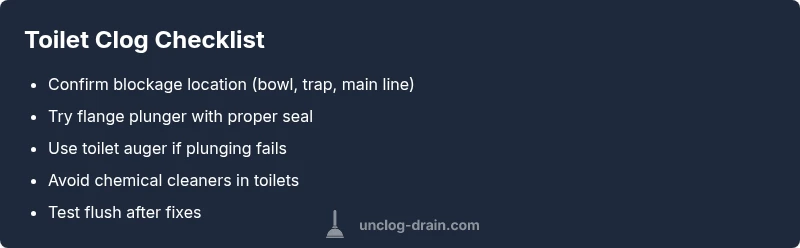
- Gather tools and prepare: a flange plunger, a toilet auger, rubber gloves, and old towels. 2) Verify you have the right plunger and create a complete seal around the drain opening. 3) Use firm, controlled plunging with vertical strokes; pause if resistance increases and rotate slightly to maintain seal. 4) If plunging fails, switch to a toilet auger and feed the cable slowly into the bowl to reach the blockage. 5) Retrieve debris or break it up, then flush to test flow. 6) If the water still won’t clear, repeat the auger, focusing on longer pulls with moderate pressure. 7) After clearing, flush several times with hot water (not boiling) to ensure smooth flow and finish with a thorough cleaning.
Aftercare and prevention: keep toilets flowing
Regular maintenance reduces future clogs: avoid flushing non-flushable items, use a toilet paper brand that dissolves easily, and consider a yearly check of the flange and wax ring for signs of wear. Keep a plunger within reach and store a toilet auger nearby for quick access. If your household frequently experiences clogs, investigate shared drainage lines or vent pipe issues with a professional. By treating the problem as a system issue rather than a single device fault, you reduce recurrence and protect your plumbing investment.
Steps
Estimated time: 45-60 minutes
- 1
Gather tools and prep
Lay out a flange plunger, toilet auger, rubber gloves, and towels. Put on gloves and goggles, keep the area contained, and clear a path for easy movement. Check the water level in the bowl and pause if it’s dangerously high before you start.
Tip: Having everything within reach saves moves and keeps mess contained. - 2
Check plunge type and seal
Ensure you’re using a flange plunger for a better seal against the drain. Submerge the rubber so it seals the rim completely, then keep your body vertical and lean into the plunge without twisting. A poor seal is the most common reason plungers fail.
Tip: A good seal matters more than raw force. - 3
Plunge with purpose
Push straight down with steady pressure, then pull back slowly to maintain suction. Repeat in short, measured cycles rather than long heavy pushes. If you hear a suction release or see water surge, pause and reset the seal.
Tip: Use consistent rhythm for best results. - 4
Move to the auger if needed
Feed the toilet auger into the drain slowly, turning the handle to help the head reach past the trap. When you encounter resistance, rotate gently and back off before pulling out to avoid damaging the porcelain. Clear debris as you go and withdraw the snake gradually.
Tip: Never force the auger; it can crack porcelain. - 5
Test flush and clean up
Flush once or twice to verify water clears and the trap seals. If the flow returns, continue with light plunging, then rerun the auger if needed. Clean the area with a bathroom-safe disinfectant and dispose of debris properly.
Tip: Always test with a small burst of water to check flow.
Diagnosis: Toilet won't flush or water rises in the bowl after flushing; plunger fails to clear
Possible Causes
- highMain sewer line blockage or slow drain
- lowIn-tank or float misadjustment causing weak flush
- lowPipe vent obstruction causing poor drainage
- mediumWadded toilet paper or foreign object in trap
Fixes
- easyCheck for other drains in the home to gauge if a system-wide clog; if multiple, call a plumber or use a snake from the main line
- easyAdjust float or fill valve in the toilet tank to restore proper flush
- mediumUse a toilet auger to break up or retrieve the blockage
- easyAvoid chemical drain cleaners; these can damage porcelain and pipes
Common Questions
What is the most common cause of a toilet clog when plungers fail?
Most clogs originate in the trap or main drain, not the bowl itself. If a plunger fails, the blockage is likely beyond the toilet and may require an auger or professional help.
Most clogs start in the trap or main drain, not the bowl. If plunging fails, you may need an auger or a pro.
Is it safe to use chemical drain cleaners in a toilet?
Chemical cleaners can damage toilet porcelain and pipes and may not reach the blockage. Mechanical methods like plunging or augering are safer and often more effective.
Chemicals can harm porcelain and pipes; safer to use plungers or an auger.
Can I flush hot water to clear a clog?
Hot water can help some organic clogs but may crack porcelain if extremely hot. Use warm—not boiling—water and avoid forcing water down if the blockage persists.
Warm water can help; avoid boiling water and don’t push through a stubborn clog.
When should I call a professional plumber?
Call a plumber if multiple fixtures back up, if you suspect a main line or vent issue, or if you can’t clear the clog after careful plunging and augering.
Call a plumber if others back up or you still can’t clear the clog.
Will a toilet auger damage the porcelain?
A properly used toilet auger is designed for toilet clogs and is generally safe when used according to instructions. Apply steady pressure and avoid forcing the cable.
An auger is safe when used correctly; don’t force the cable.
What about main sewer line issues?
If several fixtures drain slowly or gurgle, you may have a main sewer issue. In that case, professional assessment is advised to prevent pipe damage and backups.
If others back up, you might have a main sewer issue—get a pro.
Watch Video
Key Points
- Identify whether the clog is local or system-wide.
- Use the right tool with proper technique before moving to aggressive methods.
- Avoid chemical cleaners and call a pro if flow remains blocked.
- The Unclog Drain team recommends preventive maintenance to reduce future clogs.