Why Your Toilet Won't Unclog After Plunging: Quick Troubleshooting
Why won't my toilet unclog after plunging? This guide explains common reasons, steps to retry, tools to use, and safety tips so homeowners can clear drains quickly and safely.


Most often, a toilet won't unclog after plunging because the blockage is partial or located deeper in the drain than the plunger can reach. A single plunge may not dislodge it. Start with a second, longer plunge using an updated technique, then progress to a closet auger and inspect the trap. If water remains high or wastes back up, call a professional.
Understanding the Toilet Clog After Plunging
If you’re wondering why is my toilet not unclogging after plunging, you’re not alone. This happens when the blockage is deeper in the line or only partially moved by the initial plunge. According to Unclog Drain, plunging mainly affects blockages in the immediate bend, and deeper clogs require different tools and approaches. Begin with a calm assessment: confirm water level, inspect the plunger for a proper seal, and ensure you’re using a flange plunger designed for toilets. From there, decide whether to retry with a refined plunge technique or move to an auger. Safety should come first, so turn off the water supply if you must take the tank lid off to inspect the filler mechanism.
Common Causes When Plunging Fails
There are several scenarios that explain why a plunge doesn’t clear a stubborn toilet. A partial blockage located deeper in the drain is common, and a flush that releases a small amount of waste at a time can create the impression of progress without clearing the pipe. Debris like toilet paper buildup, feminine products, or wipes can form a compact plug that the plunger cannot overcome. Worse, issues with the vent stack or aging pipes may create suction problems, making it feel like the clog persists even when water moves. Unclog Drain analysis, 2026 indicates that many stubborn clogs involve blockages beyond the trap, requiring tools beyond a standard plunger.
Quick Checks You Can Do Before Tools
Before grabbing tools, run through a few checks that are safe and quick. First, verify the water level in the bowl—if it’s too high, do not force another plunge. Next, check that the plunger forms a tight seal with the drain; a wrinkled gasket or misalignment reduces suction. Confirm the flapper and fill valve operate correctly so the bowl refills smoothly after a flush. Clear away any toys or wrappers near the base, and ensure you are using a flange-style toilet plunger rather than a generic cup plunger. These small adjustments often reveal whether you’re dealing with a surface-level stall or a deeper obstruction.
Diagnostic Path: Symptom to Solution
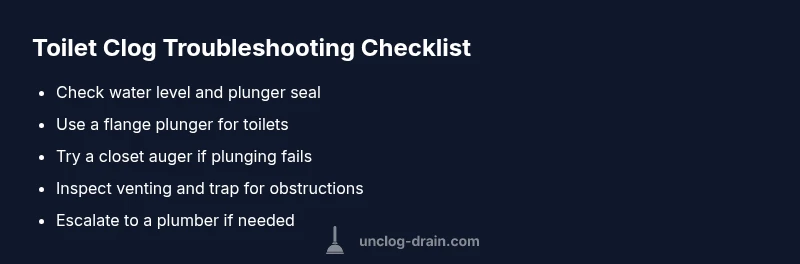
Start with the symptom: water rising, slow drainage, or partial flow after plunging. If water remains high but begins to drop after repeated plunges, you might be dealing with a partial clog that is slowly moving—or a deeper blockage that will require an auger. If you hear gurgling from the drain or vent, this hints at venting issues. For each symptom, follow the proposed path: 1) retry with a tight seal and longer, controlled plunges; 2) use a closet auger to reach deeper; 3) inspect the trap and flange for obstructions; 4) check the vent stack for blockages; 5) consider professional help if the problem persists. This diagnostic flow helps prevent unnecessary force and potential damage.
Tools, Safety, and Setup
Gather your safety gear: gloves and eye protection. Have a flashlight, a bucket, and old towels ready. Place a stiff trash bag to seal waste drips. If you remove the tank lid, be careful with the float arm to avoid running the valve. Turn off the water supply at the shutoff valve behind the toilet to prevent overflow. If you have a large water flush, use a sponge to remove excess water to keep the area clean. With the right setup, you minimize splashback and protect your floor.
Step-By-Step Troubleshooting Path
This section outlines a practical, hands-on sequence to tackle the most common cause of post-plunge stalls. Start with the simplest fix and escalate only as needed. Remember to work safely and pause if anything feels risky. If the blockage remains after these steps, professional help is the safest option. Refer to the dedicated step-by-step guide below for precise actions and tips.
Prevention and Maintenance to Avoid Future Clogs
After you clear a stubborn toilet, take a moment to prevent recurrence. Use only the amount of toilet paper you need, avoid flushing wipes or non-flushables, and inspect the drain area regularly for signs of buildup. A yearly maintenance check—especially in homes with older pipes—can catch slow-developing clogs before they become emergencies. Simple habits, like flushing with plenty of water and keeping foreign objects away from the bowl, go a long way toward keeping your toilet flowing smoothly.
Steps
Estimated time: 60-90 minutes
- 1
Re-Inspect the Toilet and Water Level
Look for an overly full bowl, a stuck float, or a misaligned flapper. Confirm the water line isn’t so high that another plunge would overflow. If you can, turn off the shutoff and carefully remove the tank lid to inspect components without forcing a flush.
Tip: Keep pets and kids away; this is when splash risk is highest. - 2
Reattempt a Controlled Plunge
Attach a proper flange plunger, seal the drain completely, and deliver slow, steady thrusts. Pause briefly between thrusts to observe movement. Do not slam the plunger; controlled pressure breaks up the blockage rather than pushing water everywhere.
Tip: A consistent rhythm beats quick, forceful pushes. - 3
Try a Closet Auger for Deeper Reach
Insert the auger into the drain and rotate clockwise as you advance. Push gently to avoid bending the toilet throat, then retract and pull debris back into the bowl. Repeat until the path starts to clear.
Tip: Lubricate the cable and keep hands away from the paddle end. - 4
Check the Trap Arm/Flange for Obstructions
Shine a flashlight and look for visible debris around the flange or in the trap arm. Remove any objects you can safely reach with pliers. Do not force past resistance; it can cause damage.
Tip: If the obstruction is out of reach, stop and call a plumber. - 5
Assess Venting and Drain Flow
If you hear gurgling or notice slow drainage in other fixtures, venting could be the issue. A blocked vent stack often requires professional access from the roof or attic.
Tip: Avoid DIY vent fixes if you’re unsure about roof work. - 6
Consider Safer Chemical Options
If you choose to attempt cleaners, use only products labeled for toilets and never mix different cleaners. Follow the label instructions and ventilate the area. Do not rely on chemicals as a primary fix for deep clogs.
Tip: Never mix chemicals with bleach or ammonia. - 7
Call a Pro If Needed
If multiple methods fail, or you notice persistent backups or smells, professional service is the safest route. A plumber can assess the sewer line, venting, and trap with professional tools.
Tip: Document what you’ve tried to save time and money. - 8
Finalize and Clean Up
Dispose of waste safely, disinfect tools, and wash your hands thoroughly. Restore water supply and test the toilet with a normal flush to ensure the blockage is fully cleared.
Tip: Sanitize the area to prevent germs.
Diagnosis: Toilet won't start or drains slowly after plunging
Possible Causes
- highPartial deeper clog located beyond the trap
- mediumVent stack blockage causing poor drainage
- lowObstruction in the trap arm or flange
Fixes
- easyRetry with a tight-seal plunge and longer strokes
- easyUse a closet auger to reach deeper into the drain
- mediumInspect venting and remove obvious blockages if accessible
- mediumClear the trap area and remove visible obstructions near the flange
- hardIf unresolved, contact a licensed plumber for deeper inspection
Common Questions
Why doesn't plunging clear a clog if water still rises?
Rising water typically means the blockage is deeper or only partially cleared. Plunging can move debris but may not remove the blockage entirely. Try a closet auger and check venting before escalating.
If water keeps rising, the clog is likely deeper; use a deeper tool or check ventilation before calling a pro.
Can I safely use chemical drain cleaners after plunging?
Chemical cleaners can be hazardous and may not reach deep clogs. If you use them, follow the label exactly and never mix with other cleaners. Safer alternatives are plungers and augers.
Chemicals can be dangerous and often don’t fix deep clogs; follow the label and consider mechanical methods first.
What is a toilet auger and how do I use it safely?
A toilet auger is a flexible snake designed for toilets. Insert it into the drain while turning slowly, push with gentle pressure, and reel back to pull out the blockage. Stop if you feel solid resistance and consider professional help.
A toilet auger helps reach deeper clogs; use slow turns and don’t force it if you meet strong resistance.
Is it safe to flush after a failed plunge?
If the toilet is still blocked, flushing can cause overflow. Wait until you’re confident the blockage is cleared or use only minimal flushes to test progress. When in doubt, avoid another flush.
Don’t keep flushing when it’s still clogged; it can overflow and create a bigger mess.
When should I call a plumber for a stubborn clog?
Call a plumber if multiple methods fail and the blockage persists after a thorough attempt. Signs like sewer smells, backups in other fixtures, or gurgling indicate a professional assessment is needed.
If several methods don’t work and you notice backups or smells, call a plumber.
How can I prevent future toilet clogs?
Prevent clogs by flushing only toilet-safe items, using an appropriate amount of toilet paper, and performing regular inspections. Consider a yearly drain check to catch slow buildups before they block.
Use the right toilet paper, avoid flushing non-flushables, and inspect weekly for minor buildup.
Watch Video
Key Points
- Start with a second, controlled plunge before tools.
- Deeper clogs may require a closet auger or pro help.
- Check venting and trap for other causes of slow drainage.
- Avoid aggressive chemicals as a primary fix.
- Document attempts and maintain safety measures.