What to Do If a Toilet Won’t Unclog: A DIY Guide
Learn practical, safe steps to unclog a stubborn toilet using plunger, auger, and DIY methods. This Unclog Drain guide explains what to do if toilet won't unclog and when to call a pro.


To fix a toilet that won't unclog, start with a plunger to generate suction, try a toilet auger for deeper jams, and clear the rim jets with a wire or toilet brush. If water rises, stop, avoid overfilling, and consider safe chemical alternatives or professional help. This guide walks you through each step.
What to do if toilet won't unclog: quick assessment and signs
According to Unclog Drain, most toilet clogs are caused by tissue, toilet paper buildup, and objects that get lodged in the trap or bend of the drain. Before you reach for tools, take a moment to assess the situation. Look to see whether the water level is near the rim and rising, or if the bowl is simply slow to drain. If multiple fixtures are affected or you detect a sewer smell, this may indicate a bigger plumbing or sewer issue. If water stays high but does not overflow, you still have a blockage somewhere between the bowl and the main line. This quick assessment helps you set realistic expectations for the fix and avoids unnecessary mess.
Safety and prep before you begin
Safety comes first when dealing with a toilet clog. Put on rubber gloves and the oldest, thickest towel you have to protect floors and clothing. Clear pets and kids from the bathroom. Place a bucket and a few old towels nearby for spills. If you anticipate overflow, turn off the toilet water supply at the valve behind the toilet and flush briefly to remove some water from the bowl. Keep a flashlight handy to inspect under the rim and inside the trap. While you can consider chemical cleaners in some cases, mechanical methods are safer for porcelain and sewer lines. This is especially important for households with septic systems or older pipes. Throughout this guide, remember that patience and cleanliness reduce mess and risk.
Core methods: plunger and auger basics
The plunger is your first line of attack for a typical toilet clog. A flange or toilet-specific plunger creates a better seal and more forceful suction. Use smooth, deliberate strokes rather than brute force. If the plunger doesn’t move the clog after 15–20 seconds, pause, recheck the seal, and try again. For more stubborn blockages, a closet auger (toilet auger) can reach past the rim and break up the obstruction. Operate the auger slowly, feeding the coil into the drain while turning the handle to avoid kinking. If you feel resistance, don’t force it—back off and reassess to avoid scratching the porcelain or damaging the pipes. Safety first, especially when children or pets are nearby.
Using a toilet auger effectively
A toilet auger is designed to navigate the toilet trap and bend without harming the porcelain. Begin by inserting the auger head into the toilet bowl and gently extend the cable until you meet resistance, then rotate the handle to work the obstruction loose. Stop if you feel a sharp pinch or you can’t advance the coil. In some cases, the clog is caused by a foreign object that a gloved hand can carefully retrieve with pliers after the auger loosens the line. After you remove the obstruction, slowly retract the auger and flush to test flow. If the flush remains weak, repeat in short cycles and verify the water level remains controlled.
When to avoid DIY and call a professional
If water relentlessly rises toward the rim, if you hear gurgling in other drains, or you can’t get the blockage to budge after several attempts, it’s time to seek help. Do not force the auger or plunger past what feels comfortable; you can damage the seal or the fixture. Also, avoid mixing chemical drain cleaners with your manual methods, as this can create hazardous fumes and damage the pipes. If you have a septic system, aggressive chemical treatments can upset the balance and cause more problems. When in doubt, a licensed plumber can diagnose whether the issue is a local clog, a vent issue, or a sewer line problem. This is a crucial step to prevent water damage and contamination.
Maintenance to prevent future clogs
Prevention is better than emergency fixes. Regularly inspect the toilet area for signs of wear or leaks. Consider using a toilet-safe cleaning routine that doesn’t degrade seals. Avoid flushing non-flushable items like wipes, sanitary products, paper towels, or excessive toilet paper. If you have a history of clogs, a small amount of enzyme-based cleaner used per manufacturer directions can help maintain a clear drain, but never rely on chemical cleaners as a primary solution. Proactive maintenance reduces the likelihood of future clogs and saves time and money in the long run.
Troubleshooting tricky scenarios
Some clogs are not in the bowl but in the horizontal drain line or vent system. If the water level only rises after a flush but does not drain, the issue may be deeper in the plumbing or a blocked vent. In such cases, you might notice slow drainage in other sinks or tubs as well. If you’re dealing with recurring clogs despite using a plunger and auger correctly, this can indicate a more complex problem that warrants a professional assessment. The Unclog Drain team recommends scheduling a plumber visit to avoid more severe damage and ensure a proper diagnosis.
Tools & Materials
- Plunger (cup or flange)(Choose a toilet-specific plunger with a flange for a better seal and effective suction)
- Toilet auger (closet auger)(A rigid auger designed for toilets; avoid compacted drain snakes not intended for toilets)
- Rubber gloves(Protect hands from waste and bacteria)
- Old towels and a bucket(Contain spills and keep the work area clean)
- Flashlight(Inspect under the rim and inside the trap for obstruction)
- Pliers or a small grabber(Retrieve visible objects after loosening the clog)
- Enzyme-based cleaner (optional)(Safer for septic systems; not a first-line fix)
Steps
Estimated time: 60-90 minutes
- 1
Assess and prep
Clear the area, lay towels, and put on gloves. If the water is about to overflow, shut off the supply valve behind the toilet and flush once to lower the bowl level. This creates a safe workspace and reduces splashes during the fix.
Tip: Having a dry, clean floor makes it easier to detect leaks and keeps cleanup quick. - 2
Try the plunger correctly
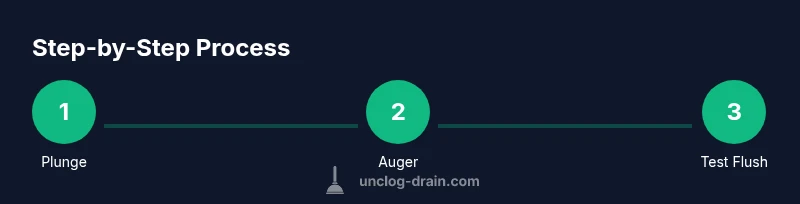
Place the plunger over the drain opening to form an airtight seal. Use firm, vertical strokes without lifting the seal. After 15–20 seconds of pressure, pause to see if the water level drops. Repeat if necessary.
Tip: Ensure the plunger is fully submerged; partial immersion reduces suction. - 3
Employ the toilet auger
Insert the auger head into the bowl, extend it gently until resistance stops, then rotate the handle to work the blockage free. Stop if you encounter strong resistance and reevaluate.
Tip: Keep the auger straight to avoid kinking and to maximize traction on the clog. - 4
Test flush and monitor
After each attempt, slowly flush to test flow. If water rises again, stop and reassess before the next attempt. Do not repeatedly force the system beyond comfort level.
Tip: Be prepared to bail out excess water with a cup to prevent overflow. - 5
Address vent and deeper issues
If the clog persists and you suspect a vent block or deeper sewer problem, stop DIY attempts and consider professional evaluation. This protects your system from pressure buildup and damage.
Tip: Avoid using aggressive chemicals that can react or vent fumes in closed spaces. - 6
Clean up and sanitize
Disinfect tools and surfaces after completing the fix. Wash gloves and hands thoroughly, and launder towels separately. Return valves to their normal position if you shut them off.
Tip: Sanitizing prevents cross-contamination and keeps the bathroom safe for everyone.
Common Questions
Can I use chemical drain cleaners in a toilet?
Chemicals can damage porcelain and pipes and may create dangerous fumes. Mechanical methods like a plunger or toilet auger are safer first-line options.
Chemicals can damage your toilet and pipes. Start with a plunger or auger instead.
How long should I wait between plunging attempts?
Give the plunger time to generate suction, pause, and re-seat before retrying. If there’s no progress after 3–5 cycles, move to an auger.
Give it a few seconds between attempts and switch to an auger if nothing changes after several tries.
What’s the difference between a plunger and a closet auger?
A plunger uses suction to dislodge clogs near the drain. A closet auger physically extends into the trap to reach deeper blockages.
The plunger creates suction; the auger reaches deeper blocks.
When is it time to call a professional?
If water keeps rising toward the rim after attempts, if you suspect a vent block, or if the clog recurs repeatedly, a licensed plumber is recommended.
Call a professional if the toilet continues to clog after several attempts or you suspect deeper issues.
Could a clogged toilet indicate a septic system issue?
Yes, persistent clogs, especially with multiple fixtures, can signal septic or main sewer problems that require professional evaluation.
Yes, persistent issues can hint at septic or sewer problems.
Are there safety risks I should watch for?
Yes—watch for slipping, splashes, and chemical fumes. Always wear gloves and keep children and pets away during DIY fixes.
Watch for splashes and fumes; wear gloves and keep kids away.
What should I sanitize after finishing the fix?
Disinfect the bowl rim, auger, plunger, and surrounding surfaces. Wash hands thoroughly and launder towels separately from other laundry.
Sanitize all tools and surfaces; wash up afterward.
Watch Video
Key Points
- Start with proper plunger technique
- Use a toilet auger for deeper clogs
- Shut water off if overflow risk appears
- Avoid harsh chemical cleaners in toilets
- Call a pro if DIY fixes fail or signs of bigger problems appear