What to Do If a Toilet Overflows: Quick Steps
Learn fast, safe steps to stop a toilet overflow, contain spills, and restore sanitation. This Unclog Drain guide covers immediate containment, tool prep, step-by-step unclogging, and prevention.


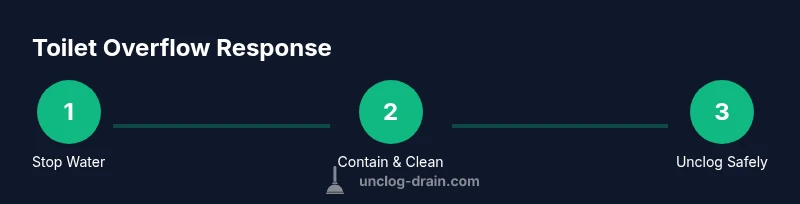
What you will do is stop the flow, contain the mess, and begin safe unclogging. Key requirements: shut off the water supply, gather PPE and towels, then attempt a plunger or toilet auger. If water rises or the clog persists, call a professional.
What to know about toilet overflows and safety
A toilet overflow is more than a messy nuisance; it can expose you and your family to wastewater with germs and contaminants. The first step is safety. Wear gloves, eye protection, and a mask if you have one, and avoid mixing cleaners that release dangerous fumes. According to Unclog Drain, keeping the bathroom door closed and ventilating the space reduces the spread of contaminants. The phrase what to do if clogged toilet overflows should begin with a calm, methodical plan. Do not flush again, and do not pour chemical cleaners into a bowl that’s already overflowing—these can whip up dangerous fumes or create a bigger blockage. Remember: quick, deliberate action minimizes damage and cleanup time.
Quick containment: stop the spread of wastewater
Containment buys you time. Start by turning off the toilet’s water supply valve to stop new water from entering the bowl. Place towels, old rags, or a mop around the base to absorb liquid and create a dam between the bathroom and other areas. Use a bucket to capture water and disposable bags for soiled towels. Close the bathroom door to limit access, and if you have multiple fixtures, shut their water supply as well until the area is secure. This minimizes contamination and makes cleanup safer and faster.
Tools and supplies you’ll want on hand
Before you dive into unclogging, gather PPE and cleanup supplies: rubber gloves (nitrile preferred), eye protection, disposable towels, a sturdy plunger with a flange, a toilet auger (snake), a mop bucket, disinfectant, and sealable plastic bags for waste. Keep a flashlight handy in case visibility is reduced. Have extra towels or rags ready for soaking up water as the bowl drains. Sanitation is essential, so prepare a bleach-free disinfectant suitable for bathroom surfaces and always wash hands thoroughly after handling contaminated materials.
Step-by-step approach to plunging and augering safely
First, place the plunger over the drain opening with a tight seal and give several brisk, full-length pushes to create pressure that can loosen the clog. If the plunger alone doesn’t clear the blockage after 20-30 seconds of steady work, insert the toilet auger slowly into the drain and rotate the handle to dislodge the clog. Avoid forcing the tool or applying excessive torque, which can damage the porcelain. If water continues to rise after attempting these methods, stop and assess the need for professional help. Persistence is important, but safety and equipment limits come first.
When to escalate: recognizing persistent clogs and rising water
If the water level continues to climb, or if plunging and augering fail after several minutes of effort, don’t push through the risk of overflow. Rising water can indicate a sewer backup or a deep clog that requires specialized equipment. In Unclog Drain’s experience, many cases benefit from a licensed plumber’s expertise to prevent wastewater exposure and structural damage. Document your actions and the time you began, as this helps professionals diagnose the problem quickly.
Cleaning, sanitation, and aftercare
After the clog is cleared, flush once to verify flow, then run the sink and shower to confirm there’s no residual backup. Disinfect all touched surfaces with a bathroom-safe cleaner and wipe down tools before storing them. Launder or replace towels that contacted wastewater in hot water with an appropriate sanitizer. Bag and seal contaminated items and dispose of them in outdoor trash, away from living spaces. Finally, ventilate the bathroom until the area smells clean and sanitary again.
Professional help: when to call and what to expect
If you cannot restore normal flow with plungers and augers, contact a licensed plumber. A professional can remove the clog deeper in the line and check for sewer line issues. Expect a diagnostic visit to include a camera inspection or inspection of the main sewer line in some cases. The Unclog Drain team emphasizes prompt professional involvement when backups recur or when multiple fixtures are affected.
Prevention: simple steps to reduce future clogs
To prevent future overflow situations, avoid flushing large quantities of paper towels, wipes, or non-flushable items. Use a bathroom trash bin for disposable items and consider regular drain maintenance like gentle, enzyme-based cleaners that break down organic material rather than harsh chemical agents. Regularly check the toilet wax ring and seals for leaks. Using a plunger or auger instinctively is good, but consistent maintenance reduces the likelihood of urgent calls.
Myths vs. facts: common misconceptions debunked
Myth: Chemical clog removers dissolve all clogs. Fact: Many clogs are caused by solid waste or non-flushables that chemicals can’t break down; they can also damage pipes and fixtures. Myth: A backup is always a sign of a broken sewer line. Fact: Most residential clogs are localized in the toilet or drain line and can be addressed with proper plunging or snaking. The key is to act quickly and safely to minimize exposure and damage.
Tools & Materials
- Rubber gloves (nitrile preferred)(Long enough to protect wrists; avoid latex if you have a latex allergy)
- Eye protection(Goggles or face shield to guard against splashes)
- Disposable towels or old rags(For absorption and spill containment)
- Plunger with flange(Rigid cup and flange for a tight seal)
- Toilet auger (plumber’s snake)(Useful for deeper clogs; handle with care)
- Mop bucket or sealable container(Contain and carry wastewater safely)
- Disinfectant bathroom cleaner(Choose EPA-registered product)
- Trash bags (strong, sealable)(For contaminated towels and wipes)
- Flashlight or headlamp(Improves visibility in low light)
- Squeegee or spatula(For lifting standing water if needed)
- Waste disposal container(Keeps waste contained during cleanup)
Steps
Estimated time: 60-90 minutes
- 1
Turn off the water supply
Locate the shutoff valve behind the toilet or on the wall. Turn the valve clockwise until it stops to stop more water from entering the bowl.
Tip: If the valve is stiff, use pliers carefully; do not force it and risk breaking the pipe. - 2
Contain the spill with towels
Spread towels around the base to absorb water and place a bucket to catch overflow. Keep doors closed to prevent spreading wastewater to other rooms.
Tip: Use multiple towels and replace as soon as they become saturated. - 3
Scoop out excess water
Use a sponge or towels to remove water from the bowl, wringing into a bucket. This reduces the height of the overflow and improves access for plunging.
Tip: Wear gloves; keep a separate rag for clean areas to avoid cross-contamination. - 4
Plunge with care
Position the plunger to seal the drain; push and pull with steady pressure for 20-30 seconds. Do not yank or break the seal.
Tip: If the water doesn’t move, try a few more cycles before stopping. - 5
Use a toilet auger if needed
Gently insert the auger and turn the handle to dislodge the clog. Do not force it hard against the rim.
Tip: Retract slowly if resistance increases to avoid damaging the porcelain. - 6
Test the flush
Slowly restore water supply if the blockage clears. Flush once to verify proper flow; watch for any signs of backup.
Tip: If backup recurs, stop and reassess; repeated attempts may worsen the problem. - 7
Sanitize and disinfect tools
Clean the plunger and auger with disinfectant after use. Wipe down all surfaces that contacted wastewater.
Tip: Avoid cross-contamination by keeping used tools separate from clean items. - 8
Dispose of waste safely
Bag contaminated towels and wipes and seal before disposing in outdoor trash. Do not flush the soiled items.
Tip: Wash hands thoroughly with soap and water after handling waste. - 9
Plan prevention
Adopt routine maintenance: avoid flushables, run water after toilet use, and consider enzyme cleaners to reduce buildup.
Tip: Keep a small trash can in the bathroom for items that shouldn’t be flushed.
Common Questions
What should I do first when a toilet overflows?
First, shut off the toilet’s water supply to stop more water from entering the bowl. Then contain the spill with towels and start cleanup.
First, shut off the water to stop more water from coming in, then contain the spill with towels and begin cleanup.
Can I use chemical drain cleaners to fix a clog?
Chemical drain cleaners are not recommended for toilets; they can damage the porcelain and pipes and may not reach the clog. Plungers or a toilet auger are safer first steps.
Chemicals aren’t usually safe for toilets; they can damage the porcelain and pipes. Use a plunger or an auger first.
When should I call a professional?
Call a professional if plunging and snaking don’t clear the blockage, if the water backup involves multiple fixtures, or if you notice sewer smells or gurgling sounds.
Call a plumber if plunging doesn’t fix it, or if more fixtures back up or you smell sewer gases.
How can I prevent future toilet clogs?
Avoid flushing items other than waste and toilet paper, use a trash can for non-flushables, and perform regular maintenance with enzyme cleaners.
Don’t flush non-flushables, use a trash can, and do regular maintenance with safe cleaners.
Is it safe to flush after the overflow stops?
If the clog is cleared and the drain is flowing smoothly, a single test flush can confirm normal operation. Do not repeatedly flush if you’re unsure.
If it’s clear and the water runs smoothly, you can flush once to test. Don’t flush repeatedly if unsure.
Watch Video
Key Points
- Turn off water immediately to stop the flood.
- Contain spills with towels and a bucket before unclogging.
- Use a plunger first, then a toilet auger if needed.
- Sanitize tools and dispose waste properly after cleanup.
- Prevent future clogs with mindful flushing and regular maintenance.