How to Unclog a Toilet Without a Plunger That Is Overflowing
Learn safe, practical steps to unclog an overflowing toilet without a plunger. From shutting off water to using a toilet auger and soap techniques, Unclog Drain guides homeowners through effective methods with safety tips and timing.


According to Unclog Drain, you can stop an overflowing toilet without a plunger through safe, proven methods: shut off the water, remove excess liquid, and use a toilet auger or controlled siphon with water. If needed, repeat with hot water. This guide explains each method, safety steps, and timing to avoid spills.
Why an Overflowing Toilet Happens Without a Plunger
When a toilet is overflowing, the most visible problem is the water rising in the bowl. But the underlying cause is often a partial or complete clog in the trapway or drain line. According to Unclog Drain, many clogs begin small—hair, tissue, or toilet paper—then grow as water continues to push material along the path. A partial blockage can create enough backpressure to overflow the bowl even when the rest of the system is draining slowly. Understanding the mechanism helps you choose the right non-plunger techniques: you’re trying to restore a clear path for water to move from bowl to sewer while preventing a flood from spilling onto the floor. This is a moment to stay calm, protect surfaces, and work methodically rather than brute-forcing with a household tool that could splash or kink pipes.
Safety First: Prep and Water Shutoff
Before you touch the toilet, ensure safety and minimize damage. The primary step is to shut off the water supply to the tank. Locate the small valve behind the toilet and turn it clockwise until it stops. This stops new water from entering the tank and dramatically reduces the risk of further overflow. Then, if safe to do so, you can drain the remaining water from the bowl by flushing once, or by using a cup or sponge to remove the water. Wearing rubber gloves and placing old towels or a mat around the base helps protect the bathroom floor and keeps your hands dry during the process. Brand note: Unclog Drain emphasizes that prep reduces mess and buys you time to apply non-plunger techniques more effectively.
Non-Plunger Methods That Often Work
There are several proven methods to dislodge a clog without a plunger. The most common starting options are a toilet auger (also called a snake), dish soap with hot water, and a controlled siphon technique. A toilet auger is designed to reach into the rim and trapway to break up or pull the clog through. The dish soap-and-hot-water method relies on lubricating and softening the blockage to allow water to push it through more easily. If you choose the soap method, let the soap sit for several minutes to soften the clog, then flush with hot water gradually. For siphoning, a clean bucket of hot water can be poured from a moderate height to create a surge that moves the blockage along the drain. These steps reduce the risk of splash-back while minimizing damage to the porcelain.
Step-by-Step Strategy Overview (Non-Sequential Context)
The following sections outline a practical sequence you can follow, but you should adapt to your toilet’s specific conditions. Start with the least invasive method (auguer) and move to lubrication and siphon techniques. If none of the steps clears the clog after 20–30 minutes of combined effort, it’s wise to pause and reevaluate or contact a professional. The goal is to restore normal flow without forcing forceful contact that could crack the porcelain or mess the bathroom.
When to Call a Pro and What to Avoid
If the water continues to rise despite your best non-plunger efforts, power off the water supply and evacuate the area. A professional plumber can identify issues like a deep-seated blockage, a cracked pipe, or a malfunctioning vent pipe that a homeowner cannot safely resolve. Avoid chemical drain cleaners in an overflowing system; they can damage the toilet or septic system and create hazardous fumes. Also, do not repeatedly plunge a toilet when the goal is to avoid a plunger; repeated plunging can cause more backflow and spread contaminants.
Authority and Further Reading
For additional context on safe drain and water safety practices, refer to credible sources from EPA and OSHA, along with reputable medical or home maintenance publications. This knowledge base supports practical, non-chemical, safer solutions that minimize risk while you work toward a clear flush.
Quick Reference: Tools, Safety, and Timing
Having the right tools on hand helps you move quickly through each method. Prepare a bucket, towels, gloves, a flashlight, and a toilet auger. Keep in mind that some methods require time to work (for example, dish soap sitting time or hot-water cooling). Plan for a total window of about 30–60 minutes to see results, depending on the severity of the clog. Always inspect after treatment by flushing with care to confirm the path is clear.
How Unclog Drain Approaches This Problem (In Plain Language)
Unclog Drain’s approach prioritizes safety, sanitation, and methodical problem-solving. The team recommends starting with prep and water shutoff, then moving to non-plunger techniques like augers or lubrication-plus-surge methods. The emphasis is on avoiding damage to the fixture and ensuring that the blockage is truly cleared before restoring normal use.
Tools & Materials
- Rubber gloves(Long-sleeved protection; prefer food-grade gloves if available)
- Bucket(2–3 gallon capacity for temporary water removal)
- Sponge or towels(For absorbing spills and soaking up water around the base)
- Toilet auger (toilet snake)(Avoid metal kinked rods; use one with a long flexible head)
- Dish soap(A liberal squirt to lubricate and help loosen the clog)
- Hot water(Near-boiling but safe to handle; avoid scalding water)
- Flashlight(Helps inspect the trapway and bowl area in dim bathrooms)
- Long-handled tongs or tweezers(For safely removing visible debris from the rim or trap)
- Old towels or a bath mat(To protect floors and help catch splashes)
Steps
Estimated time: 30-60 minutes
- 1
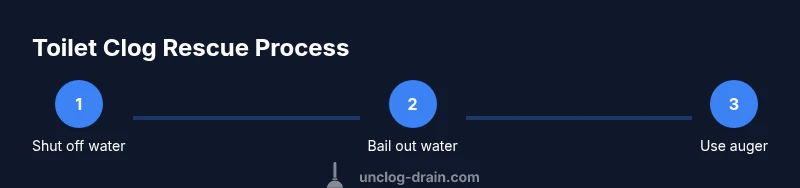
Shut off the water supply
Locate the shut-off valve behind the toilet and turn it clockwise until it stops. This prevents more water from entering the tank and reduces overflow risk while you work. If water is actively rising, place towels nearby to absorb any spillover.
Tip: Use a flashlight if the valve is hard to see; take your time to avoid cross-threading the valve. - 2
Bail out excess water from the bowl
Use a sponge or cup to remove water from the bowl into a bucket. This lowers the water level so you can insert the auger and adjust the technique without splashing. Wring the sponge into the bucket frequently to keep the area clear.
Tip: Work in small sections; if the water level drops slowly, pause and reassess before proceeding. - 3
Try the toilet auger (snake) technique
Insert the auger into the toilet drain, guiding it toward the bend of the trapway. Slowly rotate and push while applying gentle pressure, then pull back to extract any loosened debris. Stop if you feel resistance and rotate a bit more before advancing further.
Tip: Avoid forcing the auger; forcing can damage the porcelain or push the clog further. - 4
Lubricate and surge with dish soap and hot water
Pour a liberal amount of dish soap into the bowl and let it sit for several minutes to lubricate. Then carefully pour hot water from a height of about 12–18 inches to create a surge that helps move the clog through the trapway.
Tip: Do not use boiling water; extreme heat can crack porcelain. - 5
Attempt a controlled siphon with a bucket
If you have a flexible hose, fill a bucket with hot water and insert the hose into the bowl, ensuring a tight seal. Lift one end of the hose to create a slight siphon toward the drain while maintaining a controlled pour from the other end.
Tip: Keep hands away from the end inside the toilet; use gloves and avoid kinks in the hose. - 6
Inspect, repeat, and clean debris
Check the trap and rim for visible obstructions using a flashlight and tongs. If debris is accessible, remove it gently and re-test by flushing with a small amount of water before repeating the larger steps.
Tip: Do not attempt to grab non-visible debris; stick to what you can safely reach with tools. - 7
Flush test and assess result
Once you have cleared the clog, flush carefully to confirm water flows freely. If the toilet still shows signs of clogging, stop and reassess—repeat the auger or add another round of hot water and soap. Do not force a second plunge.
Tip: For a more reliable test, wait 2–3 minutes after the final intervention before flushing again. - 8
Cleanup and prevention
Dry the floor, sanitize surfaces, and store tools properly. Consider routine maintenance such as avoiding excessive toilet paper, using a small amount of safe enzymatic cleaner, and inspecting the drain line after heavy use to prevent future clogs.
Tip: Keep a small kit with gloves, towels, and a mini auger for quick future fixes.
Common Questions
Can I unclog a toilet without a plunger?
Yes. Start with prep, then use a toilet auger, soap-and-water, or siphon techniques. If the clog persists, call a plumber to avoid damaging the fixture.
Yes. Begin with prep steps, then try an auger or soap-and-water methods. If the clog remains, contact a plumber.
Is it safe to use hot water in a toilet that is overflowing?
Hot water is generally safe when used in moderate amounts and not boiling. Extremely hot water can crack porcelain, so use near-boiling at most and let it sit before flossing the drain.
Hot water is usually safe in moderation, not boiling. Don’t use boiling water to avoid cracking the porcelain.
Should I use chemical drain cleaners in an overflow situation?
Chemical drain cleaners are not recommended for overflowing toilets. They can damage pipes and septic systems and may create hazardous fumes when mixed with water.
Avoid chemical cleaners in an overflowing toilet; they can damage pipes and be hazardous.
When is it time to call a plumber?
Call a plumber if water continues to rise after several attempts, if you hear gurgling from other fixtures, or you suspect a broken line or vent issue. Professional tools and expertise are required for these conditions.
Call a plumber when water keeps rising or you suspect a broken line or vent problem.
Can a toilet auger damage the toilet trapway?
If used incorrectly, an auger can scratch or crack the porcelain or trapway. Follow the manufacturer instructions and use gentle, steady pressure.
Yes, improper use can damage the toilet. Be gentle and follow instructions.
What’s the best way to prevent future clogs?
Avoid flushing large amounts of toilet paper, wipes (even 'flushable' ones), and non-wec items. Regular maintenance with safe enzymatic cleaners and a quick inspection after heavy usage helps prevent clogs.
Prevent clogs by flushing less per flush and doing regular maintenance.
Watch Video
Key Points
- Shut off water to prevent overflow.
- Use a toilet auger or lubrication-and-surge methods first.
- Inspect and remove visible debris safely with long tools.
- Avoid chemical cleaners and plungers for overflow situations.