What Happens When You Can't Unclog a Toilet: Troubleshooting Guide
Urgent, step-by-step guidance for diagnosing and fixing a toilet that won't unclog. Learn common causes, safe fixes, and when to call a pro today.


Most likely, the blockage sits deeper in the drain line or there is a partial sewer backup. Quick fixes include stopping flushing, using a flange plunger with steady, direct pressure, and trying a toilet auger if plunging fails. If multiple fixtures back up or water rises, stop and call a professional. Avoid chemical drain cleaners as they can damage seals and septic systems.
What happens when a toilet can't unclog
A toilet that won’t unclog is more than a nuisance—it can become a health and property risk quickly. When a flush fails to move waste, water can rise in the bowl and threaten to overflow onto the bathroom floor. If water continues to back up, sewage can spill into the bowl and leak around the base, creating a messy cleanup and potential mold growth. According to Unclog Drain, repeated attempts to force a clog free with aggressive flushing or chemical cleaners can damage pipes and seals and may push the blockage deeper, making the problem harder to fix. In some homes, a stubborn blockage signals a larger issue in the drainage system or a partial sewer line backup. If you notice a foul odor, gurgling sounds from other fixtures, or backups in sinks or tubs, treat it as a potential sewer problem and respond quickly. Quick, careful actions can protect your home and reduce repair costs, while delaying fixes can turn a modest clog into a major plumbing bill.
Why it happens: common causes
Common causes of a toilet that won’t unclog include a deep blockage sitting in the toilet trap or further down the drain line, a worn or misadjusted flapper or fill valve, and foreign objects or paper that resist standard plunging. A more serious culprit is a partial or full sewer line backup, often caused by tree roots or a heavy influx of waste. Septic systems, if applicable, can also contribute to persistent backups. According to Unclog Drain analysis, recognizing whether the issue is isolated to the toilet or affects other fixtures helps narrow the path to a fix. Being aware of the signs—slow draining, gurgling in multiple fixtures, or backups in the basement drain—lets you act quickly and minimize damage.
Immediate actions you should take before attempting fixes
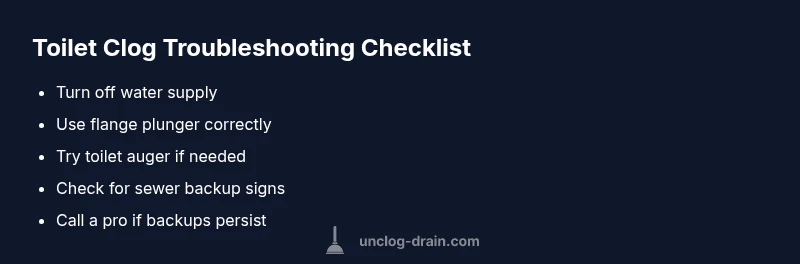
Before you reach for tools, protect yourself and your home. Turn off the toilet’s water supply at the valve behind the bowl to prevent overflow. Place towels or a bucket to catch any rising water. Do not flush repeatedly; this can worsen the overflow. Keep kids and pets away from the bathroom. If the smell of sewer gas is strong, leave the area and ventilate the house. When safe, use a flange plunger with a proper seal and steady pressure, or an toilet auger if plunging doesn’t move the blockage. If the water level is rising or a backup is visible in sinks or tubs, stop and call a professional to avoid flood damage.
Steps
Estimated time: 15-30 minutes
- 1
Turn off water and prep area
Shut off the toilet’s water supply at the valve behind the bowl. Remove excess water with a cup or towel and clear the area around the base so you can work safely.
Tip: Keep a bucket or towels ready; this prevents overflow during fixes. - 2
Use a flange plunger correctly
Create a tight seal over the toilet drain and plunge with controlled, vertical motions. Maintain pressure for 15-20 seconds, then pause and check results.
Tip: Use a dedicated toilet plunger (flange type) for best suction. - 3
Try a toilet auger
If plunging doesn’t move the blockage, gently insert the auger into the drain and rotate to dislodge or hook the clog.
Tip: Do not force the auger; stop if you feel resistance to avoid damaging the porcelain. - 4
Avoid flushing as you test
After each attempt, flush sparingly or push water with a container to see if the clog has cleared without overwhelming the bowl.
Tip: Do not pour chemical cleaners into the toilet—these can cause reactions and damage. - 5
Know when to call a professional
If backups persist after two solid attempts, or if you smell sewer gas, stop and contact a licensed plumber.
Tip: Professional tools like video inspection cameras can locate hard-to-reach blockages.
Diagnosis: Toilet won’t flush or overflows after flushing
Possible Causes
- highDeep clog in the drain line
- mediumWorn flapper or faulty fill valve
- lowPartial sewer line backup
Fixes
- easyTry a flange plunger with proper technique and steady pressure
- easyCarefully use a toilet auger to dislodge the clog
- mediumShut off the water supply and call a pro if backup continues
Common Questions
Why does a toilet still backup after I plunge?
A clog may be deeper in the drain line or the main sewer line, requiring more powerful tools or expert assessment.
A deeper clog or sewer issue often needs a professional inspection.
Are chemical drain cleaners safe for toilets?
Most toilet cleaners can damage components and pipes and are not recommended for routine use. They often fail to remove deep clogs.
Chemicals can harm your system and usually don’t solve deeper blockages.
When should I call a plumber for a toilet clog?
If plunging and probing don’t clear the clog, or backups spread to other fixtures, call a professional.
If you still have backup after trying the fixes, call a plumber.
Can a clogged toilet affect the main sewer line?
Yes, a serious clog in the main line can cause widespread backups in multiple fixtures.
A big blockage can affect the entire home’s sewer system.
What are simple prevention steps after a clog is fixed?
Use drain guards, avoid flushing non-flushables, and don’t pour grease or fat down drains.
Prevent clutter by watching what goes down the drain.
Is septic system involvement a concern?
If you have a septic system, clogs can involve the septic field; follow local guidance and consider professional evaluation.
Septic systems require careful handling—seek expert advice when in doubt.
Watch Video
Key Points
- Turn off the water and stop flushing if overflow starts
- Plungers and augers are your first tools, not chemicals
- If backups persist, call a pro promptly
- Prevent future clogs with regular maintenance