Why Won't My Toilet Unclog? Practical DIY Troubleshooting
Struggling with a stubborn toilet clog? This practical guide from Unclog Drain walks homeowners through common causes, a step-by-step diagnostic flow, and safe fixes to unclog toilets quickly and safely. Learn when to escalate to a plumber.


Most toilets won’t unclog because of a partial blockage, a venting issue, or a trapped trap. Begin with the simplest fixes: plunge with proper technique, then try hot water and dish soap, and re-test. If water continues to back up or won’t drain, advance to an auger or call a professional for safe, effective help.
Understanding why a toilet won’t unclog
Toilets stop draining for a few reasons, and most boil down to everyday use, not a mysterious plumbing fault. According to Unclog Drain, the majority of bathroom clogs start with a partial blockage that slows water flow rather than a complete stop. A venting issue can also disrupt the drain path, especially if the vent stack is blocked or restricted, forcing air into the system and hindering suction. The Unclog Drain team found that many homeowners misjudge the problem, attempting aggressive flushing or chemical helpers when the real culprit is a simple, easily reachable obstruction near the drain or within the trap.
Understanding these basics helps you pick the right fix first, which saves time and reduces the risk of a costly mistake. A calm, methodical approach is your best ally, because most clogs are solvable with tools you already own and a little patience.
Common causes of toilet clogs
Blockage can form from everyday usage, so knowing the typical culprits helps you spot the problem quickly:
- Excess toilet paper or a paper-heavy load that accumulates in the bend of the drain.
- Non-flushable items or wipes that get stuck and form a stubborn barrier.
- Foreign objects inadvertently dropped into the bowl.
- A partially blocked trap or drain line that slows water exit.
- Venting issues (blocked vent stack) that reduce suction and trap air in the plumbing.
Recognizing these causes helps you choose a safe, measured course of action. Remember, progress often comes from addressing the simplest issue first.
Diagnostic checks you can perform safely
Start with low-risk checks before moving to tools:
- Observe water height after a flush. A rising water level can indicate a partial clog rather than a full blockage.
- Listen for gurgling sounds in the drain line, which signal air movement and potential venting problems.
- Check for a faulty flapper or a weak flush that leaves debris behind.
- Inspect the toilet bowl and trap visually (with care, using a flashlight) for obvious blockages.
- If you suspect a vent issue, do not seal or block any vents; vent repair is best left to a pro.
These checks empower you to decide whether a quick plunge will solve the problem or if you should move to a deeper intervention.
Step-by-step fixes you can try at home
Following a logical sequence minimizes mess and maximizes success:
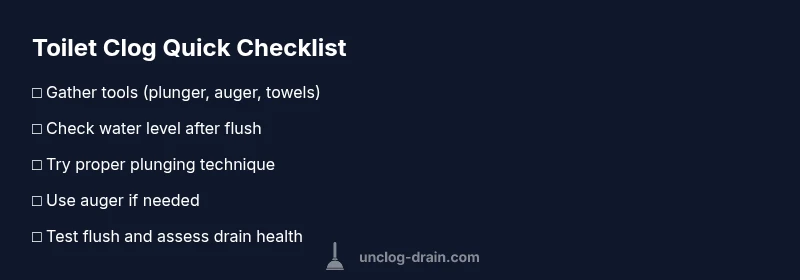
- Gather your tools: flange plunger, toilet auger, a bucket, towels, and gloves. Safety first.
- Step 1: Use a properly fitted flange plunger; place the rim completely over the drain and give firm, vertical, controlled pumps.
- Step 2: If plunging alone doesn’t clear the blockage, add a little hot water (not boiling) and a squirt of dish soap, then re-plunge.
- Step 3: If water still won’t drain, insert a toilet auger into the bowl and gently push until you feel resistance, then rotate to dislodge the obstruction.
- Step 4: Withdraw the auger slowly and test the flush. Repeat if needed, but avoid forcing the tool, which can damage the porcelain.
- Step 5: If the toilet begins to overflow, stop immediately, remove excess water with towels, and call a plumber if the problem persists.
Approach each step deliberately to minimize splash and prevent overflow.
Safety tips and common mistakes
Key safety reminders to keep the repair safe and effective:
- Always wear gloves and eye protection; toilets can harbor bacteria and sharp objects.
- Do not mix chemical cleaners with other products; this can create dangerous fumes or damage plumbing.
- Avoid using heavy force or metal wires that can scratch the porcelain or damage the trap.
- Never overlook an overflowing toilet; turn off the water supply at the valve if needed and seek professional help.
- Keep a towel or mat handy to catch splashes and prevent slips.
Prevention: keep toilets flowing and reduce future clogs
Prevention is easier than replacement. Adopt simple habits to reduce clog risk:
- Use a sensible amount of toilet paper and flush only what’s appropriate.
- Avoid flushing non-flushables like wipes, paper towels, or sanitary products.
- Consider routine maintenance every few months with safe, toilet-friendly cleaners and occasional flushes with hot water.
- Install a basic drain check routine: keep a plunger handy and test the system after tough toilet paper days.
- If you have a main sewer line, monitor for slow drainage in other fixtures; it may signal a broader issue.
When to escalate: professional help and next steps
Some situations require expert intervention:
- If plunging and augering fail after multiple attempts, or if you notice multiple fixtures draining slowly, call a licensed plumber.
- If the toilet continues to overflow or you hear unusual noises from the sewer line, professional assessment is mandatory.
- Persistent venting problems or recurring clogs suggest a deeper drainage or sewer issue that needs specialized equipment.
The Unclog Drain team recommends seeking professional help when basic fixes don’t restore normal function within a reasonable effort window.
Steps
Estimated time: 20-40 minutes
- 1
Gather tools and prep
Assemble a flange plunger, toilet auger, towels, gloves, and a bucket. Clear the area and turn off the toilet valve if you anticipate overflow risk. This reduces splash and keeps the space clean.
Tip: Wear safety gloves and eye protection from the start. - 2
Try a proper plunge
Place the flange over the drain, seal well, and pump with controlled, vertical motions. Maintain a steady rhythm for 15-30 seconds, then pause and test drainage.
Tip: A consistent seal improves suction and effectiveness. - 3
Add hot water and soap
Pour warm (not boiling) water into the bowl with a small amount of dish soap, then attempt another plunge. This can help loosen the clog.
Tip: Work the plunger through the same seal to maximize impact. - 4
Use a toilet auger
Insert the auger into the toilet and gently push, then twist to break through the obstruction. Retract slowly and test the flush.
Tip: Avoid forcing the auger; damage is possible if you push too hard. - 5
Double-check for overflow
If water starts rising toward the rim, stop and remove water with towels, then reassess. Do not flush repeatedly when the risk is high.
Tip: Keep towels ready to catch spills and protect the floor. - 6
Evaluate and decide
If the toilet clears, run a quick flush test. If not, escalate to professional help to avoid water damage or sewage exposure.
Tip: Document steps taken in case you need to describe the issue to a plumber.
Diagnosis: Toilet won't unclog; water backs up after flushing
Possible Causes
- highPartial drain blockage (paper, debris)
- mediumVent stack blockage causing poor drainage
- lowForeign object lodged in trap or drain
Fixes
- easyProperly plunge with a flange plunger
- easyPour warm water with a small amount of dish soap and re-plunge
- mediumUse a toilet auger to clear deeper blockage
- hardIf toilet still won’t drain or overflows, call a licensed plumber
Common Questions
What is the first thing I should try when a toilet won't unclog?
Start with a properly fitted flange plunger, ensuring a solid seal and firm, controlled pumps. If that doesn’t work, proceed to hot water and dish soap, then use a toilet auger as needed.
Begin with a flange plunger to create a strong seal, then escalate if needed.
Can a clogged toilet be a sign of a main sewer line problem?
Yes, slow drainage in multiple fixtures or frequent clogs can indicate a main line problem. Check other drains and consider professional inspection if symptoms persist.
If other drains are slow too, you may have a main sewer issue.
Are chemical drain cleaners safe to use in toilets?
Most toilet-safe cleaners are not recommended for routine use; they can damage porcelain and septic systems. Use mechanical methods first and save chemicals for last.
Chemical cleaners can harm your toilet and plumbing—prefer plungers or augers first.
When should I call a plumber?
Call a plumber if plunging and augering fail after multiple attempts, if water overflows, or if you notice gurgling sounds from the sewer line.
If fixes don’t work after a few tries or it overflows, call a pro.
Why does flushing repeatedly sometimes make it worse?
Repeated flushes can push the blockage deeper or cause water to back up into the bowl, signaling a need for a different approach or professional assessment.
Flushing too often can make the blockage worse; try a different method.
Watch Video
Key Points
- Start with plunging before tools
- Vent issues can mimic clogs
- Toilet auger is safer than harsh chemicals
- Avoid forcing tools into the trap
- Call a plumber if basic fixes fail