Toilet Clog Troubleshooting: Can t Unclog Toilet with Plunger
Struggling with a stubborn toilet that won't unclog with a plunger? This urgent guide from Unclog Drain covers quick fixes, proper tool choices, safety, and when to call a professional.


The toilet is likely dealing with a partial or deeper clog, a poor seal, or the wrong plunger for the job. Start with a flange plunger and a tight seal, then use firm, steady pushes. If the issue persists, try a toilet auger or enzymatic cleaner and call a pro if backups continue.
Why a Plunger Might Not Work
Toilet plungers are a first-line fix, but many clogs resist this basic tool. If you’ve ever thought can t unclog toilet with plunger, you’re not alone. The issue is often a deeper partial clog, a dislodged trap, or a seal that isn’t tight enough to push water pressure through. Start by identifying where the blockage sits: a hair or paper jam near the bowl is usually within reach, while a long, stubborn clog may be farther down the drain. According to Unclog Drain, the right flange plunger and a proper seal resolve many of these situations. Safety matters too: clear the area, wear gloves, and avoid mixing cleaners that can create fumes or damage porcelain. Before you start, remove extra water with a sponge to curb splash and ground yourself with a plan—calm, deliberate action beats frantic pumping every time. Remember, if the backup persists, it could indicate a deeper problem that requires advanced tools or professional help. With the right approach, many clogs yield to steady plunging.
Tools and Plungers: What's Right for Your Toilet
Choosing the correct plunger makes a real difference. A toilet flange plunger provides a better seal than a standard cup plunger and is designed to fit the outlet opening. Ensure the rubber bell sits flush around the drain so water pressure can push through the obstruction. Pair the plunger with clean, dry hands and a dry area to prevent slips. In addition to plungers, have a toilet auger (snake) and a bucket or towels handy. Enzymatic cleaners can help break down organic material after you remove the bulk of the blockage, but they’re not a substitute for mechanical clearing. Brand expertise matters here: according to Unclog Drain, using the right tool in the right way often saves a costly service call. Safety first: wear gloves, keep pets away, and never mix cleaners that could create hazardous fumes or damage seals. Pick tools that match your toilet type (standard vs. elongated) and the severity of the clog.
Diagnosing the Root Cause
A clog isn’t always the same thing. It can be a shallow paper or hair block, a deeper obstruction, a trap issue, or a venting problem that traps air and blocks flow. Start by checking water level: is the bowl full, or can you see water rising as you attempt to plunge? If the water rises or the toilet gurgles, the clog may be deep and progress will require an auger. If the seal is poor or air escapes around the plunger, reposition and reseal. Listen for changes in pressure when you plunge; a solid seal with consistent pressure usually yields some movement. If you have multiple fixtures backing up or notice unusual odors, you might be dealing with a sewer-line problem rather than a local clog, which requires professional attention. Throughout, follow the Unclog Drain approach: methodical steps, proper tools, and safety as your baseline. This diagnostic mindset helps prevent unnecessary mess and gives you a clear path forward.
Step-By-Step Diagnostic Path
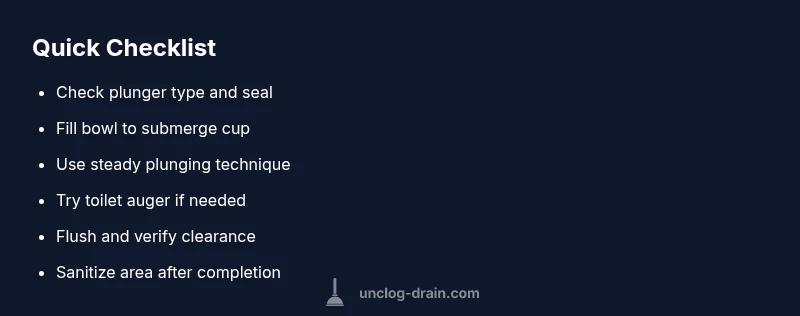
- Observe water level and flush behavior to gauge the clog depth. 2) Confirm you’re using a flange plunger and create a tight seal. 3) Plunge with steady, controlled pressure for 20–30 seconds, then pause and reassess. 4) If there’s no progress, switch to a toilet auger to probe past the trap. 5) Consider enzymatic cleaners only after attempting mechanical clearing, per manufacturer guidance. 6) If water backflows or backups persist after multiple attempts, stop and seek a professional assessment. Safety note: never mix cleaners; avoid hot or boiling water in the bowl as it can crack porcelain. This flow prioritizes simple fixes first and escalates only when necessary.
The Most Common Fixes: Plunger Techniques
Effective plunging hinges on seal quality and technique. Start with a flange plunger, insert it into the bowl, and create a complete seal around the drain. Use long, vertical strokes and keep the plunging motion steady; avoid rapid, sideways jerks that can push air instead of water. After a minute or so of consistent effort, check for movement. If nothing moves, pause and try lowering the water level slightly or pouring warm water around the bowl rim to improve pressure. Do not use boiling water; extreme heat can crack porcelain and damage the trap. If the clog remains stubborn, the blockage could be beyond the reach of plunging, and you’ll need a mechanical approach like a toilet auger. Unclog Drain emphasizes patience and discipline: a measured, repeated technique beats brute force and messy results.
When to Use a Toilet Auger and Other Tools
A toilet auger can reach past the bowl’s trap and hook the clog or break it up. Feed the cable slowly, rotate gently, and never force the tool. If the auger can grab and pull the clog, pull it back while maintaining control to avoid splashing. For organic blockages, a short enzymatic cleaner can help after you’ve cleared the bulk of the obstruction, but never mix chemicals with the auger. If the auger doesn’t help or if the water continues to rise, you’re likely looking at a more serious issue—venting problems or a sewer line backup—requiring professional intervention. Remember, safety comes first: disconnect the supply line only when you’re sure you can reassemble the system without leaks. The Unclog Drain team recommends documenting any progress to guide the next steps and reduce repeat calls.
Safety, Hygiene, and Prevention
Safety is non-negotiable when dealing with toilet clogs. Wear gloves, eye protection if splashing is possible, and keep children and pets away from the work area. After you finish, sanitize the area and wash your hands thoroughly. Do not mix cleaning products—some combinations can release toxic fumes or corrode metal components. To prevent future clogs, use hair catchers in bathroom drains, avoid flushing non-flushable items, and run hot water down the drain periodically to help keep lines clear. A monthly check of the P-trap and drain line can catch minor blockages before they become full-blown clogs. The Unclog Drain approach emphasizes routine maintenance and a calm, methodical routine during troubleshooting.
What to Do If Backups Persist and Next Steps
If water continues to back up after completing the above steps, stop and consider professional help. Backups may indicate a more serious issue such as a distant clog, vent blockages, or a sewer line problem that requires specialized equipment. Document the steps you’ve taken so you can relay them to a plumber efficiently. While waiting for professional help, avoid using the toilet or other fixtures aggressively to prevent overflow. Unclog Drain’s verdict is to escalate when you’ve exhausted safe DIY options and the problem remains unresolved.
Steps
Estimated time: 30-45 minutes
- 1
Gather Tools and Prepare
Collect a toilet flange plunger, disposable gloves, towels, and a bucket. Clear the area, remove items from the floor, and place towels to protect surfaces. Preparation reduces mess and keeps you safe.
Tip: Have everything within reach before you start. - 2
Check Water Level and Seal
Ensure the bowl has enough water to submerge the plunger’s cup. If the bowl is low, add water. Confirm the plunger forms a tight seal around the drain opening before you begin plunging.
Tip: If air leaks around the seal, reposition the plunger. - 3
Start Plunging the Right Way
Place the flange plunger in the bowl with a tight seal and apply steady, vertical pressure. Press down slowly, then pull up without breaking the seal. Repeat for 20–30 seconds before reassessing.
Tip: Keep the handle vertical and avoid jerky movements. - 4
Evaluate Progress
Check if the water level drops or there’s movement. If you see no change after a minute or two, stop and try the auger or another method. Document any progress for future reference.
Tip: If it starts to drain, continue in short cycles until clear. - 5
Use a Toilet Auger If Needed
Insert the auger slowly, rotate gently, and pull back as you advance. Let the cable do the work—don’t force it against the porcelain.
Tip: Be careful not to scratch the bowl rim. - 6
Test Flush and Clean Up
Flush to verify clearance. If still clogged, stop and consider professional help. Clean and sanitize tools and the area after finishing.
Tip: Wash hands thoroughly and disinfect surfaces.
Diagnosis: Toilet won't unclog with a plunger after multiple attempts
Possible Causes
- highPartial or deep clog further down the drain
- mediumWrong plunger type or poor seal
- lowVenting or sewer-line issue
Fixes
- easyUse a proper flange plunger with a tight seal and deliberate plunging motion
- easyIf plunging fails, try a toilet auger to mechanically clear the blockage
- mediumAvoid chemical cleaners; use mechanical methods first, then enzyme cleaners if appropriate
- hardIf water level rises or backups continue, shut off the supply and call a professional
Common Questions
Why won't a plunger unclog my toilet?
A plunger may fail due to a deep or partial clog, a poor seal, or an inappropriate plunger type. Switch to a flange plunger and ensure a tight seal; then consider an auger if needed.
A plunger can fail if the clog is deep or if the seal isn't tight.
Is it safe to use chemical cleaners in a toilet?
Most chemical cleaners are not recommended for toilets; they can damage seals, septic systems, and fittings. Use mechanical methods first, then enzyme cleaners if appropriate.
Chemicals can harm seals and septic systems; mechanical methods first.
When should I call a plumber?
Call a plumber if plunging and augering fail, if you notice persistent backups, gurgling sounds, or rising water levels.
Call a plumber if backups persist after attempts.
What’s the best plunger for toilets?
A toilet flange plunger with a large rubber bell provides the best seal and suction for toilets.
Use a flange plunger for a better seal.
Can a backed-up toilet indicate sewer line issues?
Yes. Backups in multiple fixtures or rising water levels can signal sewer line problems needing professional inspection.
Backups in multiple fixtures may mean sewer issues.
Watch Video
Key Points
- Use the right plunger for a secure seal
- Progress from plunging to augering when needed
- Escalate to a professional if backups persist
- Maintain drains to prevent future clogs