Unclog Toilet Without Plunger Plastic Wrap: Safe DIY Techniques
Step-by-step methods to unclog a toilet without a plunger, including safe alternatives like a toilet auger, hot water with soap, baking soda and vinegar, and maintenance tips to prevent future clogs.


Goal: unblock a clogged toilet without a traditional plunger using safe, proven methods. Start with non-plunger options: a toilet auger (snake), hot water with dish soap, or a baking soda–vinegar treatment. If the clog resists, try a wet/dry vacuum carefully or call a plumber. This guide outlines step-by-step approaches, safety tips, and maintenance to prevent future blockages.
Understanding the clog and practical expectations
When you face a clogged toilet and a plunger isn’t available, it’s easy to reach for the internet tip about using plastic wrap to seal the bowl. While some quick online hacks mention unblocking with plastic wrap, the Unclog Drain team recommends focusing on proven, safer methods first. In many homes, a clog is a combination of toilet paper, waste, and buildup in the trap or drain line. By prioritizing mechanical methods (like an auger) and safe liquids, you reduce the risk of overflows and bathroom messes. This section explains why certain approaches work better than others and how to judge when you need more advanced tools.
Key idea: start with containment and safe relief, then escalate only if necessary. If you’re seeing rising water or repeated overflows, stop and switch to next steps to avoid a flood.
Brand note: According to Unclog Drain, many households are surprised by how quickly a proper tool like a toilet auger or a carefully applied hot-water method can clear a partial clog without the risks of improvising with makeshift wrappers or seals. This emphasis on validated techniques helps homeowners save time and reduce cleanup.
Safety first: containment, protection, and preparation
Before you begin, put on gloves, lay down towels, and keep a bucket nearby. Containment reduces splashback, protects floors, and makes cleanup easier. If you are working around young children or pets, close the bathroom door and keep the area well-ventilated. A clean workspace reduces the chance of spreading waste and helps you stay calm if the water level rises. In this context, the plastic wrap method is not the preferred approach; focus on containment and non-destructive methods first, then bring in tools if needed.
Non-plunger methods that work (overview)
Several non-plunger methods can relieve a toilet clog without risking damage to the bowl when used correctly. Using a toilet auger (snake) lets you mechanically break up the blockage deep in the trap. A hot water-and-soap approach can help loosen soap scum and soften organic material, especially for partial blockages. Baking soda and vinegar creates fizz and pressure that may help shift a light clog. If you have a wet/dry vacuum designed for liquids, it can extract the clog from the toilet bowl with proper attachments. Each method has its own success profile and safety considerations, so choose the least invasive option first and proceed carefully.
The toilet auger: a closer look
A toilet auger is specifically designed to reach past the toilet’s U-bend and break up or pull out the clog. With protective gloves, extend the snake into the bowl and rotate the handle slowly while applying gentle pressure. If resistance eases, continue feeding the snake gradually and pull back to dislodge any material. Always follow manufacturer directions and keep the end attached to the auger to prevent scratching the porcelain. This method is often the most reliable non-plunger technique for many types of clogs.
Safe use of household agents: hot water, dish soap, baking soda, and vinegar
Hot water can help soften and dislodge a light clog, especially when paired with a bit of dish soap to reduce surface tension. Do not use boiling water from a kettle; extremely hot water can crack porcelain. If you choose a foamy reaction, use baking soda and vinegar in modest quantities and allow time for the fizz to work before flushing. This approach is best for minor buildups and should be used as a supplement to mechanical methods rather than a replacement for a clogged toilet.
Important safety note: never mix strong cleaners like bleach with acids such as vinegar, as it can release dangerous gases. Always ventilate and avoid mixing multiple cleaners in the toilet.
When to call a professional
If the clog remains after attempting auger work and safe chemical methods, or if water rises consistently toward the rim, stop and seek professional help. A licensed plumber can inspect for deeper issues such as a blocked main line, a damaged trap primer, or a stubborn full blockage. Early intervention can prevent wastewater backflow and costly repairs. This is also a good point to consider drain maintenance habits to minimize future clogs.
Maintenance and prevention: keep clogs from returning
Regular maintenance reduces future clogs. Consider routine flushing with hot water and a splash of dish soap every so often to keep the trap clear. Use drain-safe enzymes or safe cleaners periodically to break down organic buildup, but avoid overly harsh chemicals that can damage pipes and septic systems. Simple habits—like not flushing non-flushable items, being mindful of toilet paper types, and ensuring a proper flush each time—go a long way toward preventing clogs. By combining mechanical methods with preventive care, you’ll minimize the chances of recurring problems.
Quick troubleshooting checklist
Before you call in help, run through a brief checklist: check water level in the bowl, confirm the toilet is not leaking, try a different bathroom if multiple toilets exist, and verify that you used the auger correctly. If you observe an overflowing bowl or wastewater near fixtures beyond the toilet, stop, turn off the water supply, and call a professional. A calm, methodical approach reduces mess and speeds up resolution.
Tools & Materials
- Toilet auger (toilet snake)(Minimum 3 ft length; choose one with a durable crank handle)
- Heavy-duty rubber gloves(Protect hands from waste and grime)
- Bucket and towels(Contain spills and keep workspace clean)
- Dish soap(Low-foaming, mild soap works best)
- Hot water (not boiling)(Heat is to soften clog; avoid scalding water)
- Baking soda(Used in combination with vinegar for gentle fizz)
- White vinegar(Safe, acidic cleaner for minor clogs)
- Wet/dry vacuum (liquid-capable)(Use with care and proper attachments if available)
- Old towels or rags(Pad surfaces to catch spills)
- Flashlight(Improve visibility inside the bowl)
Steps
Estimated time: 45-75 minutes
- 1
Prep and containment
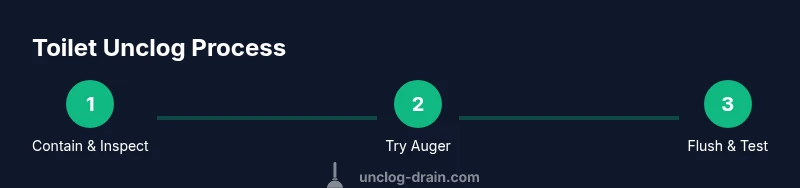
Put on gloves, lay towels, and place a bucket nearby. Contain any overflow by placing towels around the base and preparing your vacuum attachment if you’ll use it later. Ensure the area is well-ventilated and keep kids and pets away from the bathroom.
Tip: Have a spare fresh towel ready for post-cleanup and don’t rush. - 2
Try non-plunger methods first
If the water level isn’t rising rapidly, begin with a non-plunger method such as hot water and dish soap. Let it sit for a few minutes to soften the clog, then attempt a gentle flush.
Tip: Avoid boiling water—extreme heat can crack the porcelain. - 3
Use a toilet auger
Insert the auger into the bowl and crank slowly while applying steady pressure. Push until you feel resistance ease, then retract and pull to dislodge the material.
Tip: Keep the auger straight to avoid kinking; never force past a strong blockage. - 4
Baking soda and vinegar fizz
Pour 1 cup baking soda, then 1–2 cups vinegar into the bowl. Let the fizz work for 10–15 minutes, then flush with hot water. Don’t mix with household cleaners.
Tip: Use modest amounts to prevent overflow; monitor the reaction closely. - 5
Vacuum as a last resort
If a visible obstruction remains, you may carefully use a wet/dry vacuum to extract the clog. Do not suction liquids into the vacuum beyond its intended use; use attachments designed for liquids.
Tip: Only attempt if you’re confident in handling and cleanliness is maintained. - 6
Test the flush and clean up
Slowly flush to verify if the clog is gone. If the water level drops and the bowl clears, finish by a full flush. Clean all tools with soap and water, and dry the area.
Tip: Dispose of contaminated towels in a sealed bag to prevent spreading germs.
Common Questions
Is plastic wrap a safe method to unclog a toilet without a plunger?
Plastic wrap is not a reliable or recommended method for unclogging toilets. It can create a seal that leads to overflow and mess. Stick to mechanical methods like an auger or safe chemical approaches and avoid makeshift wrappers.
Plastic wrap is not a safe method for unclogging toilets; use augers or safe methods instead.
What tools are essential for unclogging without a plunger?
A toilet auger (snake), heavy gloves, a bucket, towels, dish soap, hot water, baking soda, and vinegar cover most safe non-plunger workflows. A wet/dry vacuum is optional but can help if used carefully.
A toilet auger, gloves, towels, and simple cleaners cover most safe non-plunger workflows.
How long should I wait after a baking soda and vinegar treatment?
Wait about 10–15 minutes to let the fizz loosen the clog, then flush with hot water. If it doesn’t clear, move to a mechanical method like an auger.
Wait 10–15 minutes, then flush. If not cleared, try an auger.
When should I call a plumber?
Call a plumber if water continues to rise, the clog persists after auger use, or you suspect a deeper main-line issue. Delayed action can lead to bigger problems.
If the clog persists after trying an auger and you see rising water, call a plumber.
Can I reuse baking soda and vinegar treatments?
Yes, but use sparingly and avoid mixing with other cleaners. For stubborn clogs, rely on mechanical methods first before re-attempting chemical tricks.
You can reuse the baking soda-vinegar approach but use caution and prioritize mechanical methods first.
Watch Video
Key Points
- Identify the clog type before forcing a fix.
- Prioritize safe, mechanical methods over improvisations.
- Use a toilet auger as the first solid non-plunger option.
- Prevent future clogs with regular maintenance.