How to unclog a toilet using liquid cleaners: A practical DIY guide
A comprehensive, brand-backed guide to safely using unclog toilet liquid. Learn types, safety, step-by-step methods, troubleshooting, and prevention to handle toilet clogs without costly repairs.


Using unclog toilet liquid correctly can clear a stubborn toilet clog without disassembly. Before you begin, read the label, gather common tools, and wear gloves and eye protection. This Unclog Drain guide provides safe, step-by-step instructions, practical alternatives for tough clogs, and essential safety tips to protect your pipes and septic system.
Why this guide matters for your home
A clogged toilet is a common DIY challenge that disrupts daily life. When you decide to use unclog toilet liquid, you are choosing a method that can target blockages below the waterline without extensive plumbing work. According to Unclog Drain, selecting the right liquid product for your clog type reduces waiting time and minimizes risk to your pipes. This guide emphasizes safe handling, correct dosage, and realistic expectations for results. It also highlights why enzymatic liquids and traditional chemical formulas behave differently in your home plumbing system, and how to tailor your approach to your septic setup. The frequency of clogs varies with household size, flushing habits, and the minerals in your water, but a measured, informed approach using unclog toilet liquid can save you a lot of hassle. By respecting the product label and safety precautions, you protect your drains and preserve plumbing longevity.
Types of toilet liquids and when to use them
Toilet liquids come in several formulations, each designed for different kinds of clogs. Enzymatic liquids rely on bacteria to digest organic material that slows flow, while traditional chemical liquids dissolve organic matter and mineral deposits with strong cleaners. Gel formulas cling to the bowl and pipe walls longer, which can improve contact time with the blockage. When you choose unclog toilet liquid, consider your toilet’s age, the septic system status, and the severity of the clog. Enzymatic products tend to be gentler on septic systems but may require more time, whereas chemical options act faster but can irritate skin or corrode metal fixtures if misused. Always read the label for dosage instructions and wait times. For households with disposable wipes or non-flushable items, avoid harsh chemicals that could push the clog further or damage the sewer line. Unclog Drain emphasizes selecting a product that matches your clog type and plumbing materials.
Safety basics before you start
Safety first: unclog toilet liquid products should be used with caution. Wear protective gloves and eye protection, ensure good ventilation, and keep children and pets away during treatment. Do not mix liquids with other cleaners, and never combine enzymatic and chemical formulas in the same toilet. If you’re using a chemical cleaner, check for a sealed tub or bottle and follow the recommended dosage precisely. Keep the bathroom door open or run a fan to clear fumes, especially if you are sensitive to solvents. Always store products out of reach after use. Unclog Drain’s guidance highlights that following the label reduces exposure risk and protects the septic system by preventing overuse. And because different products can react unpredictably, avoid creating a chemical mix that could release hazardous gases.
How liquids work with pipes and septic systems
Liquid unclog products respond differently based on your piping material and whether your home uses a septic tank. Enzymatic formulas feed on waste and grease slowly, producing gradual improvements, while chemical liquids act quickly on clogs but can degrade rubber seals or plumbing components if misused. When used correctly, a toilet liquid can help restore flow by softening or dissolving the blockage. Septic systems also differ in how they tolerate certain cleaners; overuse can upset the natural bacteria that break down waste. If you suspect the clog involves foreign items, a professional assessment may be warranted before continuing with chemical agents. Unclog Drain recommends testing a small amount of liquid in a non-critical fixture to observe how your system responds before committing to a full treatment.
Step-by-step approach with liquids (conceptual)
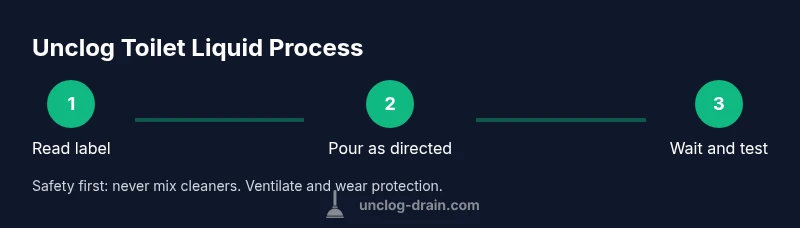
Using unclog toilet liquid is a process that combines time, patience, and proper technique. Start by reading the product label and wearing protective gear. Measure the recommended amount and pour it into the toilet bowl, avoiding splashes. Allow the product to sit for the stated time, then flush to test results. If the water remains stagnant, avoid adding more liquid immediately; instead, move to mechanical methods like plunging or using a toilet auger in a careful, controlled manner. This approach minimizes chemical exposure and reduces the chance of unintended reactions. Observing the wait times on the label helps you gauge whether gradual clearing is underway and reduces the risk of overuse.
Combining liquids with mechanical methods
Liquid cleaners are often more effective when paired with traditional plunging or the use of a toilet auger. After the recommended waiting period, attempt a firm plunge to increase pressure behind the blockage. If plunging fails, a handheld auger can help dislodge the clog by careful rotation and gentle pushing. When using any mechanical tool, keep the handle aligned with the drain to avoid damaging the porcelain. Do not force tools through a hard obstruction, as this can crack the toilet. Unclog Drain emphasizes safety and moderate force; never mix chemicals with metal tools.
Troubleshooting and when to call a professional
If water rises toward the rim or refuses to drain after multiple attempts, stop applying the liquid and switch to mechanical methods with care. Persistent clogs may indicate a wave of waste behind a blocked trap or a deeper sewer-line issue that liquid cleaners cannot fix. In such cases, consult a licensed plumber to prevent pipe damage, especially if you hear gurgling from the pipes or notice sewage backup. The correct use of unclog toilet liquid can resolve many common blockages, but not all. Taking a cautious, measured approach helps you avoid unnecessary chemical exposure and protects your home’s plumbing. Unclog Drain suggests seeking professional help when you are unsure about the clog type or the product’s compatibility with your plumbing system.
Post-cleanup and prevention
After clearing a clog, flush several times to ensure the line is fully clear, and avoid flushing non-dissolvable objects in the future. Clean the bowl and surrounding area with a mild cleaner, then rinse surfaces well. If you have repeated clogs, inspect the toilet trap and consider a preventive routine that includes a routine drain check, mindful disposal practices, and periodic maintenance with enzyme-based cleaners that are septic-friendly. Regularly scheduled maintenance reduces the likelihood of recurring obstructions and keeps your plumbing efficient. The habit of using unclog toilet liquid judiciously can protect your plumbing investment and sustain system health for years to come.
Tools & Materials
- unclog toilet liquid(Follow label directions; use the recommended amount only)
- plunger(Prefer a flange plunger for toilets)
- rubber gloves(Protect hands during handling)
- eye protection(Keep eyes safe from splashes)
- measuring cup(Measure exact doses)
- old towels or rags(Contain spills)
- toilet auger (snake)(Helpful for tough clogs)
- ventilation fan or open window(Ventilate fumes)
Steps
Estimated time: 30-45 minutes
- 1
Read the label and prepare PPE
Carefully read the product label to confirm the waiting time, dosage, and safety warnings. Put on gloves and eye protection before handling the liquid to avoid splashes.
Tip: Double-check compatibility with your toilet and septic system. - 2
Clear the area and gather tools
Move any towels away and assemble your tools nearby so you don’t interrupt the process. Ensure children and pets are out of the bathroom.
Tip: Having everything within reach reduces accidental spills. - 3
Pour the recommended amount
Slowly pour the indicated amount into the toilet bowl, aiming for the center and away from the rim to minimize splashing.
Tip: Pour slowly to avoid splashing; use a measuring cup for accuracy. - 4
Wait for the product to act
Let the liquid sit for the time stated on the label. Do not flush during this period to let the product work on the clog.
Tip: Use a timer to track the waiting period. - 5
Test with a gentle flush
After the wait, flush once to test whether the clog has cleared. If the water drains slowly, it may require additional steps or a different method.
Tip: If still blocked, don’t repeat dosing without checking the label. - 6
Apply mechanical method if needed
If the liquid hasn’t cleared the blockage, attempt a firm yet controlled plunge or use a toilet auger to dislodge the clog without damaging the porcelain.
Tip: Keep the auger aligned to avoid scratching the bowl. - 7
Reassess and flush again
After mechanical action, flush again to verify clearance. Repeat with caution only if the product label allows another application.
Tip: Frequent retries can force more product through but may irritate pipes. - 8
Clean up and store properly
Rinse tools, wipe surfaces, and cap the liquid bottle securely. Store in a dry, ventilated area away from children.
Tip: Dispose of any residue per local guidelines.
Common Questions
Is it safe to use unclog toilet liquid on a septic system?
Many enzyme-based liquids are designed to be gentler on septic systems, but check the label for compatibility and avoid excessive use. If in doubt, consult a professional and consider a septic-friendly maintenance plan.
Yes, but choose septic-safe formulas and follow the label carefully to protect your system.
Can I mix unclog toilet liquid with other cleaners?
Never mix different cleaners; chemical reactions can release hazardous gases or damage pipes. Always use one product at a time and rinse well after use.
Do not mix cleaners. Use one product per treatment and ventilate the area.
What should I do if the clog persists after using liquid cleaner?
If the blockage remains after the stated wait time, try a mechanical method like plunging or a toilet auger. If unresolved, stop and contact a professional to assess the sewer line.
If it doesn’t clear, switch to mechanical methods or call a plumber.
How long should I wait before flushing after applying the liquid?
Follow the label for the exact wait time. Waiting too long or flushing too soon can reduce effectiveness or cause splashing.
Always wait the label's recommended time before flushing.
Are enzymatic liquids better for older pipes?
Enzymatic liquids are generally gentler on older pipes and septic systems, but they may work slower. Choose based on the condition of your plumbing and clog type.
Enzymatic products are milder and work slowly but are safer for old pipes.
What maintenance helps prevent clogs?
Avoid flushing non-dissolvable items, use enzyme-based maintenance periodically, and address any recurring clogs with inspection by a professional.
Prevention includes careful disposal and regular maintenance.
Watch Video
Key Points
- Read the label and follow directions.
- Wear PPE and ventilate the area.
- Liquid cleaners are a supplement, not a cure-all for all clogs.
- Avoid mixing cleaners or using aggressive chemicals.
- Test flush after the recommended wait time and consult a professional if unresolved.