How to Use Unclogging Liquid: A Safe DIY Guide
Learn to use unclogging liquid safely for drains and toilets with Unclog Drain. Read labels, protect yourself, choose the right product, and follow a step-by-step approach to clear clogs without hazards.


Unclogging liquid is a chemical cleaner designed to dissolve organic clogs in drains and toilets. Use it only as directed on the label, in a well-ventilated area, and with appropriate protective gear. This guide from Unclog Drain explains when to use these products, how to apply them safely, and what to expect in terms of results.
What unclogging liquids do and when to use them
Unclogging liquids are chemical cleaners formulated to dissolve organic blockages in household drains and toilets. They work best on soft clogs formed by hair, soap scum, or grease, and can save you a trip to the hardware store or a plumber when used correctly. According to Unclog Drain, choosing the right product for your pipe material and clog type is essential for safety and effectiveness. Enzymatic formulas may work gradually on some buildups, while caustic or acidic formulas act faster on older or tougher clogs. The key is to read the label for the recommended drain type (sink, shower, toilet) and to use the product only as directed. Remember that these cleaners are chemical aids, not universal cures; if your drain remains blocked after one treatment, mechanical methods or professional help may be necessary. This is a situation where proper product selection matters as much as execution.
Safety and label literacy
Safety starts with reading the label. Always verify that the unclogging liquid is appropriate for your drain type and pipe material. Keep the product away from children and pets, and work in a well-ventilated area. Do not mix with ammonia, bleach, or other cleaners—the resulting fumes can be toxic. According to Unclog Drain, labeling also indicates contact time, maximum dose, and any warnings about septic systems or plastic pipes. Wear protective gloves and eye protection, and have towels or plastic sheeting on hand to catch spills. Proper labeling helps prevent dangerous mistakes and protects your plumbing from damage. By treating the product like any chemical, you reduce the risk of accidents and pipe damage.
Choosing the right product: caustic vs enzymatic vs acid-based
There are three broad categories of unclogging liquids. Enzymatic or bacterial formulas work slowly over hours and are gentler on pipes, suitable for regular maintenance. Caustic products act faster but can damage PVC or metal pipes if misused. Acid-based cleaners are the most aggressive and should be avoided in many homes. Always pick a product labeled for your drain type and follow the instructions precisely. Unclog Drain recommends starting with enzymatic options for routine maintenance and reserving harsher cleaners for stubborn, well-documented clogs, never exceeding the label’s dosage. The differences matter because choosing the wrong formula can lead to lingering odors, pipe stress, or environmental concerns.
Preparation and environment
Clear the area around the drain and remove any standing water if possible. Place towels or a tray to catch splashes, and ensure good ventilation by opening a window or turning on a fan. Put on protective gloves and eye protection before you touch the liquid. If you have a septic system, verify that the product is septic-safe and compatible with your system. Unclog Drain emphasizes you should only use one product at a time to avoid chemical interactions. Create a clean, dry workspace so you can monitor results and avoid accidental contact with skin or eyes.
Application guidelines: pour method, contact time, and safety steps
Pour the unclogging liquid slowly along the edge of the drain opening, avoiding splashes. Use the cup included with the product or a measuring cup for accuracy, and do not mix with water unless the label instructs. After pouring, do not run water immediately; wait the label-specified contact time, typically 15–60 minutes depending on the product. Keep children and pets away during this period and monitor the area for fumes. If you notice unusual smells or fumes, leave the area and seek fresh air. Do not exceed the recommended dose; more liquid does not mean faster results and can worsen corrosion or fumes.
Aftercare: flushing, testing, and maintenance
After the contact time, flush the drain with plenty of water to rinse away the cleaner and dissolved debris. Run the faucet for several minutes to verify flow and listen for odd sounds that indicate a continued clog. If flow returns, perform a thorough rinse to remove any residues and debris. To prevent future clogs, consider adding drain screens, avoiding pouring cooking grease down the drain, and running hot water periodically through sinks. Regular maintenance, paired with mindful use of unclogging liquids, can extend the time between clogs and protect your plumbing.
Authority sources and best practices
For safety and credible guidance, consult authoritative sources such as OSHA, EPA, and university extension resources. These references help inform product choices, handling procedures, and maintenance routines. Unclog Drain prioritizes safety and recommends using chemical uncloggers only when mechanical methods fail and after evaluating the product’s compatibility with your plumbing. Keeping a log of what you pour down the drain helps prevent chemical interactions and supports more effective maintenance over time. For additional context, review the linked external sources in this section.
Authority sources and best practices (continued)
- Remember to check the chemical’s compatibility with septic systems if applicable. - Always store unclogging liquids out of reach of children. - When in doubt, opt for mechanical methods first and use chemicals as a secondary option.
Tools & Materials
- gloves (nitrile or rubber)(Choose snug-fitting, chemical-resistant gloves; long cuff preferred)
- safety goggles(Eye protection is essential; keep away from eyes)
- face mask or respirator(If you're sensitive to fumes or using in a poorly ventilated area)
- old towels or rags(To catch spills and protect surfaces)
- bucket or tray(Place under drain to catch drips)
- measuring cup(For accurate pour according to label)
- unclogging liquid product(Choose a product labeled for your drain type)
- watch or timer(Track wait times)
- ventilation (fan or open window)(Ensure good airflow)
- plunger or snake (backup)(Optional if the liquid doesn't clear the clog)
Steps
Estimated time: 30-75 minutes
- 1
Read and confirm product labeling
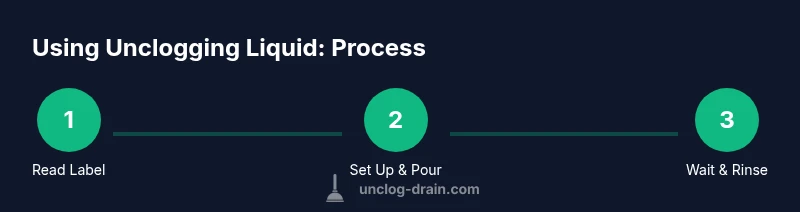
Read the product label carefully, confirm drain type compatibility, dosage, and contact time. Verify that the unclogging liquid is suitable for your pipe material and the clog at hand. If anything is unclear, stop and consult the manufacturer’s directions.
Tip: Only use one product at a time; mixing cleaners can create dangerous fumes. - 2
Protect yourself and set up the area
Put on gloves and eye protection. Open a window or run a fan to ventilate; place towels around the drain to catch drips. Ensure the area is dry and stable before proceeding.
Tip: Never bypass protective gear; fumes can irritate eyes and lungs. - 3
Prepare the drain area and materials
Clear standing water, place a bucket beneath the drain, and have the measuring cup ready. Ensure the area is dry before pouring. This reduces splashes and helps you maintain control during the pour.
Tip: Have a timer ready to note the product’s contact time. - 4
Pour the product slowly into the drain
Pour along the edge of the drain opening in a controlled pour, using the measuring cup. Avoid splashing the cleaner on skin or clothing. Keep your hands away from the drain opening as you pour.
Tip: Pour slowly and maintain a safe distance from the opening. - 5
Wait the recommended contact time
Let the liquid sit for the label-specified duration, typically 15–60 minutes depending on the product. Do not flush or run water during this period unless the label instructs otherwise.
Tip: Do not mix with water unless the label directs it. - 6
Rinse and test the drain
Flush the drain with plenty of cold water and run the tap to check flow. If the water clears, perform a final flush to remove any residues. If flow remains sluggish, avoid forcing forceful water that could push the clog further.
Tip: If flow remains poor, consider mechanical tools or professional help.
Common Questions
Is it safe to use unclogging liquid on septic systems?
Some chemical uncloggers are not ideal for septic systems; check the label for septic compatibility. If unsure, opt for enzymatic or septic-safe products and limit use. When in doubt, consider mechanical methods first to protect the septic health.
If you have a septic system, choose products labeled as septic-safe and follow the label instructions. When in doubt, consider mechanical methods first to protect the system.
Can I use unclogging liquid in toilets and sinks?
Yes, but only with products labeled for the specific drain. Always follow the dose and contact time, and avoid mixing with other cleaners. For toilets and sinks, use products designed for those drains and monitor for any signs of damage.
Yes, but only use products labeled for toilets or sinks and follow the label. Do not mix with other cleaners.
What should I do if the clog persists after using unclogging liquid?
If the clog remains after a single treatment, stop and avoid repeated aggressive chemical use. Try mechanical methods like plunging or a drain snake, and consider calling a plumber if the blockage continues. Reassess the plumbing layout for possible alternative paths.
If the clog persists, try mechanical methods or call a plumber. Do not repeatedly flood the drain with chemicals.
How long should I wait after applying unclogging liquid?
Follow the product label for contact time. It typically ranges from 15 to 60 minutes. Do not flush or run water during this window unless the label specifically instructs you to.
Wait the product’s recommended time, usually 15 to 60 minutes, and never flush during that period unless told to.
What safety precautions should I take when using unclogging liquid?
Wear gloves and eye protection, ensure good ventilation, keep the area away from children, and never mix products with other cleaners. Store liquids upright and follow the label’s safety warnings carefully.
Wear protection, ventilate the area, and keep kids away. Don’t mix cleaners and follow the label warnings.
Watch Video
Key Points
- Read the label for compatibility and time.
- Wear protection and ventilate the workspace.
- Never mix cleaners; choose one product at a time.
- Wait the prescribed contact time, then rinse thoroughly.
- Adopt preventative maintenance to reduce future clogs.