How to Unclog a Japanese Toilet: Step-by-Step Guide
Learn safe, practical methods to unclog a Japanese toilet with hands-on steps, essential tools, and pro tips from Unclog Drain. Avoid harsh chemicals and protect your fixture.


To unclog a Japanese toilet, you’ll clear the blockage without damaging the fixture by using a plunger, a toilet auger, and careful water management. Start with mechanical methods (plunger or auger) before resorting to chemicals, and wear gloves. For best results, follow a step-by-step approach tailored to squat toilets, and monitor for lingering drainage issues.
How squat toilets work and why clogs happen
Japanese toilets commonly employ a squat design or low-profile bowl that relies on gravity and a strong flush to clear waste. Their internal traps and vents are optimized for rapid water movement, but they can be sensitive to flush volume, paper type, and disposal habits. When paper balls up or debris enters the trap, the downstream flow slows and a clog forms. According to Unclog Drain, understanding these dynamics helps you choose the right technique to clear the drain without splashing or damaging the porcelain. The simplest path to unclog japanese toilet is to start with mechanical methods (a plunger designed for deep-bowl fixtures) before moving to a flexible toilet auger if the blockage persists. In many homes, clogs arise from overused or improper toilet paper, discarded objects, or misrouted waste. Recognizing these patterns lets you intervene quickly, protect the fixture, and reduce the risk of overflow. This guide will show you how to unclog japanese toilet safely and effectively.
wordCountReasoningInBlockForSEO: null
Tools & Materials
- Flange plunger (deep-bowl design)(Choose a plunger suited for squat toilets; ensure a tight seal)
- Flexible toilet auger (toilet snake)(Length 3-6 ft recommended; twist while feeding)
- Heavy-duty rubber gloves(Nitrile recommended; protect hands from waste)
- Bucket or basin(For catching dirty water; 1-2 liter capacity minimum)
- Flashlight(Inspect under the rim and trap for debris)
- Old towels or rags(Protect floors and absorb spills)
- Dish soap (optional)(Lubricates the drain if needed, not essential)
- Warm water(Helpful for loosening buildup during flush tests)
Steps
Estimated time: 60-90 minutes
- 1
Put on safety gear
Slide on rubber gloves and eye protection before touching the bowl or waste. This protects you from splashes and contaminants as you work. Place towels around the area and keep a clear space for your tools.
Tip: Pro tip: test your gloves for flexibility before handling the water. - 2
Shut off water supply and prepare the area
If possible, turn off the toilet’s fill valve to stop new water from entering the bowl. This prevents overflow while you work and buys time to assess the blockage. Allow residual water to settle for about 2 minutes before proceeding.
Tip: Pro tip: use a dry towel to wick away any surface water before starting. - 3
Inspect for obvious blockages
Look for visible paper stacks or small objects around the rim and inside the bowl. If you can safely reach and remove a small obstruction with gloved fingers, do so carefully. Avoid pushing debris deeper into the trap.
Tip: Pro tip: use a flashlight to spot debris near the rim; a mirror can help in tight spaces. - 4
Seal and use the plunger
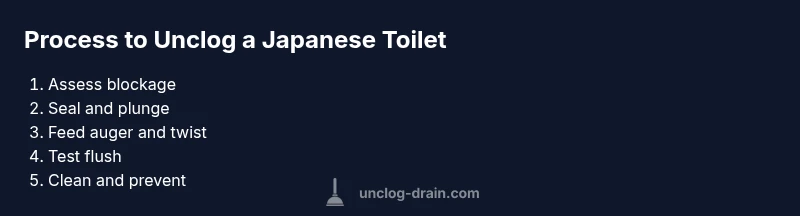
Position the flange plunger to create a tight seal around the drain opening. Apply steady, measured pressure with 6-8 strong pumps, keeping the seal intact. If water rises, pause and adjust the seal before continuing.
Tip: Pro tip: maintain a consistent rhythm; erratic pumping can splash and spread contamination. - 5
Try the toilet auger if needed
Gently insert the auger into the trap and twist while feeding the cable. Stop if you feel resistance and rotate to break the obstruction. Withdraw slowly and test the water flow with a small flush.
Tip: Pro tip: keep the cable below the waterline to reduce splash risk and wear safety goggles if possible. - 6
Flush test and reassess
Refill the bowl with a small amount of water and perform a gentle flush to check if the blockage is cleared. If the water drains slowly, repeat the auger or plunger sequence one more time. If there is no improvement after two attempts, do not force the blockage further.
Tip: Pro tip: avoid adding harsh chemicals; they can cause fumes and damage the bowl. - 7
Safe cleanup and sanitation
Once the drain flows freely, slowly restore the water supply and run a couple of normal flushes. Rinse tools with clean water, sanitize the work area, and bag any waste properly. Dry the area to prevent slips.
Tip: Pro tip: wash hands thoroughly and sanitize gloves before storage. - 8
Prevent future clogs
Adopt smart habits: flush only toilet paper, avoid wipes or plastics, and consider a routine cleaning to minimize buildup. If you notice recurring slow drainage, schedule a professional inspection to prevent escalation.
Tip: Pro tip: a small amount of baking soda with warm water can help maintain bowl cleanliness between uses.
Common Questions
What is the first thing I should try to unclog a Japanese toilet?
Start with a flange plunger designed for squat toilets. Ensure a tight seal and use steady, controlled strokes before moving to an auger. Avoid rushing the process to prevent splashing.
Start with the flange plunger for a tight seal, then move to an auger if needed.
Are chemical drain cleaners safe for Japanese toilets?
No. Chemical drain cleaners can damage porcelain parts and traps, and may create dangerous fumes. Rely on mechanical methods first and save chemicals for professional advice.
Chemicals can harm the toilet and fumes can be dangerous; use mechanical methods first.
What should I do if the toilet overflows during unclogging?
Stop using the toilet, shut off the water supply, and mop up the excess water. Once the area is safe, reassess the blockage and only proceed when you can control the flow.
Shut off the water, mop up, and wait until you can safely proceed.
Can I use a standard toilet auger on a Japanese toilet?
Yes, but choose a flexible auger and feed slowly. Avoid aggressive twisting that could damage the trap or porcelain.
A flexible auger works, use it slowly and carefully.
When should I call a plumber for a Japanese toilet?
If multiple attempts fail after a thorough mechanical approach or if you notice repeated clogs, call a professional to diagnose the plumbing layout.
If it won’t clear after several tries, get a plumber.
Watch Video
Key Points
- Use mechanical tools first: plunger, then auger.
- Avoid chemical cleaners; they risk damage and fumes.
- Shut off water to prevent overflow during the job.
- Prevent future clogs through mindful disposal and regular cleaning.