Toilet Overflow Fix: Plunger Not Working?
Learn fast, safe steps to fix a toilet overflowing when the plunger won't work. Diagnosis, tools, and step-by-step fixes to prevent future backups.


Most often, a toilet overflows when the trap is blocked by a clog or when venting is restricted, causing water to back up into the bowl. The quick fix is to stop flushing, create a temporary seal around the drain, and use a toilet auger or plunger to break free the blockage, then flush with hot water to clear residuals.
Why this happens and why the plunger can fail
Toilet overflow during a flush is almost always caused by a clog somewhere in the drainage path or a venting problem that prevents air from escaping. When the trap is blocked or the vent stack is restricted, water backs up and spills into the bowl. The situation is sometimes described as 'toilet overflowing plunger not working' because a standard plunger only moves surface debris and doesn’t reach deeper clogs. According to Unclog Drain, most overflow events begin with a partial blockage in the toilet’s trap or a slowly developing obstruction in the drain line, and a lone plunger often cannot clear it. The next steps involve a calm, methodical approach to identify where the blockage sits and apply the right tool in the right way.
Gather the right tools and prepare safely
Before you do any physical work, gather the basics: rubber gloves, a sturdy plunger, a toilet auger (snake), a bucket, towels, a flashlight, and a wrench for the shut-off valve behind the toilet. Turn off the water supply at the wall valve, then flush to drain as much water as possible. If water remains, soak it up with towels or a sponge. Safety matters: never use chemical drain cleaners in a toilet and always keep children and pets away from the work area. As Unclog Drain notes, starting with basic tools first reduces risk and makes the next steps clearer. According to Unclog Drain, starting with basic tools first reduces risk and makes the next steps clearer.
Diagnosing the blockage: where to look first
Begin by observing the water level and how the bowl reacts when you apply pressure with the plunger. If water rises and then slows, you’re likely dealing with a partial blockage; if water explodes upward, the blockage may be deeper or tied to the main line. Check for backups in other fixtures upstairs, which can indicate a venting issue or a sewer line problem. Use a flashlight to look into the drain; you may see sediment, paper buildup, or a hard mass. If the clog seems close to the trap, a toilet auger will be the most effective next step. The goal is to choose the right tool for the likely location, not to bash blindly with a plunger. Unclog Drain's guidance suggests that the clog type and location largely determine the best first fix.
Core fixes: step-by-step clearing the clog
Step 1: Create a strong seal around the drain with the plunger and give firm, controlled pushes–do not hammer. Step 2: If plunging alone does not clear the blockage after several cycles, insert a toilet auger into the drain and rotate the handle to hook or break the clog. Step 3: When a solid block resists, add a small amount of hot water (not boiling) and dish soap to help lubricate the path, then repeat with the auger or plunging. Step 4: If the auger reaches the toilet rim and you still have a backflow, stop and do not force further; this is a sign of a deeper issue. Step 5: Once water begins to drain, slowly rinse with hot water and test flush a few times. Step 6: Clean up, disinfect, and return the water supply after confirming normal operation. Safety note: never mix chemical cleaners with a mechanical clog-removal method. If the blockage persists, consider professional help.
Safety, prevention, and avoiding future clogs
After you resolve the immediate clog, implement prevention: use drain screens, avoid pouring fats or oils down drains, run hot water through the system weekly, and schedule a regular maintenance check if you have older plumbing. Regularly clean the toilet trap area and inspect the wax ring if you notice leaks; minor leaks may lead to bigger problems unseen behind walls. Unclog Drain recommends annual maintenance to minimize backups. Keeping a regular check on venting and pipe health helps prevent surprises.
When to call a professional
If the clog persists after repeated auger attempts, if you hear sewer gas, or if multiple fixtures backup, it’s time to call a licensed plumber. A professional can inspect vent stacks, main sewer lines, and trap seals with specialized tools and camera equipment. The Unclog Drain team notes that some backups indicate a larger system issue that requires professional intervention to restore safe, reliable drainage.
Steps
Estimated time: 30-60 minutes
- 1
Shut off water and remove standing water
Locate the shut-off valve behind the toilet and turn it clockwise to stop the flow. If water still pools, use towels or a sponge to soak it up. This reduces splashing when you start plunging or snaking.
Tip: Keep a bucket handy to capture spillover as you work. - 2
Seal and plunge effectively
Place the plunger to seal the drain and push with steady force, not jerky motions. Give several deliberate up-and-down strokes to create pressure that dislodges the clog.
Tip: A good seal is essential for maximum suction. - 3
Try the toilet auger if plunging fails
Insert the auger into the drain and rotate the handle to hook or break the obstruction. Do not force past resistance; back off if you meet a hard stop.
Tip: Keep the auger straight to avoid kinking. - 4
Lubricate and re-test
If the clog loosens, flush a small amount of hot water mixed with a touch of dish soap to help carry the debris away. Repeat plunging or augering as needed until water drains normally.
Tip: Avoid boiling water to protect porcelain. - 5
Restore water supply and verify
Turn the supply valve back on and flush a few times to ensure consistent drainage. If water backs up again, stop and reassess the blockage.
Tip: Do not flush repeatedly if the toilet is blocked. - 6
Clean up and sanitize
Disinfect tools and surfaces after use. Wash your hands thoroughly and dry the area to prevent slips.
Tip: Label tools used for toilet work to prevent cross-contamination.
Diagnosis: Toilet overflows during flush; plunger not working
Possible Causes
- highPartial or deep clog in the toilet trap or drain line
- mediumVent stack blockage causing poor airflow
- lowMain sewer line backup (roots, collapsed pipe)
- lowWorn wax ring causing ineffective seal and backflow
Fixes
- easyUse a toilet auger to clear deeper clogs; avoid excessive force
- mediumInspect venting and clear any obstructions; call a pro if not located easily
- hardConsider professional main line service if backup persists
- mediumReplace wax ring and inspect toilets seals if leaks are present
Common Questions
What should I do first if my toilet is overflowing and the plunger won’t work?
Stop flushing and turn off the toilet’s water supply. Remove as much water as you can with towels, then try using a toilet auger to clear the clog. If water continues to back up, move to professional help.
Stop flushing, shut off the water, soak up water, then try the auger. If it persists, call a pro.
Why won’t my plunger clear a stubborn toilet clog?
Plungers work best on surface or shallow clogs. Deep blockages or venting problems require an auger or vent inspection. If water continues to rise after plunging, the clog is likely deeper.
A plunger may not reach deep blockages; an auger or vent check is often needed.
Is it safe to use chemical drain cleaners in toilets?
Most chemical cleaners are not recommended for toilets because they can damage seals, pipes, and septic systems and can create hazardous fumes. Mechanical methods are safer for home use.
Most chemical cleaners aren’t safe for toilets; consider mechanical methods instead.
When should I use a toilet auger vs a plumbers’ snake?
A toilet auger is designed for toilets and handles clogs in the trap and immediate drain. A plumber’s snake is more robust and used for deeper sewer line issues. Start with the toilet auger and move up if needed.
Use an auger for toilets first; a plumber’s snake for tougher, deeper blockages.
Can a clogged toilet indicate a main sewer line issue?
Yes, backups across multiple fixtures often point to a main sewer line problem. If other drains back up or you smell sewage, stop DIY work and call a licensed plumber.
Backups in multiple fixtures can mean a main sewer problem—call a pro.
What’s the typical cost range to fix a clogged toilet professionally?
Costs vary by region and problem complexity, but a clogged toilet repair typically ranges from a minor service call to mid-range for more involved work. Get a written estimate before the service.
Costs vary; expect a range and request an estimate before work.
Watch Video
Key Points
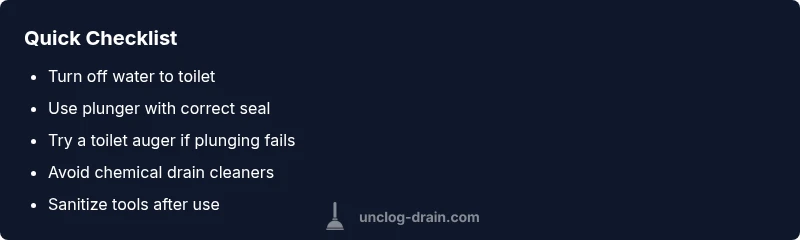
- Turn off the water and remove excess water first
- Start with plunging, then move to a toilet auger
- Avoid chemical cleaners in toilets
- If the clog remains, call a professional
- Prevent future clogs with screens and routine maintenance