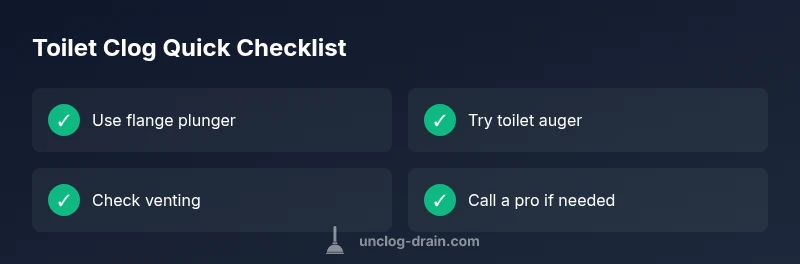
What to Do When a Toilet Is Clogged and the Plunger Won't Work
Urgent, practical guide to diagnose and fix a toilet clogged when the plunger won't work. Safe steps, tools, and guidance to prevent future clogs.


Most clogs start deeper in the bowl or trap, not just at the rim. Start with a tight flange seal and firm, controlled plunging strokes. If plunging fails, move to a toilet auger to clear obstructions beyond the trap. Avoid chemical drain cleaners; they can damage the porcelain and plumbing and delay a proper fix.
Why a Toilet Gets Clogged and Plunger Not Working
A toilet clog that won’t respond to a plunger is a signal that the blockage is more complex than a surface buildup. In many homes the issue lies deeper in the trap or the waste arm, or in the vent system that helps drain water from the bowl. Unclog Drain’s team sees this pattern frequently: thick toilet paper, foreign objects accidentally flushed, or a sluggish sewer line can all stall water flow even when the plunger feels solid. Understanding where the obstruction sits helps you pick the right tool and technique, and reduces the risk of splashback or pipe damage. This guide explains how clogs form, why plungers sometimes fail, and what to look for to guide the next steps.
Quick Safety Checks You Should Do First
Safety comes first when you’re dealing with a clogged toilet. Begin by turning off the water supply at the shut-off valve behind the toilet to prevent overflow. Place towels or a bucket nearby to catch any spillover. Wear gloves and avoid mixing chemical cleaners with other methods. Keep kids and pets away from the bathroom until you complete the fix. If you see sewage backups or smell strong odors, stop and call a professional immediately.
Diagnosing The Obstruction: Where It's Likely Located
Blockages can reside in the bowl, the trap arm, or further down the drain line. A rising water level with no effective flush indicates a blockage in the trap or waste arm. Gurgling sounds suggest air is trying to escape through the drain, which can point to a vent issue or a partial clog. The key is to assess water behavior during flushing attempts and note whether the water clears, slips, or backflows. This diagnostic mindset helps you choose between plunging, using an auger, or calling a pro for sewer-line concerns.
Essential Tools And Supplies For A Fast Fix
Gather a flange plunger, a toilet auger, heavy-duty gloves, towels, a bucket, a flashlight, and a towel to seal around the base. A small container of warm water can help loosen buildup, and a flashlight improves visibility inside the bowl. Keep a clean shop towel for spill cleanup and a separate brush for post-fix cleaning. Having the right tools reduces frustration and speeds up the process.
Step-By-Step Troubleshooting Path (Non-Professional)
This section walks you through a practical, non-professional approach to clearing a common blockage. Start with the quickest, safest option and progress to deeper fixes only if needed. Each step builds on the previous one, and you should stop if you feel uncertain or encounter resistance.
When To Call A Pro And What To Expect
If you’ve tried the above steps without success, or if the toilet keeps backing up after attempts, it’s time to involve a licensed plumber. Persistent blockages could indicate sewer-line problems, vent stack issues, or structural damage that require professional tools and expertise. A pro will diagnose using specialized equipment and explain whether the issue is local to the fixture or part of the building’s main drainage network.
Prevention Tips To Avoid Future Clogs
Preventive habits save time and money. Flush only toilet-safe items and use minimal toilet paper. Consider a regular maintenance schedule for your toilet’s trap and check for vent stack obstructions if you hear gurgling in other fixtures. A quick yearly check can reduce emergency calls and keep your bathroom functioning smoothly.
Steps
Estimated time: 30-60 minutes
- 1
Shut off water and prep the area
Turn off the supply valve behind the toilet to prevent overflow. Place towels or a bucket to catch spills and wear gloves. Clear the area so you can move freely without creating a mess.
Tip: Have everything ready before you start; it reduces cleanup time. - 2
Check the plunger seal and position
Make sure you’re using a flange plunger and that the rubber lip fully covers the drain. A tight seal is essential for generating effective suction.
Tip: Center the plunger and push straight up and down, not at an angle. - 3
Attempt steady plunging
With a controlled rhythm, apply 15–20 firm strokes, keeping the seal intact. Pause to observe whether water starts to drain.
Tip: Skip aggressive jerks; slow, steady pressure works best. - 4
Try a toilet auger if plunging fails
Feed the auger into the toilet bowl gently, then rotate to catch the obstruction. Retract slowly and repeat as needed until the line clears.
Tip: Do not force the auger; stopped progress means stop and reassess. - 5
Test flush and assess
Turn the water back on and flush to see if the bowl drains completely. If water rises again or you hear gurgling in other fixtures, stop and evaluate.
Tip: If it refills, there may be a deeper clog or vent issue. - 6
Clean up and maintain
Disinfect the area, wash tools, and store the auger and plunger separately to prevent cross-contamination. Consider a quick annual check for drain health.
Tip: Keep a dedicated toilet toolset to avoid spreading grime between fixtures.
Diagnosis: Toilet won't drain or water level rises when attempting to flush
Possible Causes
- highPartial clog in trap or bowl/waste arm
- mediumSewer line blockage or tree roots
- lowVent or vent stack issue
Fixes
- easySeal a flange plunger properly and use smooth, centered strokes
- easyInsert a toilet auger to clear deeper obstructions
- mediumIf water remains high or you suspect sewer issue, stop and call a professional
Common Questions
Why isn’t my plunger clearing the clog?
A partial blockage deeper in the drain or an improper seal can render plunging ineffective. Re-seat the plunger for a tight seal and try steady, full strokes before moving to an auger.
A partial clog or a poor seal usually causes plunging to fail; reseat and plunge steadily first.
Is it safe to use chemical drain cleaners on a clogged toilet?
Chemical cleaners can damage porcelain and pipes and may not reach deeper blockages. They’re not recommended as a first option; mechanical methods are safer and more effective.
Chemicals can harm your pipes and toilet, so use mechanical methods first and only consider them if advised by a professional.
What tools do I need to unclog a toilet?
A flange plunger, a toilet auger, gloves, towels, a bucket, and a flashlight. These cover most common clogs without invasive procedures.
You’ll want a flange plunger, a toilet auger, gloves, towels, and a flashlight.
When should I call a professional plumber?
Call a pro if the bowl refills after plunging, if you suspect a sewer-line problem, or if multiple fixtures share the same drain. Don’t delay with persistent backups.
If it keeps backing up or you suspect a sewer issue, it’s time to call a professional.
Can a clogged toilet indicate a bigger problem?
Yes. A recurring clog or a vent/sanitary sewer issue could point to broader plumbing problems that require investigation beyond the fixture.
A recurring clog could mean a bigger plumbing issue—get it checked."
Will a plunger help with a blocked vent?
No. Vent blockages require different diagnostics and tools; a plumber should inspect the vent stack and connected systems.
Blocked vents need a pro to inspect the vent stack and related plumbing components.
Watch Video
Key Points
- Act safely and start with the basics
- Deep clogs may require a toilet auger
- Avoid chemical cleaners as a first option
- Call a pro for sewer or vent issues