Toilet Bowl Blockage Troubleshooting: Quick Fixes and Safe Steps
Urgent guide to diagnose and fix a toilet bowl blockage fast. Learn plunging, augers, safety tips, and prevention to avoid future clogs.


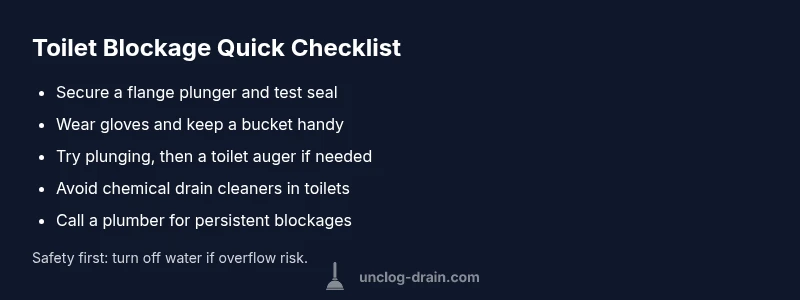
Most toilet bowl blockages are caused by paper buildup or a local clog. Quick fix: 1) Stop flushing to prevent overflow. 2) Use a flange plunger, seal well, and plunge firmly for 15-30 seconds. 3) If plunging fails, try a toilet auger to dislodge or pull the obstruction. If none work, contact a licensed plumber.
Understanding Toilet Blockages
Toilet bowl blockage occurs when waste and materials cannot pass through the trap and vent to the sewer line. A partially blocked toilet may drain slowly, while a full blockage can cause rapid overflow during a flush. In many homes, the culprit is a combination of toilet paper, waste, and everyday items that should not be flushed. According to Unclog Drain, most blockages start with paper buildup or items that snag and form a stubborn plug. Recognizing the signs early helps you choose the right tool and technique. When you suspect a blockage, stop using the toilet to prevent an overflow, then proceed with an assessment of potential causes and the least invasive remedies first.
A clogged toilet is not just an annoyance; it can indicate a larger drain issue. If the water level rises or the bowl backs up even after multiple flush attempts, you’re dealing with a more serious clog or a line backup. The Unclog Drain team emphasizes assessing whether the blockage is isolated to the toilet or part of a broader drainage problem. This awareness guides your next steps and reduces the risk of damage or overflow.
Quick Safety Prep for a Blocked Toilet
Before you reach for tools, set safety boundaries to prevent flooding and injury. Turn off the water supply at the shutoff valve behind the toilet and flush once to empty the bowl if possible. Wear latex or rubber gloves and keep a bucket and towels ready. Avoid chemical drain cleaners in toilets, as they can damage porcelain and create dangerous fumes. According to Unclog Drain, safety first protects both your home and your plumbing. If you notice a strong sewer smell, gurgling drains elsewhere, or continuous overflow, stop and call a professional to avoid a costly disaster.
Tools and Safety Gear You Need
Having the right tools on hand makes a big difference. A flange-plunger is essential for a tight seal and effective pressure. A toilet auger (snake) helps reach and dislodge deeper clogs that plunging can’t. Don’t forget gloves, a bucket, old towels or rags, and a sturdy flashlight. Use a small flashlight to inspect the trap for obvious blockages without forcing anything. This setup minimizes mess and protects you from splashes while working on a toilet bowl blockage. The Unclog Drain guidance suggests keeping everything organized so you can switch from plunging to augering without delay.
Common Causes of Toilet Blockage
Understanding why blockages form helps prevent future incidents. The most frequent culprits are toilet paper buildup and the improper disposal of wipes, feminine products, or foreign objects. A partial clog can worsen if several small items accumulate over time. In some homes, venting issues or a slow sewer line contribute to persistent backups, especially after heavy bathroom use. Regular maintenance and mindful flushing reduce the likelihood of a future toilet bowl blockage. The Unclog Drain analysis notes that routine checks and cautious disposal habits dramatically cut clogged-to-toilet incidents.
Step-by-Step Plunging Techniques (Effective for Most Blockages)
- Prepare: Place towels around the base to catch splashes; ensure the toilet is not wobbly. 2) Position: Insert the flange end into the drain, creating a tight seal with the rim. 3) Plunge: Push and pull with controlled force for 15–30 seconds, keeping the seal intact. 4) Check: Lift the plunger and see if the water clears. If not, repeat 2–3 times. 5) Assess: If water remains, proceed to an auger. 6) Clean up: Rinse the bowl, remove debris, and sanitize tools. Tip: Use two hands for steady pressure and prevent splashes.
When to Use a Toilet Auger (If Plunging Fails)
A toilet auger is designed to reach deeper clogs without damaging the porcelain. Feed the snake gently into the toilet bowl, turning the handle to extend the cable. When you feel resistance, rotate and pull back slightly to capture or break the obstruction. Repeat several times, then remove the cable slowly. Always keep a bucket handy and avoid forcing the auger if you feel significant resistance; forcing can fracture the toilet or pipe. This method is a safe next step after plunging for many toilet bowl blockages.
What to Do If It Still Blocks
If plunging and augering fail, do not apply excessive force, as that can damage the toilet or piping. Stop and shut off the water supply to prevent overflow, then call a licensed plumber. Severe blockages may indicate a main sewer line issue or venting problems that require professional equipment and expertise. In the meantime, avoid dumping chemical cleaners or expanding the problem by flushing repeatedly. For many homes, a professional assessment is the fastest way to resolve stubborn toilet bowl blockage safely.
Prevention and Maintenance to Avoid Future Blockages
Create a simple prevention plan to minimize future toilet bowl blockages. Only flush human waste and toilet paper; avoid items like wipes, cotton balls, sanitary products, and jewelry. Consider a weekly quick flush to keep the line moving, especially in homes with older pipes. Use a light amount of toilet paper and avoid clogs that form from overuse. Regular maintenance, mindful disposal, and prompt attention to signs of slow drainage greatly reduce the risk of future toilet bowl blockages. The Unclog Drain team recommends routine checks and smart habits as the best defense.
Steps
Estimated time: 30-60 minutes
- 1
Shut off water and assess overflow risk
Locate the shut-off valve behind the toilet and turn it clockwise to stop water flow. If the bowl begins to overflow, be prepared with towels and a bucket. This step prevents water damage while you work on the blockage.
Tip: Have a towel ready to catch spills and avoid staining the floor. - 2
Seal the drain and prepare the plunger
Place a flange plunger over the outlet and push down to create an airtight seal. Ensure the plunger covers the drain completely; a loose seal wastes effort and can cause splashing.
Tip: A proper seal matters more than brute force. - 3
Plunge with controlled pressure
Push and pull the plunger with steady, full strokes for 15–30 seconds. Maintain the seal and avoid breaking the seal mid-stroke. Lift to check drainage after each round.
Tip: Keep your wrists relaxed to apply consistent pressure. - 4
Assess and repeat if needed
If water drains slowly or stops rising, repeat the plunging cycle 2–3 times. If nothing changes after several attempts, switch to an auger.
Tip: Don’t rush; test after each cycle to gauge progress. - 5
Use a toilet auger if plunging fails
Insert the auger tip into the toilet bowl and gently rotate the handle to extend the cable. When you feel resistance, rotate and pull back to capture the clog. Repeat as needed.
Tip: Keep the auger clean and wipe the bowl after use. - 6
Return water supply and test
Turn the shut-off valve back to the open position and let the tank refill. Flush once to test if the blockage is cleared. If it reoccurs, call a professional.
Tip: Run a final test flush to confirm clearance.
Diagnosis: Toilet won’t drain or backs up after flushing
Possible Causes
- highLocalized clog in the bowl trap or outlet
- highPaper buildup or waste choking the trap
- mediumForeign object or wipes stuck in the trap arm
- lowVent or main sewer-line issue affecting flow
Fixes
- easyPlunge with a flange plunger to break the clog
- easyUse a toilet auger to clear or pull the obstruction
- mediumIf block persists, inspect for vent issues or call a plumber
Common Questions
What is the most common cause of a toilet blockage?
Most blockages start with paper buildup and waste that clumps together. Improper disposal or flushing of non-flushable items can quickly turn a partial clog into a full blockage. Regular toilet hygiene and mindful flushing reduce the chance of future clogs.
Most toilet blockages come from paper buildup and waste. Avoid flushing non-flushables to prevent future clogs.
Can chemical drain cleaners fix a blocked toilet?
Chemical drain cleaners are not recommended for toilets. They can damage porcelain and pipes, and they often fail to reach deeper clogs. Safer methods include plunging or using a toilet auger.
Chemicals can damage the toilet and usually don’t clear deep blockages; pliers or augers are safer.
Is it safe to flush repeatedly when blocked?
Flushing repeatedly can cause overflow and water damage. Pause and assess the blockage first, then use a plunger or auger. If the bowl continues to overflow, turn off the water supply and call a plumber.
Don’t keep flushing. Stop, assess, and act with plungers or augers, or call a pro if needed.
When should I replace my toilet due to a blockage?
Blockages that recur despite proper plunging and augering may indicate aging pipes or a failing toilet. Replacement is considered when frequent blockages occur or when repairs exceed a practical limit for your home.
If blockages keep coming back after proper fixes, it may be time to replace the toilet.
What is the best tool for clearing a toilet blockage?
For most blockages, a flange plunger is the first tool to use. If plunging fails, a toilet auger is the safer next step. Avoid improvised tools that can crack the porcelain.
Start with a flange plunger, then try a toilet auger if needed.
Should I call a professional for a stubborn blockage?
Yes. If you’ve tried plunging and an auger without success, or if there’s overflow or signs of a larger sewer issue, a licensed plumber can diagnose and repair safely.
If it won’t clear with plunging and an auger, call a professional for safety and proper repair.
Watch Video
Key Points
- Start with plunging; it solves most toilet bowl blockages.
- Use a toilet auger only if plunging fails.
- Avoid chemical drain cleaners in toilets.
- Shut off water if overflow risk; call a plumber for stubborn blockages.
- Prevent clogs with mindful flushing and routine maintenance.