If You Let a Clogged Toilet Sit Will It Unclog
Urgent, practical troubleshooting for clogged toilets: understand causes, safe checks, and proven fixes to prevent overflow and restore flush power fast.


The most likely cause of a slow flush is a partial blockage from toilet paper or waste buildup. Use a flange plunger with a firm seal and steady, vertical strokes, ensuring you cover the drain. If several strong plunges don’t clear it, switch to a toilet auger or seek professional help—don’t flush repeatedly, which can worsen the clog.
Why toilet clogs happen and why time matters
Toilets clog when waste and paper accumulate faster than the drainage system can handle it. In many homes, users flush items that aren’t meant to be flushed, or a buildup of toilet paper creates a partial blockage that slows the flush. If you let a clogged toilet sit will it unclog, the honest answer is usually no; gravity and the downstream pipe conditions don’t suddenly shift in your favor. Acting quickly reduces the mess and saves water, because you’ll avoid repeated flushes that push more material into the sewer line. According to Unclog Drain analysis, most clogs start with everyday habits—excess toilet paper, sanitary wipes (not flushable, despite marketing), and small objects that slip through the rim or trap. The key is to notice a change in the flush feel: if the water rises and sits or backs up, you’ve got a partial blockage that needs attention before it becomes a full outage. A few non-invasive steps can prevent a bigger clog, including proper disposal, avoiding liquid drain cleaners in toilets, and keeping the trap clean. This is not a problem to ignore; the longer you wait, the messier it gets, and the harder it becomes to restore normal function.
Quick checks you can do safely before tools
Before grabbing tools, perform a quick safety and assessment pass. Ensure you wear gloves and keep children and pets away from the bathroom. Check the flush lever for sticking or resistance, and verify the water level in the tank matches the manufacturer’s mark. If the bowl is actively rising, avoid flushing again—the extra water can spill. Inspect the toilet paper and waste buildup in the bowl, and look for any foreign objects that could be causing a blockage, such as small toys or wipes. If you’re seeing only a partial blockage, a few careful plunges may restore flow. Do not mix household cleaners; chemical reactions can create dangerous fumes. If you’re smelling sewage or see water backing up into other fixtures, stop and call a plumber. This quick assessment helps you decide whether the simplest fix will work or if it’s time to escalate.
Does leaving a clogged toilet sit sometimes help? The short answer is: rarely. A genuine clog typically needs mechanical removal rather than waiting for gravity to do its work. If you notice the water level rising as you flush, you’re dealing with a blockage downstream of the bowl or a partial sewer-line backup. In these cases, patience is not a fix; you risk an overflow and exposure to contaminated water. The key is to keep things sanitary and avoid layering more material into the trap. The Unclog Drain analysis emphasizes quick, deliberate action and the avoidance of improvisation in the bathroom.
Tools and safety basics you may need
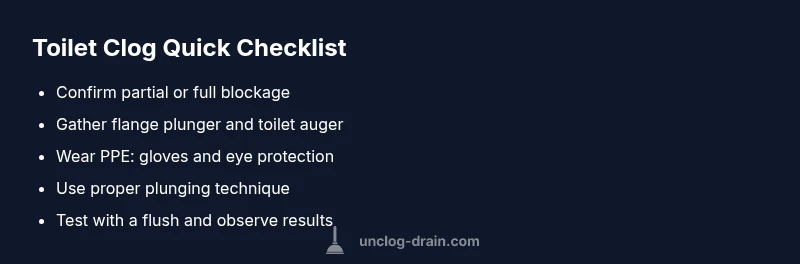
Some clogs respond to manual methods, others require equipment. Gather a flange plunger, a toilet auger (also called a closet auger), gloves, eye protection, and a bucket or towels for cleanup. Use the correct plunger type: a flange plunger is designed for toilets and creates a better seal than a cup plunger. Have old towels ready to soak up water and a cleaning solution for post-work disinfection. If you work near the drain, avoid bending over the bowl to prevent splashing and wear eye protection if splashing is likely. Liquids like bleach should not be mixed with other cleaners; read the label for compatibility. The right tools make the job safer, faster, and more effective.
Step-by-step fixes for most common clogs (overview)
- Plunge with purpose: ensure a solid seal and a rapid up-and-down motion to push the blockage away from the trap. - Auger if needed: insert carefully and rotate to break up the blockage, avoiding force that could crack the porcelain. - Don’t force it: stop if you feel resistance or hear unusual sounds. - Test with a gentle flush after the fix. - If water remains, repeat the steps or move to professional help. These steps cover about 80–90% of home toilet clogs and help you avoid messy overflows.
Prevention tips to avoid future clogs
Regular toilet maintenance reduces the chance of recurring clogs. Use less toilet paper, avoid flushing wipes unless labeled flushable, and consider a small screen in the bowl to catch debris. Periodically clean the trap with a mild cleaner to prevent buildup, and inspect the vent pipe from time to time for blockages. If you have hard water, mineral buildup in the trap can make clogs more likely—addressing it with routine maintenance helps. Remember that prevention is cheaper and safer than emergency fixes.
Steps
Estimated time: 30-60 minutes
- 1
Prepare and safety check
Put on gloves and lay towels. Remove any items from the floor area and ensure pets/children are clear. Confirm you have a clear escape route and your cleaning supplies nearby.
Tip: Keep a bucket handy for any overflow and check your water supply. - 2
Gather the right tools
Select a flange plunger; if the plunger doesn’t seal well, try a toilet auger as a backup before you apply force.
Tip: Use the correct toilet plunger for a better seal and less mess. - 3
Plunge with controlled, vertical strokes
Seal the bowl with the flange plunger and push straight up and down, not side-to-side. Allow the pressure to build before pulling back.
Tip: Aim to create forceful pressure without splashing. - 4
Try a toilet auger if plunging fails
Insert the auger and rotate slowly to break up the blockage, avoiding force that could crack the porcelain.
Tip: Do not force the auger beyond the trap's bend. - 5
Flush test and cleanup
Slowly flush to test the drain. If water drains slowly or bubbles back, repeat steps or stop and call a pro.
Tip: Never flush aggressively when you’re unsure. - 6
Sanitize and finish
Disinfect the bowl, the plunger, and the surrounding area. Wash hands thoroughly after removal of gloves.
Tip: Ventilate the room for a few minutes after cleanup.
Diagnosis: Toilet clogged or slow flush, water rising in bowl
Possible Causes
- highPartial blockage from toilet paper or waste buildup
- mediumForeign object causing a deeper obstruction
- lowVenting or sewer-line backup affecting flow
Fixes
- easyUse a flange plunger with proper seal and steady pressure
- easyTry a toilet auger to dislodge hard blockages
- easyAvoid chemical toilet drains; call a professional if backup continues
Common Questions
What should I do first when a toilet is clogged?
Stop flushing, put on gloves, and perform a quick visual check. Gather your tools and prepare for a safe plunge or auger. If water overflows or sewage odor is present, call a professional.
First, stop flushing and prepare your tools, then assess the situation. If the smell or overflow is present, call a pro.
Can I use chemical drain cleaners for a toilet?
Chemical drain cleaners in toilets are risky and can damage seals or pipes. They often do not resolve deeper clogs and can create harmful fumes. Use mechanical methods first.
Chemicals can be dangerous in toilets and rarely solve deeper clogs, so use mechanical methods first.
Will a clogged toilet unclog itself if I wait?
Waiting seldom helps. Most clogs require physical removal or loosening with a plunger or auger. If the water level rises, there is likely a blockage that needs attention.
Waiting won’t unclog it; you’ll likely need to act with plungers or augers.
When should I call a plumber?
Call a plumber if plunging and augering fail, if multiple fixtures back up, or if there’s sewage smell or water backing up into other fixtures. Professional help can prevent overflows and wastewater exposure.
If plunging and augering fail or other fixtures back up, call a plumber.
Will using a toilet auger damage the toilet?
A properly used toilet auger should not damage the toilet; force and improper use can crack porcelain. Follow manufacturer instructions and rotate gently.
A properly used toilet auger won’t damage the toilet, but don’t force it.
Are wipes or foreign objects common causes?
Yes. Flushing non-flushable wipes or small objects is a frequent cause of clogs. Dispose of them in the trash and keep toilet paper usage reasonable.
Non-flushable items cause many clogs; don’t flush them.
Watch Video
Key Points
- Act quickly to minimize overflow risk
- Use the right tools with proper technique
- Do not rely on waiting to unclog
- Call a pro if backup persists or safety is in doubt