How to Unclog Toilet Bowl: A Practical DIY Guide
Learn a practical, safe approach to unclog a toilet bowl with a flange plunger and toilet auger. This comprehensive DIY guide covers techniques, safety, and maintenance to prevent future clogs.


You can unclog a toilet bowl safely by using a flange plunger first, then a toilet auger if needed, and only using chemical cleaners as a last resort. Prepare the area, turn off the water supply, and work patiently in 2–3 focused attempts. This step-by-step approach minimizes mess and damage.
Understanding toilet clogs and how water seals work
A clogged toilet bowl typically happens when solid waste, paper, or foreign objects form a blockage in the trap or downstream piping. The toilet relies on a water seal in the trap to keep sewer gases from entering the bathroom. When the trap and drain line are obstructed, water backs up, pressure builds, and the flush can fail to move material through the system. For the homeowner, the key to effective unclogging is to restore a clear path for water and waste to flow, while protecting the surrounding area from splashes and stains. In this guide, you’ll learn how to unclog toilet bowl using tools you already have in the home, with safety as a priority, and without relying on harsh chemicals as a first resort. According to Unclog Drain analyses in 2026, a structured approach reduces damage risk and speeds up resolution time for most residential clogs.
Safety and prep before you begin
Before you touch the toilet, prepare the space and protect yourself. Wear rubber gloves and, if possible, eye protection. Clear the area around the toilet and place an old towel or a disposable mat to catch splashes. Turn off the water supply at the shut-off valve behind or beside the toilet to prevent new water from entering the bowl. If the bowl already contains water, you can flush once to reduce standing water, then quickly grab the flush handle to avoid overflow. This step minimizes messy splashes and keeps work controllable. For DIYers, planning your actions and keeping a tidy work zone pays off when you’re dealing with a stubborn clog.
Choosing your method: plunger, snake, or safe cleaners
The first tool should almost always be a flange plunger designed for toilets, not a sink plunger. A good seal around the drain is essential for effective pressure to move the blockage. If plunging doesn’t clear the clog after several attempts, a toilet auger (snake) is the next tool to try. Avoid chemical drain cleaners as the first option; they can damage seals, masks symptoms, and create hazardous fumes in enclosed bathrooms. When you do use cleaners, opt for enzyme-based products and follow label directions strictly. This section lays out a clear decision path so you don’t waste time with ineffective methods.
Step-by-step overview for a successful unclog
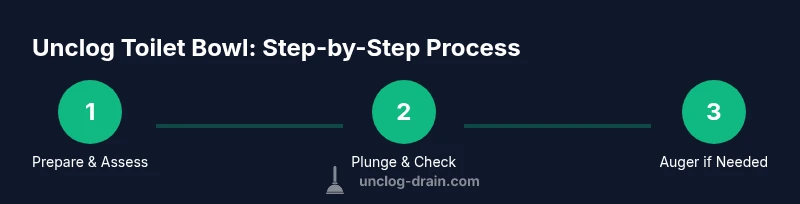
This section provides a high-level plan of the sequence you’ll execute, from prep to final test. You’ll learn how to position the plunger for maximum suction, how to extend a toilet auger into the trap, and how to safely flush the system to confirm success. While the details live in the step-by-step block, having this overview helps you anticipate each move and prevents backtracking that can spread mess. Remember, patience matters when you’re dealing with a stubborn clog.
Common mistakes to avoid
Rushing through steps or using the wrong tools are the two biggest mistakes. A sink plunger won’t seal properly on a toilet and will push water back rather than dislodge the clog. Overusing chemical cleaners can produce dangerous fumes and may damage porcelain or seals. Mixing cleaners with ammonia or bleach is a hazardous error that should be avoided entirely. If you notice unusual odors, sweating pipes, orpersistent backups, stop and reassess your approach; safety comes first for DIY drain repair.
When to call a professional
Most toilet clogs respond to a well-executed plunger and, if needed, a toilet auger. If the water level rises rapidly, if you’ve tried three or more attempts without improvement, or if you suspect a sewer-line issue, professional help is advised. A licensed plumber can diagnose deeper problems such as a blocked main line, broken pipes, or a slow drain caused by tree roots. The Unclog Drain team recommends opting for professional inspection when basic methods fail or recur, to prevent further damage and ensure long-term reliability.
Authority sources
For additional safety and best practices, refer to these authoritative resources:
- https://www.epa.gov/watersense
- https://www.osha.gov/chemical-safety
- https://www.cdc.gov/niosh/
These sources provide guidance on safe use of tools, handling chemicals, and general plumbing hygiene to support DIY maintenance and prevention strategies.
Tools & Materials
- Flange toilet plunger(Ensure a tight seal; look for a rubber flange to improve suction)
- Toilet auger (plumber's snake)(Rigid or flexible 3–6 ft length works for most residential toilets)
- Rubber gloves(Slash-resistant, waterproof gloves for hygiene and protection)
- Bucket or basin(To catch water and keep the area clean)
- Old towels or rags(Mop up spills and protect flooring)
- Dish soap (optional)(A few drops can help lubricate the auger? Not required but optional)
- Enzyme-based drain cleaner (optional)(Use only if no mechanical method works; follow label precisely)
- Flashlight(Extra light helps inspect the water level and clog location)
Steps
Estimated time: 30-60 minutes
- 1
Turn off water and clear the area
Shut off the toilet's water supply at the shut-off valve. Flush once to reduce standing water, then wipe up remaining water with a towel. This reduces splashing and prepares you for controlled work.
Tip: Have towels ready and protect the floor with a mat or old newspapers. - 2
Position the flange plunger correctly
Place the flange plunger into the drain opening, ensuring a complete seal around the rim. The handle should stay vertical as you push and pull to generate suction.
Tip: Angle the plunger slightly to direct force toward the clog, not around it. - 3
Plunge with steady pressure
Give 15–20 firm, controlled pumps without lifting the seal. Break the initial resistance, then pause to see if the water level drops. Repeat 5–10 cycles as needed.
Tip: If it battles to seal, dampen the rim with a little water or soap to improve suction. - 4
Try the toilet auger if plunging stalls
Insert the auger into the drain and crank slowly while pushing forward. When you feel resistance, rotate slightly and pull back a bit to grab the clog, then continue feeding and rotating.
Tip: Keep the auger coil parallel to the drain to avoid kinking. - 5
Consider safe chemical options as a last resort
If mechanical methods fail, use an enzyme-based cleaner or a product labeled safe for toilets. Follow the package directions precisely and ventilate the bathroom.
Tip: Never mix cleaners with bleach or ammonia; this creates dangerous fumes. - 6
Test the flush and clean up
Turn the water supply back on and give the toilet a test flush. If clear, wipe surfaces, dry the floor, and return tools to storage. If it remains clogged, schedule professional help.
Tip: Document what you tried and the sequence; it helps if you call a pro later.
Common Questions
What is the most effective method to unclog a toilet bowl?
For most clogs, a flange plunger is the most effective first-line method. If plunging doesn’t clear the area after several attempts, switch to a toilet auger. Reserve chemical cleaners for last-resort use and follow safety instructions closely.
Usually, start with a flange plunger. If that doesn’t work, try a toilet auger. Save chemical cleaners as a final option and follow safety directions.
Can I use chemical drain cleaners to unclog a toilet bowl?
Chemical cleaners can damage porcelain and seals if used improperly. Use enzyme-based cleaners only as a last resort and always follow the product directions. Prefer mechanical methods (plunger or auger) first.
Chemical cleaners are risky; use enzymes last and rely on plungers or augers first.
How long should I wait after using an enzyme-based cleaner?
Follow the product label for wait times, typically 15 to 60 minutes. If the clog persists, avoid repeated chemical use and switch to mechanical methods or seek professional help.
Check the label for wait times, usually 15 to 60 minutes, then reassess.
What should I do if the toilet overflows?
If overflow occurs, immediately turn off the water supply and remove excess water with towels. Do not flush again until the clog is resolved. If overflow recurs, call a professional.
Shut off the water, mop up, and avoid flushing until you fix the clog; contact a pro if it keeps happening.
Is it safe to reuse the plunger for other drains?
Yes, but use a dedicated plunger for toilets to avoid cross-contamination with other drains. Clean and sanitize the plunger after use.
Yes, but keep a separate toilet plunger and clean it after use.
Watch Video
Key Points
- Start with a flange plunger for best results.
- Move to a toilet auger if plunging fails.
- Avoid chemical cleaners as the first option.
- Test flush after each method to confirm success.