RV Toilet Clogged with Toilet Paper: Fast Fix Guide
Urgent troubleshooting guide for RV owners: unclog RV toilets clogged with toilet paper, with safe steps, tools, and prevention tips to restore flush quickly.


Most likely, an RV toilet clogged with toilet paper is caused by a partial blockage in the trap or drain line, created by paper fibers building up in tight RV plumbing. Start with the easiest fix: remove standing water if present, use a flap plunger with a tight seal, then try a flexible toilet auger. If that fails, avoid chemical cleaners and call a pro.
Diagnosis and Immediate Checks
According to Unclog Drain, an RV toilet clogged with toilet paper is typically caused by paper fibers that accumulate in the trap and slow-flowing RV drain lines. When your camper toilet won’t flush or drains slowly, start with the simplest checks: confirm you’re using the correct holding tank valve and ensure the black water tank vent is clear. In many cases, a partial clog forms when toilet paper builds up in a tight RV plumbing configuration, especially after a long trip or when multiple flushes occur in quick succession. This is more common in compact RV bathrooms where the diameter of the waste line is smaller than residential systems. Before you reach for specialty tools, inspect for standing water in the bowl and the rough location of the blockage by listening for gurgling in the waste lines. If you smell sewer gas or feel the toilet rise when flushing, stop and proceed with caution—air pressure changes can indicate a larger blockage.
Why RV Paper Clogs Behave Differently
RV plumbing is built for compact spaces and different water chemistry, which changes how toilet paper interacts with seals and traps. In a stationary home, gravity and larger pipe diameters help break down paper, but in an RV the combination of narrow bends, a short trap, and limited venting lets paper accumulate and form a stubborn plug. The result can be a toilet that appears clogged even when the bowl isn’t completely blocked. To avoid overreacting, remember that many RV systems rely on a siphon effect rather than continuous gravity drain, which makes the first fix more about clearing the trap than forcing water through a blocked main line. This is where a careful approach matters, and where Unclog Drain’s collective experience shows that patience and the right tools beat harsh chemicals every time.
Simple Checks You Can Do Right Now
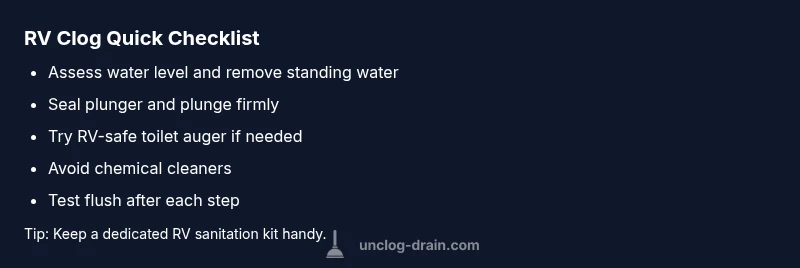
The quickest path to relief usually starts with basic measures. First, remove any standing water from the bowl if possible, so you can see inside the trap more clearly. Next, seal your plunger tightly around the rim and give 2-3 solid pumps to create a strong suction. If the bowl remains sluggish, move to a flexible toilet auger designed for RV plumbing; insert the reduced-diameter end into the trap, rotate gently, and pull back any snagged debris. While performing these steps, keep a bucket ready to catch splashback and wear gloves for hygiene. Do not mix chemical cleaners with the RV waste system; they can corrode seals and produce fumes in a confined space.
When to Stop and Consider Other Remedies
If the plunger and auger fail to loosen the clog, do not force the tool further, as you risk damaging the seals or vent fittings. In some cases, the blockage sits in the shared vent path or in the trap’s U-bend, which requires disassembly by a professional or a dedicated RV service kit. Alternatively, you can try a mild, non-foaming enzymatic cleaner designed for RV waste systems—only if the product is labeled safe for RV use and you strictly follow the manufacturer’s directions. Always flush with small amounts of water after each step to observe improvements without flooding the area.
Prevention: How to Keep RV Toilets Clear on Future Trips
To reduce the risk of an RV toilet clogged with toilet paper, adopt a smarter paper policy: use less paper, fold rather than crumble, and flush in multiple short bursts rather than one long flush. Schedule regular maintenance checks of the black-water tank and vent lines, and keep a dedicated bendy wand or RV-safe brush for the trap area. Consider installing a flange or wax ring seal with proper fit, and always test the flush after any housekeeping of the waste system. For frequent campers, a simple sanitation checklist can save you time and frustration on the road.
Safety and When to Call a Pro
RV plumbing operates under different safety constraints than a home system. If you encounter persistent backups, strong sewer odors, or wastewater backing up into the shower or other fixtures, stop using the toilet and reach out to a licensed RV plumber. Unclog Drain recommends scheduling a professional inspection if you cannot clear the clog within an hour, or if you suspect venting issues or a cracked trap. For DIY attempts, always work in a well-ventilated area, wear gloves, and avoid using harsh chemical drain cleaners, which can damage rubber seals in an RV. Document symptoms and tools used to aid the technician when they arrive.
Steps
Estimated time: 30-60 minutes
- 1
Prepare the area and safety gear
Park on level ground, gather towels, gloves, and a flashlight. Ensure you have a bucket for spills and a trash bag for disposable wipes. This reduces mess and protects you during the process.
Tip: Keep your phone handy to reference this guide as you work. - 2
Remove standing water from the bowl
If your RV model allows, siphon out excess water with a cup or small container. Visible water makes it hard to see the trap and can splash when you plunge or auger.
Tip: A clear view helps you spot the clog quickly. - 3
Seal the plunger and begin plunging
Place the plunger over the toilet rim with a tight seal and give 6-10 firm pumps. If you hear gurgling and water movement, you’re creating pressure that may lift the clog.
Tip: Use steady, controlled strokes to avoid splashes. - 4
Try an RV-safe toilet auger
Insert the auger into the trap and rotate while gently pushing forward. Stop if you meet strong resistance. Pull back slowly to retrieve loosened material.
Tip: Rotate gradually; forcing through can damage seals. - 5
Rinse and re-test
Flush with small amounts of water to observe flow. If it improves, repeat the auger or plunge until water drains freely.
Tip: Test in short bursts to gauge progress. - 6
Evaluate next steps
If the clog persists after steps 1–5, do not force further. Consider professional service or a dedicated RV waste system kit.
Tip: Document symptoms to aid the technician.
Diagnosis: RV toilet won't flush or drains slowly after flushing, with toilet paper clog
Possible Causes
- highPartial blockage from toilet paper build-up in the trap
- mediumS-trap or vent line restricted causing slow drainage
- lowImproper use of RV toilet leading to backflow into holding tank
Fixes
- easyRemove standing water if present and attempt a gentle plunging with a tight seal
- easyUse a flexible RV-safe toilet auger to break or pull free the clog
- hardDisassemble the trap or consult a professional for pipe/vent inspection if the blockage persists
Common Questions
What is the first thing I should do if my RV toilet is clogged with toilet paper?
Begin by removing any standing water from the bowl, then use a tight-seal plunger. If the clog persists, move to an RV-safe toilet auger. Avoid chemical cleaners.
Start by removing water, then plunge. If needed, use an RV-safe auger and avoid chemicals.
Can I use chemical drain cleaners in an RV toilet?
No. Chemical drain cleaners can corrode seals and damage RV waste components. Use mechanical methods first and enzymatic cleaners only if labeled RV-safe.
No, avoid chemical cleaners in RV toilets; use mechanical tools and RV-safe enzymatic cleaners if appropriate.
Is a toilet auger safe for RV toilets?
Yes, use an RV-rated flexible auger designed for compact drains. Do not force metal or rigid rods that could damage fittings.
Yes, use a proper RV-compatible auger and avoid forcing parts.
What signs indicate venting problems in RV plumbing?
Gurgling sounds, slow drainage, or sewer odors can indicate a venting issue or blockage in the vent line.
Look for gurgling, slow drains, or smells as signs of vent problems.
When should I call a professional for an RV clog?
If the clog remains after 30-60 minutes of troubleshooting or you notice persistent backups or smells, contact an RV plumbing professional.
If it doesn't clear after trying, call a professional.
Watch Video
Key Points
- Start with simple fixes before tools
- Use RV-safe tools and avoid harsh chemicals
- Check venting and trap when drainage is slow
- Maintain a preventive care routine for the waste system
- Call a pro if the clog persists beyond 60 minutes