Troubleshooting a Black Water Tank Clogged with Toilet Paper
Urgent troubleshooting guide for a black water tank clogged with toilet paper. Learn quick fixes, safety steps, and prevention to restore proper flushing and odor control in RVs and homes.


Most often, a black water tank gets clogged by toilet paper buildup that blocks the flow toward the outlet. Quick fix: remove obvious paper if accessible, then treat the tank with an RV-safe cleaner and run a controlled rinse with a tank wand or flush wand to push the clog toward the outlet. If odors persist or flushing remains weak, escalate to safer DIY methods or professional help.
What causes a black water tank clog with toilet paper
In RVs and homes with a waste holding system, the black water tank receives toilet waste and paper. Toilet paper is designed to break down, but some brands disintegrate slowly, especially when flushed in bulk or with limited water. Paper can accumulate behind a partial blockage and form a stubborn plug that restricts flow toward the outlet. The result is slow flushing, backups, gurgling noises, and sewer odors that worsen as the tank fills. This is why many owners observe a drop in flush performance and an increase in odors after a few uses. The best defense is selecting RV-grade toilet paper that dissolves reliably, using adequate water per flush, and performing regular tank rinses. If a clog forms, addressing it promptly reduces pressure on seals and minimizes the risk of a larger failure.
Tips for prevention: flush with plenty of water, avoid paper piles, and limit the amount of toilet paper per flush. A small habit change now can prevent major headaches later.
Safety first: before you begin
Safety comes first when you’re dealing with a black water tank. Put on impermeable gloves and eye protection, and ensure the area is well ventilated. If you’re indoors, open a window or use a fan to vent odors. Disconnect any automatic pumps or electrical controls that might accidentally start while you’re working. Never use caustic or strong chemical drain cleaners in RV waste tanks; they can damage seals and disrupt the septic balance. Have a waste bag handy for disposable gloves and wipes, and keep a clean towel nearby for spills. Do not attempt to dismantle tank components unless you’re trained and following the manufacturer’s instructions. These precautions keep you safe and protect the RV plumbing system while you troubleshoot.
A calm, methodical approach reduces risk and makes it more likely you’ll clear the clog without creating new problems.
Assess tank level and odors to gauge severity
Before taking aggressive steps, assess how full the tank is and whether odors indicate pressure buildup. A nearly full tank increases the risk of overflow when you flush, and it can push liquids toward the vent line, worsening odors. If you detect strong sewage smells after opening the tank or flushing, pause rapid attempts and pursue a controlled flush with a tank wand. Note the timing, the odor strength, and any unusual sounds. This information helps you decide whether to continue with in-tank methods or seek professional assistance. If you’re unsure, err on the side of safety and schedule a professional evaluation to prevent a spill or seal damage.
Record your observations so you can track progress over the next steps.
Clearing a paper clog: initial methods
Start with the simplest actions. Attach an RV-approved tank wand or long flexible hose to a clean water source and perform a controlled flush to disturb the plug. If possible, try to push the paper toward the outlet while maintaining steady water flow. Consider an enzyme-based RV waste treatment to help break down paper and reduce odors. Avoid harsh chemical drain cleaners and anything that could damage seals. Repeat flush cycles a few times, watching for improved drainage. If the clog holds, advance to more involved methods like an auger designed for RV waste systems. Throughout, keep the water level moderate to avoid splashes and pressure surges.
Patience is key: most paper clogs respond to a combination of mechanical agitation and proper flushing rather than brute force.
Using tools safely: auger, hose, and PSI
When paper buildup resists, use tools designed for RV waste systems. An RV-friendly auger can break up the plug with careful, slow rotations to avoid tearing seals. The wand or hose should be inserted through the toilet or access port with gentle, continuous pressure rather than a sharp jolt. If you use a hose, maintain low to moderate water pressures to prevent backflow and splashing. Do not exceed the recommended PSI or force, as that can damage hoses or fittings. After applying these tools, perform another round of controlled flushing to move loosened material toward the outlet. Always wear gloves and have a cleanup plan ready for spills.
Safety tip: never force a blockage through the system; if resistance persists, stop and reassess.
Preventive habits to minimize future clogs
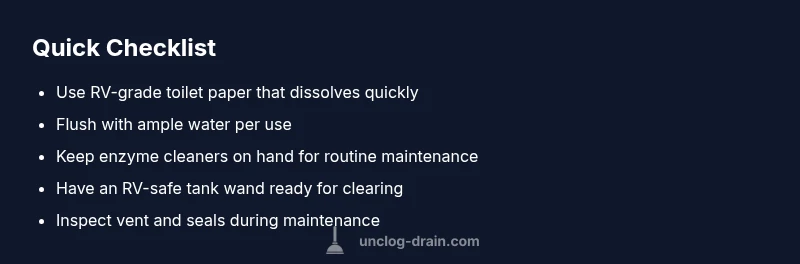
Prevention is simpler than recovery. Use RV-rated toilet paper that breaks down quickly and avoid tissue piles by flushing smaller amounts at a time. Develop a routine: dump, rinse, and flush with a generous amount of water after each dump to help push waste toward the outlet. Consider a periodic enzyme-based treatment to sustain a healthy microbial balance in the tank. Regularly inspect the vent line for obstructions and ensure the sewer hose is properly stored to prevent accidental blockages. Small daily habits combined with periodic maintenance dramatically reduce the risk of future clogs.
A proactive plan saves time and money while keeping your system running smoothly.
When to involve a professional and what to expect
If you can’t clear the clog after several attempts or if you notice persistent odors, consult a professional RV service or plumber. A technician can perform a camera check of the line, remove stubborn blockages, and assess tank seals and vent integrity. You’ll want a clear estimate before work begins, and ask whether the price includes vent/seal checks and preventive maintenance. While DIY can solve many issues, a pro can prevent escalation and guide you on an ongoing maintenance plan to avoid repeats.
Professional help provides certainty and reduces the risk of a costly failure down the road.
Steps
Estimated time: 60-120 minutes
- 1
Prepare safely and assess
Put on protective gloves, eye protection, and ensure good ventilation. If indoors, open a window or run a fan. Disconnect any electric pumps to prevent accidental activation. Verify you have an RV-safe tank wand, auger, and enzyme treatment ready.
Tip: Safety first: never bypass protective gear or masks when dealing with waste systems. - 2
Check tank level and odors
Assess how full the tank is and note any strong odors. If the tank is near capacity, proceed with caution to avoid overflow. Document observations so you can tailor the following steps to the severity of the clog.
Tip: A clear observation log speeds up the decision on whether to DIY or call a pro. - 3
Initial flush with tank wand
Attach the wand to a water source and perform controlled flushes to disturb the paper plug. Push gently toward the outlet, avoiding aggressive bursts that could splash back. Stop if you see progress or if resistance increases.
Tip: Keep water flow steady; sudden surges can worsen backflow. - 4
Apply enzyme cleaner
If available, introduce an RV-safe enzyme-based cleaner following the product instructions. These cleaners help break down paper fibers and reduce odors without harming seals. Allow time for the solution to circulate before the next flush.
Tip: Enzyme products work gradually—don’t expect instant results. - 5
Use an RV auger if needed
If the paper remains stubborn, gently insert the auger through the toilet or access port and rotate slowly to break up the clog. Avoid forcing the tool, which can damage seals or fittings. After breaking up the plug, flush again to move debris toward the outlet.
Tip: Work slowly to protect the tank’s internal components. - 6
Rinse and re-test drainage
Run multiple controlled flush cycles with fresh water until the water drains freely. Check for residual odors and ensure the tank is draining consistently. If progress stalls, move to step 7 or 8.itt
Tip: Patience pays off—rushing can re-clog the system. - 7
Assess post-cleanup condition
After clearing the clog, perform a final flush with ample water and monitor for any slow draining or odors. If the system returns to normal, continue with a preventive maintenance plan.
Tip: A final check prevents a surprise return of the issue. - 8
Create a maintenance plan
Set up a routine: use RV-grade toilet paper, flush with sufficient water, and schedule periodic tank cleaning using a wand or enzyme treatment. This routine reduces future clogs and extends tank life.
Tip: Consistency is the key to long-term reliability. - 9
Know when to call a pro
If the clog persists after attempting methods 1–8, contact a professional RV technician. Expect a diagnostic check, possible camera inspection, and a targeted clearance plan.
Tip: Don’t delay professional help if basic methods fail.
Diagnosis: Black water tank clogged with toilet paper, slow flush, odors, or backups
Possible Causes
- highToilet paper buildup behind a partial or complete blockage
- highInsufficient water per flush allowing paper to accumulate
- mediumBlockage in vent or outlet line causing backpressure
- lowNon-paper solids contributing to the plug
Fixes
- easyEmpty and flush with a tank wand to push paper toward the outlet
- easyAdd RV-safe enzyme cleaner to help break down paper and flush again
- mediumUse an RV-approved auger to break up stubborn paper clogs
- mediumIf unresolved after multiple methods, contact a professional RV service
Common Questions
What causes a black water tank to clog with toilet paper?
The most common cause is paper buildup behind a partial blockage. Paper that doesn’t break down quickly enough can accumulate and form a plug, especially if the tank is near full or flushed with insufficient water. Regular use of RV-rated toilet paper and adequate water per flush helps prevent this.
Toilet paper buildup behind a partial blockage is the usual reason for clogs; make sure you flush with enough water and use RV-grade paper.
Can I use chemical drain cleaners in a black water tank?
Chemical drain cleaners are not recommended for black water tanks. They can corrode seals and disrupt the tank’s balance, making odor problems worse. Stick to enzyme cleaners and mechanical flushing methods designed for RV waste systems.
No, avoid chemical cleaners in black water tanks; they can damage parts and worsen odors.
Is manual removal of paper safe?
Manual removal is only advisable if you can safely access the blockage and wear proper protective gear. Do not dismantle tank components without manufacturer guidance. If you’re unsure, skip to professional service to avoid injuries or leaks.
Only remove paper if you can reach it safely with proper protection; otherwise get professional help.
How often should I flush and clean the black water tank?
Flush and rinse the tank after each use with plenty of water, and perform periodic deep cleanings using an RV-safe cleaner or enzyme treatment. This reduces buildup over time and helps prevent future clogs.
Flush regularly and clean periodically to keep the tank flowing smoothly.
When should I call a professional for a black water tank clog?
Call a professional if the clog persists after attempting the DIY steps, if you detect persistent odors, or if you’re uncomfortable performing any part of the procedure. A pro can perform a camera inspection and ensure seals and vents are intact.
If it won’t clear after your methods, it’s time to contact a pro for a proper check.
Watch Video
Key Points
- Clear the clog quickly with a controlled flush and wand.
- Avoid harsh chemicals—use enzyme treatments suitable for RV waste systems.
- Regular maintenance dramatically reduces future clogs.
- Know when to call a professional to prevent damage or spills.
- Document observations to tailor prevention over time.