How to Unclog an RV Black Tank: A DIY Guide
Learn safe, practical steps to unclog an RV black tank using RV-safe methods, tools, and maintenance tips to prevent future clogs.


You will learn how to safely unclog an RV black tank using non-chemical methods and RV-safe cleaners. This guide covers the right tools, step-by-step actions, and preventative maintenance to keep the tank flowing without damaging seals or vents. You’ll avoid hazardous drain cleaners, protect yourself with PPE, and know when to call a pro.
Understanding the RV Black Tank System and Why Clogs Happen
When you hear an RV's wastewater system mentioned, the focus is usually the black tank, which stores toilet waste and flush water until it’s dumped. Unclogging this tank isn’t just about getting water to move again; it’s about protecting the seals, vents, and plumbing fittings that keep your rig livable on the road. The technique you choose should consider how the tank vents, the size of the opening, and the discharge path to the dump station interact with pressure and flow. According to Unclog Drain, understanding the tank’s layout—tank, inlet, outlet, and vent—helps you pick a method that safely restores flow without causing leaks or backups. This foundational knowledge sets you up for a methodical, non-harmful approach that minimizes odor and mess while preserving your RV’s sanitation system for long trips.
titleLine2":"System basics and why clogs form"
noteAndContext":"Introductory context for how the black tank is designed to operate and what signs indicate a clog."
Tools & Materials
- RV-safe toilet auger (snake)(A flexible, RV-rated auger designed for black tanks; avoid household plungers unless specified for RV use.)
- RV-compatible tank rinser or flush wand(Connects to freshwater hose at the dump station; helps agitate and rinse waste from near the outlet.)
- Personal protective equipment (PPE)(Disposable gloves and safety glasses; long sleeves recommended.)
- Fresh water supply(Clean, steady supply for flushing and rinsing; use cold water to reduce odors.)
- Large-capacity water container(Useful for pre-rinsing or diluting treatments if a direct rinse isn’t available.)
- Enzymatic black tank treatment(RV-safe enzyme or biological treatment to digest waste and reduce future clogs.)
- Disposable bags and cleaning supplies(For safe cleanup and disposal of waste residue after procedure.)
Steps
Estimated time: 45-90 minutes
- 1
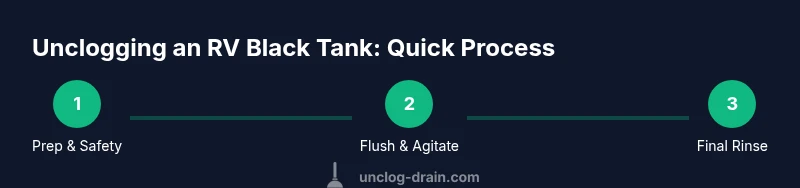
Prep and safety
Put on PPE, lay down a protective mat or old towel, and clear the area around the dump valve. Ensure you are working in a well-ventilated space and have a clear plan for safe disposal of wastewater.
Tip: Never skip PPE; waste exposure can cause skin or eye irritation. - 2
Isolate the tank and assess the blockage
If possible, ensure the black tank is isolated from other drains to prevent cross-flow. Briefly observe the drainage behavior—slow drain, gurgling, or standing water indicates a blockage.
Tip: Document symptoms so you can adjust your approach if needed. - 3
Connect the flush mechanism
Attach the RV-compatible tank rinser to the freshwater supply. Start a slow, steady flush to loosen solids near the outlet before introducing agitative tools.
Tip: A steady flow reduces splashing and improves control. - 4
Use the RV-safe toilet auger
Carefully insert the auger through the toilet bowl and feed toward the tank outlet. Gently twist to break up the blockage, then retract and repeat a few times as needed.
Tip: Keep the auger line clean and avoid forcing it to prevent damage to seals. - 5
Rinse and flush again
After mechanical agitation, run a longer rinse with ample water to push loosened material toward the dump outlet. Check for improved drainage.
Tip: Watch for air or water returning in the toilet—that’s a sign you may need another pass. - 6
Apply enzymatic treatment and wait
Pour an RV-safe enzymatic or bio-based treatment into the tank as directed. Allow time for enzymes to digest organic buildup before a final flush.
Tip: Enzymes work best with some dwell time; plan accordingly and avoid immediate draining after application. - 7
Final test and cleanup
Do a final high-volume flush to confirm consistent flow from outlet. Disconnect equipment, sanitize tools, and dispose of waste at an approved dump station.
Tip: Clean hoses and fittings to prevent lingering odors and cross-contamination.
Common Questions
Can I unclog an RV black tank without a professional?
Many clogs can be cleared with an RV-safe auger and proper flushing. If water flow remains slow or backflow persists after several attempts, consider professional inspection to check for vent or piping issues.
Yes, many clogs can be cleared with the right tools, but persistent problems may require a pro.
Are chemical drain cleaners safe for RV black tanks?
Most general chemical cleaners are not recommended for RV black tanks as they can damage seals and septic components. Use enzyme-based products and mechanical methods.
Chemical cleaners aren’t ideal for RV tanks; enzyme products and mechanical clearing work best.
How often should I sanitize the black tank?
Sanitize when winterizing or after extended trips, and periodically as part of routine maintenance depending on usage. Follow the product directions and campground guidelines.
Sanitize when you winterize or after heavy use to prevent buildup.
What is the best tool to unclog a black tank?
An RV-safe toilet auger paired with a tank rinser and a good flush routine typically yields the best results for a stubborn clog.
An RV-safe auger plus a strong flush usually does the job.
What if the blockage returns after cleaning?
If clogs return, re-test with the auger and flush, then inspect venting and lines for deeper issues. Recurrent clogs may require professional assessment.
If it keeps coming back, there may be a deeper issue and you should consider a pro.
Is it safe to flush harsh chemicals through an RV black tank?
No. Harsh chemicals can damage seals, lines, and the RV’s plumbing system and may violate campground rules. Stick to RV-safe enzymatic products.
Avoid harsh chemicals; they can damage your RV’s plumbing.
Watch Video
Key Points
- Identify the blockage safely before acting
- Use RV-safe tools and cleaners, not household products
- Flush thoroughly after mechanical clearing to clear debris
- Enzymatic treatments aid long-term maintenance
- Regular, preventative maintenance reduces future clogs