Plunger Doesn T Fit Toilet: Troubleshooting Guide
Struggling with a toilet where the plunger won’t seal? Learn quick checks, the right plunger types, safe alternatives, and a step-by-step troubleshooting flow from Unclog Drain to unclog drains fast.


Most often the problem isn t the clog itself but the plunger size. The standard cup plunger may not seal the toilet bowl, so there s no suction. Try a toilet-flange style plunger, ensure the seal is wet, and plunge with steady, controlled strokes for 15–20 cycles. If it still won t budge, switch to safer alternative methods.
Understanding the challenge: plunger doesn t fit toilet
When a standard cup plunger won’t seal around the toilet drain, you lose suction and the clog remains stubborn. The root cause is often a mismatch between the plunger head and the toilet rim or bowl geometry. The Unclog Drain team has seen many DIY attempts fail simply because the wrong plunger is used for a toilet with a narrow rim or unusual shape. This block walks you through diagnosing the fit issue, selecting the right tool, and using safe, effective plunging techniques. Remember: addressing the fit problem directly saves time, mess, and potential damage. Also ensure there is enough water to submerge the seal and inspect the rim for cracks that could hinder suction. If you spot damage, stop and seek professional help to avoid leaks.
Quick checks before re-fitting your plunger
Before swapping tools, run these fast checks: confirm there is sufficient water in the bowl to cover the plunger seal; inspect the plunger for cracks or wear; measure the cup diameter against the toilet rim; ensure the toilet isn t overflowing; wipe debris from the rim edge to allow a clean seal; verify you re dealing with a standard gravity-fed toilet. These small checks dramatically affect suction and ease of plunging, especially when the plunger seems to “not fit”.
Choosing the right plunger for your toilet shape
There are two main plunger styles: a typical cup plunger and a toilet-flange plunger. For most toilets, a flange or a bell-shaped head provides a better seal with the vertical rim. If your toilet bowl has a narrow or unusual rim, a flange-style plunger often creates a stronger, more reliable seal. When selecting, compare the cup diameter to the widest part of the rim and consider the toilet s flushing design. The goal is to have a tight seal with minimal air leaks so suction is effective. If the chosen plunger still doesn t fit perfectly, don t force it—switch tools or consult a pro.
Alternative tools and when to use them
If the plunger won t seal, don t force it. A toilet auger (or toilet snake) can clear deeper clogs that plungers can t reach. Use slow, gentle turns to avoid scratching porcelain or pushing the clog deeper. Do not mix chemical drain cleaners with water around a clogged toilet without following label instructions. In stubborn cases, a professional has access to more powerful tools. A sanitation plan is essential: wear gloves, protect your eyes, and keep water away from electrical devices.
Step-by-step approach to fix a clog when the plunger fits
- Gather the right tools: a toilet-flange plunger, gloves, and optionally a toilet auger. 2) Clear the area and place a towel to catch any overflow. 3) Submerge the plunger and form a tight seal at the drain opening. 4) Use firm, vertical thrusts without twisting, maintaining constant pressure for 15–20 strokes. 5) If water rises and the clog releases, repeat the cycle. 6) If the clog persists, switch to a toilet auger with careful feeding and gentle turning. 7) Check water flow after dislodgement and flush to confirm clearance. 8) Sanitize the area and inspect for residual slow draining. Estimated time: 20–40 minutes.
Safety and common mistakes to avoid
Avoid overloading the toilet with water or applying excessive force that could crack the bowl. Do not mix cleaners with standing water, and never use a power tool or electrical device near water. Always wear gloves and eye protection when dealing with sewage or wastewater. If you re unsure about the toilet s integrity or suspect a deeper sewer issue, call a pro rather than risking a bigger repair.
Prevention and maintenance tips
Keep a properly sized plunger stocked with the right head type for your toilet. Regularly inspect the plunger for wear and replace when the cup edges start to crack. Create a habit of flushing with clean, hot water and avoid introducing large food waste or paper products not meant for plumbing. A small, regular drain maintenance routine can prevent many clogs and extend the life of your fixtures.
Real-world scenarios and troubleshooting tips
Scenario A: The cup plunger barely seals around the rim. Solution: switch to a flange plunger and re-check the seal. Scenario B: The drain clears only partially. Solution: use a toilet auger with short, controlled turns to break the clog. Scenario C: Overflow warning during plunging. Solution: quickly remove excess water and wait, then resume plunging with gentler pressure. These tips help you adapt to common variations in toilet design and clog location.
Final checks and sanitation after unclogging
After dislodging a clog, flush several times to confirm the path is clear. Clean the bowl with a probiotic-safe cleaner, rinse the plunger and store it dry to prevent mold. Sanitize hands and any surfaces touched during the process. If the toilet continues to drain slowly, there may be a deeper blockage or venting issue that requires a plumber.
Steps
Estimated time: 20-40 minutes
- 1
Assess and gather the right tools
Identify whether you need a flange-style toilet plunger and an optional toilet auger. Gather gloves, towels, and cleaner. Prepare the area to minimize mess.
Tip: Having everything ready avoids mid-task interruptions. - 2
Inspect the toilet and water level
Check that there is enough water to submerge the plunger seal and inspect the rim for damage or cracks. A dry seal won t suction properly.
Tip: Top off the bowl with water if needed before plunging. - 3
Attach the correct plunger head
Use a flange or bell-shaped plunger designed for toilets. Ensure the cup diameter fits the rim without leaving air gaps.
Tip: Test the seal by gently pressing the plunger head against the rim before applying force. - 4
Form a tight seal and plunge
Place the plunger over the drain and push straight down with steady, vertical strokes for 15–20 cycles. Maintain pressure without twisting.
Tip: Keep the plunger fully submerged to maximize suction. - 5
Clear with a deeper reach if needed
If there s no improvement, try a toilet auger with a slow, clockwise turn to avoid damaging the porcelain.
Tip: Never force the auger; damage could require replacement parts. - 6
Flush to confirm the clog is gone
After repeating plunging or using the auger, flush the toilet to ensure water flows freely. Watch for continuous drainage.
Tip: If water remains high, pause and reassess for possible deeper clogs. - 7
Sanitize and restore hygiene
Clean the bowl, sanitize tools and wash hands thoroughly. Dry the plunger before storage.
Tip: Store tools in a dry area to prevent mold growth. - 8
Evaluate next steps if persistence occurs
If the problem persists after all tools are used, schedule a professional inspection for vent blockages or sewer line issues.
Tip: Document symptoms to share with the plumber for faster service.
Diagnosis: Toilet clog persists and a standard plunger won t form a seal
Possible Causes
- highPlunger head too large or misaligned for the toilet rim
- mediumToilet rim shape or depth prevents a proper seal
- lowWorn or cracked plunger seal
- lowClog located deeper in the drain beyond the plunger reach
Fixes
- easySwitch to a toilets-specific plunger (flange style) and ensure the seal is wet before plunging
- easyCheck for rim damage and verify there is sufficient water to submerge the seal
- easyUse a toilet auger if plunging fails to reach the clog
- mediumIf the clog persists, call a plumber to assess potential deeper or venting issues
Common Questions
Why doesn t my plunger fit toilet and seal properly?
A mismatch between the plunger head and toilet rim often causes a poor seal. Try a toilet-flange plunger and ensure the seal is fully submerged before plunging.
The problem is usually a bad seal from the wrong plunger type. Switch to a flange plunger and re-check the seal before plunging.
Can I use a regular plunger to clear a toilet clog if it doesn t fit?
A regular cup plunger can work on some toilets, but if it doesn t seal well, switch to a flange plunger designed for toilets. A poor seal wastes effort and may worsen the clog.
If the regular plunger won t seal, switch to a toilet-specific plunger for the best shot at clearing the clog.
What safety precautions should I take?
Wear gloves and eye protection, avoid mixing cleaners, and don t apply excessive force that could crack the porcelain. If you feel unsure, call a plumber.
Wear gloves and protect your eyes, avoid chemical mixes, and don t force the plunger. If unsure, call a professional.
When should I call a professional?
If plunging and an auger don t clear the clog, or you notice persistent slow drainage, a plumber can check for deeper blockages or vent issues.
Call a professional if the clog remains after trying the right tools or you suspect deeper sewer problems.
Is it safe to use a toilet auger?
Yes, a toilet auger is designed for clogs beyond the plunger reach. Use slow, controlled turns to avoid damaging the porcelain.
Yes, but use it slowly and carefully to avoid damaging the toilet.
How can I prevent future clogs in the toilet?
Flush only toilet-appropriate waste, avoid paper products that aren t designed for plumbing, and consider a routine drain maintenance schedule.
Prevent clogs by flushing only appropriate items and keeping a regular drain maintenance routine.
Watch Video
Key Points
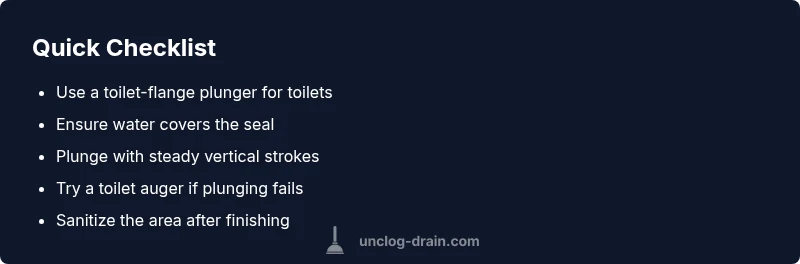
- Use the right plunger for toilets (flange style).
- Ensure the seal is wet and water level is sufficient.
- If plunging fails, switch to a toilet auger rather than forcing it.
- Sanitize after completing the task and call a pro if needed.