How to Unblock a Toilet Without a Plunger: A Practical Guide
Learn safe, practical methods to unblock a toilet without a plunger. This educational guide covers hot-water and soap techniques, DIY siphon tricks, when to use a flexible auger, and clear safety tips for homeowners.


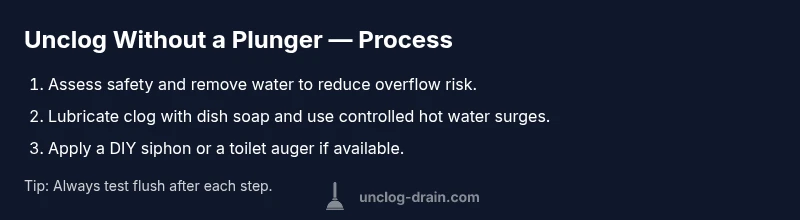
If you’re faced with a blocked toilet and no plunger, start with safety checks, then try hot water and dish soap to lubricate the clog, followed by a DIY siphon technique using a plastic bottle or bucket. If these don’t work, use a plumbing auger (if available) and test the flush. When in doubt, contact a professional. Unclog Drain emphasizes safety and patience first.
Understanding the problem: blocked toilet no plunger
A blocked toilet with no plunger is a common household headache. According to Unclog Drain, most clogs stem from toilet paper, organic waste, or non-flushable items; without a plunger, it’s essential to act carefully to avoid overflow. Clogs vary in severity, but the underlying goal is the same: restore a clear path for waste to leave the bowl. Recognizing the typical culprits helps you choose the right approach. Common causes include excessive toilet paper, wipes, too much toilet paper at once, or foreign objects accidentally flushed.
Safety note: never mix chemical cleaners with other treatment methods, and avoid forcing water into the bowl if you can hear a gurgle or smell a sewage odor. A cautious, methodical approach reduces spill risk and protects your plumbing.
Key takeaway: you can address many blockages with household items and careful technique, even if you don’t have a dedicated plunger.
Safety first: assess and prepare
Before you start, turn off the toilet’s water supply if you can locate the valve behind the toilet or at the wall. Put on rubber gloves to protect your hands and keep towels handy to catch spills. Clear the area around the toilet so you have room to work and prevent accidents in the bathroom. Inspect the bowl for signs of overflow risk, and prepare a bucket to catch any water that may escape. Adequate lighting helps you see the clog more clearly and avoid missing a potential obstruction.
Why this matters: a controlled, low-water environment reduces the chance of a messy spill and makes subsequent methods more effective.
Pro tip: keep a dedicated rag or old towels near the toilet for quick cleanup and to prevent slipping on wet floors.
Quick wins you can try without a plunger
If you don’t have a plunger, you can still attempt several safe, low-risk maneuvers to encourage flow.
- Soap and hot water method: Squirt a generous amount of dish soap into the toilet bowl, then pour hot (not boiling) water from waist height into the bowl. The soap lubricates the clog while the hot water softens it, helping water push the blockage along.
- Gentle agitation with a brush: Use a toilet brush to carefully stir the water and contact the sides of the bowl. This can help dislodge small clogs without a plunger. Do not force the brush into the drain; instead, create a mild scrubbing motion around the clog area.
- Bucket-assisted flush: If water level is low enough, pour a bucket of warm water from a height to create a flowing surge that can push the clog toward the trap. This technique creates pressure waves without a plunger.
Note: patience is key. Avoid repeated hard pours that can overflow or splash back. If you can hear a strong gurgle or the water doesn’t rise, stop and reassess.
Step-by-step alternatives using household tools
- DIY siphon with a bottle: Fill a plastic bottle with water, place the mouth at the drain, and squeeze rhythmically to create a pushing effect that helps dislodge the blockage. This is not as strong as a plunger but can move smaller obstructions.
- Bucket-wave technique: Stand with a full bucket of hot water and pour rapidly into the bowl in short bursts. The rapid flow creates pressure to loosen the clog and move it through the drain.
- Auger as a backup: If you own a toilet auger (snake), carefully insert the curved end into the drain and rotate to break up the clog. Stop if you meet resistance and back out gently to avoid damaging the porcelain.
When to call a pro and what to expect
If the toilet remains blocked after trying the safe household methods, it’s time to escalate. A licensed plumber can use professional tools like a toilet auger with greater reach or inspect the home’s sewer line for more complex issues. Before calling, note whether beyond-bowl signs appeared (sudden gurgling, strong odors, or multiple fixtures backing up). A plumber will typically assess the trap, check the vent system, and test the line for blockages. If a blockage is caused by non-flushables, a professional can minimize the risk of overflow and damage.
Preventative tips to avoid future blockages
- Only flush appropriate items: toilet paper and human waste, avoiding wipes, paper towels, feminine products, and other foreign items.
- Use moderate amounts of toilet paper per flush and consider double-flush strategies for heavy waste.
- Regular maintenance: periodically inspect the toilet’s trap and vent lines, and consider a routine drain-cleaning schedule with a plumber’s guidance.
- Consider a preventative auger check if you’ve had repeated clogs in the past; early intervention can save time and prevent emergencies.
- Manage trash and bathroom cleanliness: keep a small trash can and a bathroom cleaning routine to reduce the temptation to flush inappropriate items.
Tools & Materials
- Rubber gloves(Powder-free nitrile recommended, size large)
- Bucket (2-3 gallons)(Used for water transfer and specialty pours)
- Dish soap(Classic lubricant; clear the bowl of grease and residue)
- Hot water(From tap; avoid boiling to protect porcelain and seals)
- Flashlight(Inspect under rim and along drain path for clogs)
- Plastic bottle (2-liter)(For DIY siphon technique; ensure cap removed)
- Old towel or rags(Contain spills and protect floor)
- Toilet brush(Gently agitate inside bowl to aid loosening)
- Plumbing auger / snake(Optional for stubborn clogs; use with care)
- Chemical cleaner (optional)(Only if used as directed and never mixed with other methods)
Steps
Estimated time: 30-90 minutes
- 1
Scoop to reduce water level
If the bowl is near overflow, use a small container to scoop water from the bowl into a bucket. This lowers the risk of overflow and creates working space for your next steps. Keep towels nearby to catch splashes.
Tip: Act quickly but steadily to prevent water from spilling over. - 2
Lubricate and loosen with soap
Squirt a generous amount of dish soap into the bowl, then let it sit for a few minutes to coat the clog. The soap acts as a lubricant, helping the water flow push the clog through. Avoid adding more than one batch of soap at a time.
Tip: Too much soap can make the blockage slipperier; use measured amounts. - 3
Create a DIY siphon using a bottle
Fill a plastic bottle with water and place the mouth against the drain opening. Squeeze the bottle in measured bursts to push water toward the blockage, creating a small siphon effect that can dislodge the clog.
Tip: Keep a firm, controlled grip to avoid splashing. - 4
Use the bucket-wave method
Quickly pour a full bucket of warm water into the bowl in short bursts to generate a surge that can lift the clog. Repeat as needed, observing whether the water level rises and the bowl starts to drain.
Tip: Don’t pour from too high—keep it controlled to avoid splashes. - 5
Attempt a safe auger approach (if available)
Insert the auger into the drain and gently rotate while pushing forward until you feel resistance. Retract slowly after breaking the clog and test flush. Do not force the tool, which can crack the porcelain.
Tip: Use slow, steady turns; abrupt movements can damage the toilet.
Common Questions
Can I unblock a toilet without a plunger at home?
Yes. Start with safety measures, then try hot water with dish soap, a DIY siphon method, and a toilet auger if you have one. If these don’t resolve the blockage, consider calling a plumber.
Yes. Start with safety steps, then hot water with soap, a DIY siphon, and an auger if available. If it’s still blocked, call a pro.
Will hot water damage the toilet or tank?
Hot water from the tap is generally safe for most toilets if it’s not boiling. Boiling water can soften seals or crack porcelain, so use warm to hot water and avoid pouring boiling water.
Hot water is usually okay if not boiling; boiling water can damage parts, so use warm to hot water.
Is a toilet auger safe to use without professional help?
A toilet auger can be safe for DIY use if you follow the manufacturer’s instructions. Insert gently, rotate slowly, and stop if you feel resistance to prevent damage.
Augers can be safe if used carefully and following instructions.
What should I do if the toilet overflows while trying to fix it?
If overflow occurs, stop trying to push more water in, turn off the water supply, and use towels to contain the spill. Call a plumber if the problem persists.
If overflow happens, turn off water and call a plumber if it keeps happening.
How long should I wait before calling a plumber after attempting fixes?
If your attempts don’t clear the blockage within an hour or two, or you notice repeated overflow, it’s wise to contact a licensed plumber.
If it doesn’t clear after trying for a while, call a pro.
Are chemical drain cleaners safe for toilets?
Most chemical cleaners are not recommended for toilets, especially in enclosed drain systems. They can cause damage or react with other products. Use them only as a last resort and with caution.
Chemicals aren’t generally recommended; they can damage the toilet, so use caution and seek alternatives first.
Watch Video
Key Points
- Act quickly to prevent overflow
- Lubricate with dish soap and use controlled water surges
- Use a DIY siphon and auger as backups before calling a pro
- Test flush after each step and reassess before proceeding