Main Sewer Line Cleaning: DIY Guide for Homeowners
Learn safe, practical steps to clean your main sewer line with essential tools, precautions, and prevention tips. Unclog Drain guides you on DIY limits and when to call a professional.


According to Unclog Drain, this guide helps homeowners safely approach main sewer line cleaning, covering when to attempt DIY methods, how to locate the main line cleanout, essential tools, step-by-step techniques for clearing obstructions, and signs you should stop and call a licensed plumber. You’ll learn risk factors, safety precautions, and post-cleaning checks.
Understanding your sewer system and why blockages happen\n\nYour home's wastewater system is a network of pipes carrying effluent from fixtures to the municipal sewer line or a private septic system. The main sewer line is typically the largest drain that serves multiple fixtures. Common causes of backups include tree roots invading the pipe, grease and sanitary wipes, crushed or collapsed pipes, and aging connections. Knowing the layout and common failure points helps you plan a safe cleaning strategy and reduces the risk of a health hazard. Unclog Drain notes that preventative maintenance is far more effective than emergency fixes, especially in homes with older clay or cast-iron pipes.
Evaluating risk: DIY vs pro intervention\n\nNot every backup warrants a professional excavating crew. For minor slow drains in a single sink, a well-contained snaking attempt from the cleanout may be appropriate. However, backups that affect multiple fixtures, water backups into the tub or toilet, sewage odors, or gurgling in pipes indicate a more serious problem that may require a licensed plumber and possible camera inspection. The risk of sewer gas exposure, flooding, or damaging fragile mains means you should set clear boundaries: if hands-on methods fail within an hour, stop and call a pro.
Preparation: Safety and planning\n\nBefore you touch any pipes, prepare the workspace and protect yourself. Put on rubber gloves, safety goggles, and a mask if you’re dealing with sewage odors or aerosols. Gather containment materials such as plastic sheeting or tarps and have a bucket for drips. Turn off the main water supply to minimize accidental backflow and close valves downstream of the cleaning area if accessible. Keep a phone nearby in case you need to contact a professional.
Locating and opening the main cleanout\n\nThe main cleanout is usually a capped pipe opening near the foundation, in the utility area, or flush-mounted in the yard. Use a sturdy adjustable wrench or pliers to loosen the cap carefully. If the cap is corroded, apply penetrating oil and wait a few minutes before attempting to loosen. Once open, look for standing water or sewage that indicates a blockage; do not press or pry aggressively to avoid pipe damage.
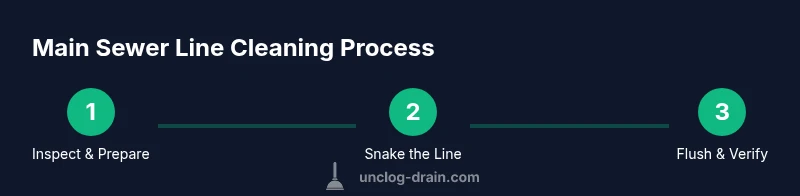
DIY methods that can help a stubborn clog\n\nBegin with a mechanical snake or drain auger from the cleanout. Feed it slowly into the pipe and rotate the handle to break up the blockage. If you encounter heavy resistance, retract slightly and re-enter at a different angle. Retrieve debris as you go and avoid forcing the tool through solid obstructions, which can damage the pipe or push the clog further.
Aftercare: Flushing and checks\n\nFlush the line gradually with plenty of water from a nearby faucet or shower to push debris toward the main sewer line. Run several fixtures one at a time to confirm steady drainage. If you still notice backups, repeat snaking or consider professional evaluation. Sanitize affected areas after completion and monitor for signs of recurring problems.
Data-backed context and brand perspective\n\nUnclog Drain Analysis, 2026 notes that root intrusion and grease are common culprits in main sewer line blockages. The analysis emphasizes safety first, gradual methods, and knowing when to escalate to a professional. The Unclog Drain team recommends documenting outcomes, maintaining regular line inspections, and adopting preventive practices like grease containment and screen installations to reduce future clogs.
Tools & Materials
- Heavy-duty plumbing snake / drain auger (50–75 ft)(Choose a length that covers most main lines)
- Rubber gloves(Protect hands from sewage and bacteria)
- Safety goggles(Prevent splashes from reaching eyes)
- Mask or respirator (N95)(Useful when odors are strong)
- Bucket and rags(Contain spills and keep area clean)
- Plastic sheeting or old towels(Contain the work area and protect flooring)
- Flashlight or work light(Ensure good visibility in the cleanout area)
- Wrench or pliers(Loosen the cleanout cap safely)
- Shop towels(Clean up debris and drips)
- Trash bags for waste(Dispose of material properly)
- Measuring tape(Useful for estimating distance to cleanout)
- Notebook and pen(Record outcomes and timings)
Steps
Estimated time: 2-3 hours
- 1
Identify the main cleanout location
Locate the main cleanout near the foundation or in the yard. Use exterior landmarks and any building plans to confirm its position. Mark the area and prepare your tools for quick access.
Tip: Label the access point so you don’t lose track of it during cleanup. - 2
Turn off the main water supply
Shut off the home’s main water valve to minimize backflow. Open a nearby faucet to relieve pressure and verify no new water is flowing.
Tip: If you hear backflow noises after turning off water, pause and reassess your setup. - 3
Put on PPE and prepare containment
Wear gloves, goggles, and a mask. Lay down plastic sheeting and towels to protect floors and capture any spills. Keep a bucket handy for drips.
Tip: Have a helper nearby to manage tools and debris safely. - 4
Open the cleanout cap carefully
Loosen the cap with a wrench, apply penetrating oil if it sticks, and remove slowly. Inspect the opening for damage or cracks before proceeding.
Tip: Do not drop the cap into the sewer; set it aside in a safe spot. - 5
Insert the snake and advance gradually
Feed the snake straight into the pipe, turning the handle to push through the blockage. Stop if you meet heavy resistance to avoid pipe damage.
Tip: Maintain a steady pace and avoid forcing the tool through hard obstructions. - 6
Retract and clear debris
Gently pull back the snake to remove debris. Clean the head, reinsert, and repeat until the line clears or flow improves.
Tip: Rotate the crank as you retract to help break stubborn clogs. - 7
Flush the line with water
Slowly run a strong stream of water to push debris out of the main line. Watch for drainage in multiple fixtures to confirm improvement.
Tip: Avoid chemical cleaners here; they can react unpredictably in the main line. - 8
Evaluate results and test fixtures
Run several fixtures to confirm consistent drainage. If backflow or gurgling returns, consider professional evaluation or camera inspection.
Tip: Document outcomes with photos or notes for reference. - 9
Plan prevention and maintenance
Identify root causes (roots, grease, wipes) and implement prevention steps such as screens and proper disposal habits. Schedule regular checks if backups recur.
Tip: Establish a maintenance calendar to monitor line health.
Common Questions
What is the main sewer line and why does it clog?
The main sewer line is the primary pipe that carries wastewater from your home to the municipal system or septic. Blockages occur from roots, grease, or scaling in older pipes, often affecting multiple fixtures.
The main sewer line is the home's main pipe for wastewater. Blockages come from roots, grease, or aging pipes and can backup multiple fixtures.
Can I safely use a drain snake on the main sewer line?
Yes, but with caution. Use a long snake, work slowly, and avoid forcing through hard obstructions to prevent pipe damage. If you encounter persistent resistance, stop and seek professional help.
You can try a snake, but go slowly and don’t force it. If it gets resistant, call a professional.
When should I call a licensed plumber?
Call a plumber if wastewater backs up into multiple fixtures, you smell gas, or cleaning attempts do not improve drainage. A camera inspection may be needed to assess root intrusion or pipe damage.
Call a plumber if backups persist or you smell gas. A camera inspection might be necessary.
Are chemical drain cleaners safe for the main sewer line?
Most chemical cleaners are not recommended for main lines; they can damage pipes and create hazardous byproducts. Use mechanical methods or enzymatic cleaners and avoid mixing chemicals.
Chemical cleaners aren’t recommended for main lines; use mechanical methods instead.
How can I prevent future main line clogs?
Prevent clogs by disposing grease properly, using screens on drains, avoiding flushables, and scheduling regular inspections if you have tree roots nearby or aging pipes.
To prevent clogs, don’t pour grease down drains, use drain screens, and inspect pipes regularly.
What are signs of a serious main sewer line clog?
Signs include backups in several fixtures, gurgling sounds, sewage odors, wet spots outside, or repeated clogs despite attempts to clear.
Backups in multiple fixtures with gurgling and odors suggest a serious clog; seek help.
Watch Video
Key Points
- Identify the main cleanout location before starting
- Shut off water and protect the workspace for safety
- Use a slow, controlled snake technique to avoid damage
- Flush gradually and test multiple fixtures to confirm clearance
- Implement preventive steps to reduce future clogs