Unclog Main Sewer Line: A DIY Guide
Learn to unclog the main sewer line with a practical DIY plan from Unclog Drain. Signs, tools, safety, steps, and prevention for home plumbing.


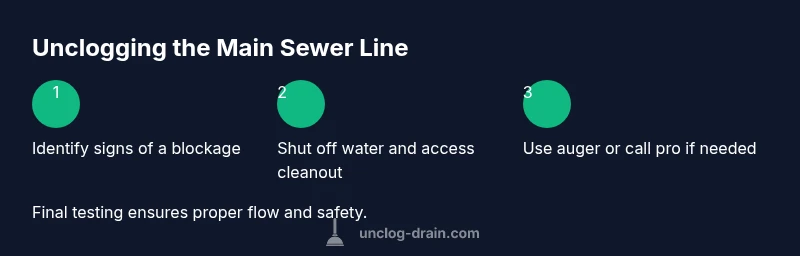
Learn to unclog the main sewer line by following a staged plan that emphasizes safety, the right tools, and careful testing. Start with confirming the blockage and shutting off water to protect fixtures. Then choose between DIY methods (manual auger or enzymatic cleaners) and professional options for high‑pressure solutions. This guide covers both DIY pathways and when to call a pro.
Signs of a Main Sewer Line Clog
According to Unclog Drain, a blocked main sewer line often presents as simultaneous drainage issues across multiple fixtures, slow flushing, gurgling sounds from drains, and or sewage odors near the cleanout. Backups may extend beyond a single sink or toilet and can worsen after flushing the toilet or running laundry. Recognizing these signs early helps you act before the problem escalates into a costly or messy overflow. For homeowners, the main line is the backbone of your plumbing, so a blockage here affects the entire house. If you notice backup in more than one fixture or foul odors that persist, treat it as a potential main sewer line issue and proceed with caution using the right tools and safety measures. Understanding the signs also informs whether you should attempt a DIY fix or call a professional.
Immediate Safety Steps to Take
Before you begin any unclogging attempt, protect yourself and your home. Shut off the main water supply to prevent water from backing up into sinks, tubs, and appliances. Open a nearby faucet to relieve trapped pressure, which can reduce splashing when you access the cleanout. Wear proper PPE: gloves, eye protection, and long sleeves. Do not mix chemicals with mechanical methods; caustic or corrosive cleaners can create hazardous reactions when used on the main line. If sewage backup is severe or you smell strong odors, evacuate the area and call a licensed plumber immediately. Document any damage and the steps you take for reference, especially if you need to involve your insurance or a pro later.
Essential Tools and Materials
Having the right tools ready saves time and reduces risk. A plumber's snake or power auger designed for main lines helps break up clogs beyond the trap. A cleanout wrench and flashlight assist access, while PPE keeps you safe. A bucket and towels are essential for cleanup, and a shop vacuum can help with residual spills. For minor organic blockages, enzymatic cleaners can be useful, but avoid commercial caustic cleaners on the main line. If you access a sewer cleanout, a water hose with a controlled flow can help flush debris toward the main line, but do not force the line with excessive water pressure. Always keep children and pets away from the work area.
DIY Methods: What Works and What to Avoid
DIY approaches can work for minor clogs or partial backups, but major blockages on the main sewer line may require professional intervention. Mechanical methods like a manual drain auger or a power auger can physically break up or retrieve the clog, especially in a cleanout. Enzymatic cleaners are gentler and can help with organic buildup over time, but they require time to work and are not a substitute for mechanical clearing when backups are rapid or severe. Avoid caustic or acid-based drain cleaners on the main line, as they can damage pipes and create hazardous fumes. For stubborn clogs, gridlines and access points may need to be opened by a licensed plumber who can perform high-pressure water jetting or pipe replacement if needed.
Maintenance to Prevent Future Clogs
Prevention is easier than repair. Schedule regular inspections of your sewer cleanouts and maintain a strict disposal routine: avoid pouring grease, fat, coffee grounds, and large solids down drains; install screens on sinks and tub drains; run hot water and a small amount of dish soap weekly to help keep the line clear. Plant roots around sewers can threaten the line, so consider root barriers in areas with mature trees or shrubs. Periodic professional camera inspections can catch problems before they become backups, and a simple seasonal flush with a controlled amount of water can help maintain flow without overwhelming the system.
When to Call a Professional and What to Expect
If DIY efforts don’t restore proper drainage or you observe recurring backups, it’s time to call a licensed plumber. A pro can perform a camera inspection to pinpoint blockages and assess pipe condition, then choose the most appropriate remediation—snaking, hydro jetting, or pipe replacement. Expect a safety assessment, potential permit checks, and a detailed estimate before any work begins. Early engagement can prevent further damage to your home’s foundation and plumbing.
How to Prepare for a Pro Visit
Before the plumber arrives, document backup events (dates, fixtures affected, and steps you’ve tried). Clear access to the main cleanout and the area around it, and ensure pets are secured. Have recent plumbing plans or home inspection reports on hand if available. Ask the plumber about warranty options for any replacement parts and about preventative maintenance plans after the job. Knowing what to expect helps reduce downtime and ensures you get the most value from the service.
Tools & Materials
- Gloves(Chemical-resistant, long-sleeve gloves)
- Safety goggles(Eye protection against splashes)
- Plumber's snake / power auger(Diameter appropriate for main line, typically 3/8" or larger)
- Bucket or bin(Catch drips and debris)
- Shop vacuum(Optional for cleanup)
- Enzymatic drain cleaner (optional)(Use only if recommended for main line, avoid caustics)
- Pipe wrench(For access to cleanout plugs)
- Flashlight(Bright, focused light for inspection)
Steps
Estimated time: 45-90 minutes
- 1
Shut off water supply
Locate and turn off the main water valve to prevent backflow while you investigate the blockage. This reduces spill risk and protects fixtures.
Tip: Know your home's main shutoff location before you start. - 2
Locate the blockage access point
Find the cleanout plug or main line access point; use a flashlight to inspect for signs of backflow or a visible obstruction.
Tip: If you can't locate the access point, stop and call a pro. - 3
Insert the manual drain auger
Carefully feed the auger into the cleanout, rotating as you push to break up the clog; avoid pinching or forcing the line.
Tip: Use steady, gentle pressure; forcing it can damage pipes. - 4
Test drainage and backflow
Turn on a sink or toilet to check drainage; if water remains slow, repeat or switch to a different method.
Tip: Do not run multiple fixtures at once. - 5
Consider enzymatic cleaners or pro intervention
For organic clogs, enzymatic cleaners can help; for severe blockages, schedule professional service.
Tip: Enzymatic cleaners require time to work—plan accordingly. - 6
Restore water and verify
Slowly restore water and monitor for continued backups; address any gurgling or odors promptly.
Tip: Keep cleaning supplies ready for future maintenance.
Common Questions
What counts as a main sewer line clog?
A main sewer line clog affects the entire home and typically presents as backups across multiple fixtures. Look for slow drains, gurgling noises, or sewage odors in multiple rooms. If these signs occur, treat it as a main-line issue and proceed with safety and proper tools.
A main sewer line clog usually means multiple fixtures are backing up. If you notice slow drains, gurgling, or sewage odors, treat it seriously and follow safety steps while using the right tools or calling a pro.
Can I unclog the main line myself?
Simple partial clogs can sometimes be cleared with a manual drain auger from the cleanout. For stubborn or extensive blockages, or if you lack access to a cleanout, it’s safer to hire a licensed plumber who can assess pipe condition and use professional equipment.
You may clear minor blockages with a manual auger, but for stubborn clogs or uncertain access, a professional is safer and often more effective.
What tools are safest for a main line?
A hand or power auger designed for sewer lines, plus proper PPE, is typically safest. Avoid caustic cleaners for the main line and never force equipment through fittings. A pro may use hydro jetting or specialized machinery for stubborn clogs.
Use an appropriate sewer auger and PPE. Avoid harsh chemicals, and don’t force equipment. A pro may use hydro jetting if needed.
Why does backup in multiple fixtures matter?
Backups that involve several fixtures indicate a problem farther down the line, likely the main sewer line or a major branch. This requires careful assessment, access to the main line, and potentially professional intervention to prevent further damage.
Multiple backups suggest a main-line issue that needs professional assessment to prevent damage.
When should I call a professional?
Call a pro when DIY efforts fail, backups persist after attempts, or you lack a reliable cleanout access. A plumber can perform camera inspections, determine the exact blockage, and decide between snaking, hydro jetting, or pipe repair.
If DIY fixes don’t work or access is difficult, contact a licensed plumber for a camera inspection and professional clearing.
Are enzymatic cleaners effective for main lines?
Enzymatic cleaners can help with organic buildup over time, but they are not a substitute for mechanical clearing on a clogged main line. Use them as a complement or preventive step after clearing the main clog.
Enzymatic cleaners help with buildup, but don’t replace mechanical clearing for a main-line blockage.
Watch Video
Key Points
- Identify signs early and limit water use.
- Shut off water before any intervention.
- Use the right tool and avoid caustic cleaners on the main line.
- Call a pro for persistent or severe clogs.