How to Fix a Main Drain Clog: A Practical DIY Guide
Step-by-step guide to diagnose and clear a main drain clog safely, with practical tools, proven techniques, safety tips, and prevention for homeowners. Ongoing upkeep.


By following these steps, you will diagnose a main drain clog, select the safest approach, and clear the blockage without damaging your pipes. This guide covers essential tools, safe techniques, and aftercare to prevent recurrence. Expect practical, field-ready steps that homeowners can perform with confidence. It also highlights when to call a professional.
Understanding the Main Drain Clog in Detail
A main drain clog is a blockage in the primary sewer line that serves most or all fixtures in a home. When the main line slows, you may notice drains in sinks, showers, and toilets backing up simultaneously, or hear gurgling from the pipes. According to Unclog Drain, these clogs are usually more stubborn than individual sink clogs because debris can accumulate along the length of the main line and in laterals toward the city sewer. Common culprits include grease and soap scum, hair, wipes that shouldn’t be flushed, and mineral buildup in older pipes. Tree roots invading an old sewer line can also create a blockage that migrates toward the main line. Before you begin any DIY effort, verify the behavior: is the slowdown affecting multiple fixtures, or is it isolated to a single drain? This distinction helps you pick a safe, appropriate approach and decide when professional help is warranted. Knowing the cause and scope guides safer techniques and reduces the risk of pipe damage.
Safety First: Protect People, Pets, and Plumbing
Working on a main drain involves dealing with wastewater and potentially pressurized water. Start by turning off the main water supply to prevent backflow and reduce pressure on pipes. Wear rubber gloves and eye protection, and lay down towels or a tarp to catch splashes. If your home has an accessible cleanout or trap, keep it clear of household items and ensure children and pets are out of the work area. Never mix cleaning products in a confined space— fumes and chemical reactions can be dangerous. If you suspect sewage contamination, stop and call a licensed plumber. This block emphasizes safety as the foundation of any successful DIY unclogging project and helps you avoid preventable injuries or property damage. Unclog Drain’s guidance stresses containment and careful planning before you touch the plumbing.
Tools and Materials You’ll Need for a Main Drain Clog
Gather essential tools and a few optional ones before you start. Essential: Plunger (cup or flange) with a good seal, drain snake/plumber’s auger, a sturdy bucket, rubber gloves, a flashlight, and old towels. Optional but helpful: safety goggles, a small amount of dish soap for lubing the auger tip, and a wet-dry vacuum to clear residual water. Keep your tools organized near the work area and test the plunger seal on a dry surface first. This preparation reduces messy surprises and speeds up the process. For a main drain, you’ll want a longer auger and a strong seal on the plunger to reach deeper blockages.
Step 1: Stop Overflow and Plan Your Approach
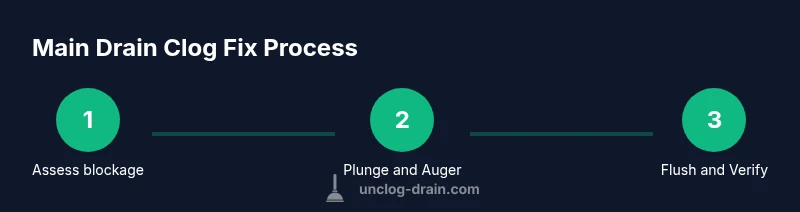
The first action is to shut off the water supply to avoid backflow. Then, set up towels and a bucket to catch any overflow. Inspect the area to locate the main cleanout if accessible, and decide whether plunging or snaking is the more appropriate first move. A cautious plan helps you avoid turfing water into carpets or electrical outlets. If you can’t find a cleanout or the water continues to back up after your attempts, stop and reassess or call a pro. In many homes, the sequence is to contain, plunge, and then progress to an auger for deeper clogs. Planning reduces trial-and-error time and minimizes risk of pipe damage.
Step 2: Plunge Your Main Drain Effectively
A strong, well-sealed plunger is your first defense against a slow main drain. Place the plunger over the drain, create a tight seal, and push and pull with steady pressure. Maintain an upright posture to maximize leverage, and avoid over-twisting the handle. If the water level drops, repeat several cycles until you see progress. Plunging can dislodge hair and soap scum, creating a clear path for flow. If you still observe resistance after multiple attempts, move to the auger. For best results, clear any standing water first and keep a towel handy for splashes.
Step 3: Use a Drain Auger (Plumber’s Snake) for Deeper Clogs
When plunging doesn’t fully clear the blockage, a drain auger is the next step. Insert the auger into the drain and feed the cable slowly, rotating the handle to work it through the bend of the pipe. When you reach resistance, push a bit further to break up the clog, then retract and pull out the debris. Cleanouts near the main line can simplify this work, but you may still need to work from the fixture side if access is limited. Wear eye protection and save the debris in the bucket to inspect later. If you encounter roots or a stubborn solid mass, halt and consider professional help. Augers are powerful tools and must be used with care to avoid pipe damage.
Step 4: Flush, Verify Flow, and Clean Up
After clearing the clog, slowly flush with hot water to wash away loosened debris. Run water from multiple fixtures to confirm consistent drainage and avoid returning water from one area back into another. If flow remains weak, re-check for leftover obstructions or droppings in the trap and cleanout. Once you have reliable flow, remove the tools, wipe down surfaces, and return the water supply. A quick final check of the entire system helps ensure you won’t face an immediate repeat clog. Proper cleanup also prevents slips and keeps your space safe for the family.
Step 5: Post-Repair Checks and Maintenance
With the main drain functioning, perform routine maintenance to prevent future clogs. Periodically flush drains with hot water, avoid flushing paper towels or wipes, and use enzyme-based cleaners to maintain a healthy sewer line. Consider having the sewer line inspected if you notice recurring slow drainage, gurgling, or frequent backups. Regular maintenance reduces the likelihood of sudden, expensive failures and keeps your plumbing running smoothly. Unclog Drain recommends scheduling semi-annual checks and addressing small issues before they become big problems.
Tools & Materials
- Plunger (cup or flange)(Choose a plunger with a good seal; a flange-style plunger helps main-drain coverage.)
- Drain snake / plumber’s auger(Length 15–50 ft; use 1/4 in or 3/8 in cable for residential main lines.)
- Bucket(Catch water and debris; keep it nearby to avoid spills.)
- Rubber gloves(Protect hands from bacteria and sharp edges.)
- Old towels or rags(Contain spills and protect flooring.)
- Flashlight(Inspect the drain path and cleanout clearly.)
- Safety goggles(Optional but recommended for eye protection during augering.)
Steps
Estimated time: 60-120 minutes
- 1
Shut off the main water supply
Locate the main shutoff valve near your water meter or in the utility area and turn it clockwise until fully closed. Confirm there is no active flow by opening a cold faucet somewhere else in the home. This prevents backflow and reduces pressure as you work.
Tip: If the valve is hard to reach, use a long-handled wrench to gain leverage without forcing it. - 2
Contain overflow and prepare the area
Lay towels around the work area and place a bucket under the drain path to catch any sudden spills. Remove any accessible items nearby to prevent contamination of surfaces. Ensure good lighting so you can see what you’re doing.
Tip: Keep a wet-dry vacuum handy to quickly remove excess water if needed. - 3
Plunge the main drain
Seal the drain with a plunger and perform rapid, forceful up-and-down motions to create pressure that dislodges the clog. If the water recedes and flow improves, continue for several cycles. If nothing happens after a few attempts, move to the auger.
Tip: Maintain a steady rhythm and avoid excessive twisting to prevent gasket damage. - 4
Extend with a drain auger if needed
Insert the auger into the drain and slowly feed while turning the handle to work through the clog. When you meet resistance, apply gentle back-and-forth pressure to break up the obstruction. Withdraw the cable slowly and inspect the debris collected in the bucket.
Tip: Take breaks if you encounter heavy resistance; forcing the cable can damage the pipe. - 5
Flush and verify flow
Flush with hot water, running water from multiple fixtures to confirm steady drainage. If water still backs up, recheck for remaining blockages or root intrusion and consider repeating the auger process.
Tip: Always verify one full drainage cycle at both the main and connected fixtures. - 6
Restore water and cleanup
Turn the main water supply back on slowly, then test all fixtures for proper drainage. Wipe and disinfect the work area, remove tools, and store equipment for future use.
Tip: Document any observations for future reference and potential professional follow-up. - 7
Prevent future clogs
Adopt maintenance steps such as regular hot-water flushes and enzyme-based cleaners, avoid flushing wipes or grease, and address tree-root threats with periodic sewer inspections if you have older pipes.
Tip: Create a simple maintenance schedule and set reminders to prevent neglect.
Common Questions
What causes a main drain clog?
Main drain clogs typically arise from a combination of grease, hair, soap scum, flushable wipes that aren’t designed to break down, and mineral buildup. Tree roots can also intrude older sewer lines and cause blockages that propagate toward the main line.
Grease, hair, wipes, and mineral buildup are common causes, with tree roots an important, more severe factor in older systems.
Can I use chemical drain cleaners for a main drain?
Chemical drain cleaners are generally not recommended for main drains because they can damage pipes and septic systems, and they may not remove all blockages. They can also create hazardous fumes in enclosed spaces.
No—chemical cleaners can damage your pipes and create dangerous fumes. Safer methods are preferred for main drains.
How long should I wait after plunging before testing the drain?
If you’ve plunging successfully, run water to verify flow immediately. If it’s stubborn, wait a few minutes and attempt another plunge cycle before calling for help.
Test flow right after plunging; if it’s still slow, give it a few minutes and try again, but don’t force it.
Is it safe to DIY a main drain clog?
DIY can be safe for simple clogs if you follow safety steps, use proper tools, and avoid hazardous chemicals. Complex issues like repeated backups or tree-root intrusion may require a licensed plumber.
DIY is possible for simple clogs, but know when to call a pro for stubborn problems.
When should I call a plumber for a main drain clog?
Call a plumber if you have repeated backups, signs of sewage backflow, persistent slow drainage after attempts, or suspected root intrusion in older sewer lines.
If backups keep happening or you suspect roots, it’s time to call a pro.
What tools are essential for addressing a main drain clog?
Essential tools include a quality plunger, a drain snake, a bucket, towels, gloves, and a flashlight. A safety goggles can be added for extra protection.
You’ll need a plunger, a snake, a bucket, towels, gloves, and a light.
Watch Video
Key Points
- Shut off water before any work
- Contain water and protect surfaces
- Use plunger first, then drain auger for deep clogs
- Flush and test flow from multiple fixtures
- Prevent future clogs with maintenance