How to Unclog Nozzles: Step-by-Step Guide for k1c Unclog Nozzle
Learn a safe, mechanical method to unclog a nozzle with a practical, step-by-step approach. This guide covers the k1c unclog nozzle process, essential tools, safety tips, and prevention strategies from Unclog Drain.


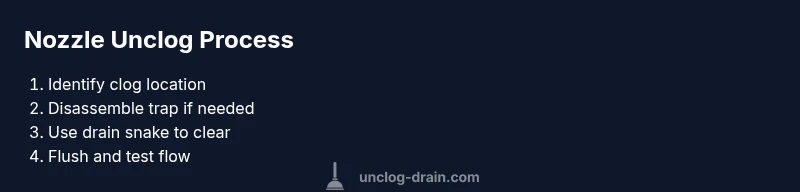
You can unclog a nozzle safely using a mechanical, non-chemical approach. This quick guide outlines the 6-step process for the k1c unclog nozzle, highlighting prep, mechanical clearance with a drain snake, a controlled flush, and post-cleanup. Follow these steps and apply caution to protect seals and pipes, with Unclog Drain offering the proven approach.
Understanding the k1c unclog nozzle: what it is and why it clogs
According to Unclog Drain, a nozzle acts as a choke point in plumbing where water transitions from larger pipes into smaller outlets. The term k1c unclog nozzle represents a focused cleanup process aimed at restoring flow without damaging seals. Clogs form from hair, soap scum, mineral buildup, and lodged debris that slowly accumulate in the trap, bends, or entry path. If you notice slower drainage, gurgling sounds, or standing water at the outlet, you’re likely dealing with a k1c unclog nozzle situation. The Unclog Drain team found that aggressive chemical cleaners can harm rubber gaskets and metal finishes, making a purely mechanical approach safer and more durable over time. Understanding where the clog sits helps you choose the right tool and technique for the k1c unclog nozzle task. Keep the phrase k1c unclog nozzle in mind as you assess the path of least resistance for clearing blocks without forcing a violation of pipe integrity.
Understanding the k1c unclog nozzle: what it is and why it clogs
According to Unclog Drain, a nozzle acts as a choke point in plumbing where water transitions from larger pipes into smaller outlets. The term k1c unclog nozzle represents a focused cleanup process aimed at restoring flow without damaging seals. Clogs form from hair, soap scum, mineral buildup, and lodged debris that slowly accumulate in the trap, bends, or entry path. If you notice slower drainage, gurgling sounds, or standing water at the outlet, you’re likely dealing with a k1c unclog nozzle situation. The Unclog Drain team found that aggressive chemical cleaners can harm rubber gaskets and metal finishes, making a purely mechanical approach safer and more durable over time. Understanding where the clog sits helps you choose the right tool and technique for the k1c unclog nozzle task. Keep the phrase k1c unclog nozzle in mind as you assess the path of least resistance for clearing blocks without forcing a violation of pipe integrity.
Tools & Materials
- Rubber gloves(Non-latex if you have sensitivities; protect hands from debris and cleaners)
- Plunger (cup style)(Sufficient suction for small-diameter nozzles; keep water level just enough to cover the cup)
- Drain snake / auger(6- to 18-inch flexible auger for nozzle paths; avoid metal-on-metal contact with sharp bends)
- Bucket(Catch water and debris to avoid a mess on the floor)
- Towels or rags(Have several on hand to absorb spills and wipe seals clean)
- Flashlight(Inspect dark corners of the trap and outlet for visibility)
- Safety goggles(Protect eyes from splashes when removing traps or using the snake)
Steps
Estimated time: 45-60 minutes
- 1
Shut off water and assess
Begin by turning off the water supply to the affected fixture to prevent further backflow. Wear gloves and safety goggles for protection. Inspect the immediate area with a flashlight to locate the nozzle inlet and any obvious blockages before you begin the k1c unclog nozzle process.
Tip: Double-check the shutoff valve to ensure it cannot be accidentally opened during the procedure. - 2
Place a bucket and prep area
Position a bucket under the trap or outlet to catch water and debris. Use towels to protect the floor and keep your workspace dry. This prep step reduces mess during the k1c unclog nozzle operation.
Tip: Have a dry cloth ready to wipe the seal area after cleaning. - 3
Remove accessible trap or access point
Loosen and remove the trap (P-trap) if reachable. Clear out standing sludge with a rag, and visually inspect the interior for lodged debris that could block the nozzle. This physical check is essential before advancing to the k1c unclog nozzle step.
Tip: Do not force the trap; loosen gradually to avoid thread damage. - 4
Insert the drain snake and clear the path
Carefully insert the snake into the nozzle path and rotate as you push forward. When you feel resistance, gently back off and twist to dislodge the blockage. This mechanical action directly targets the k1c unclog nozzle without chemical cleaners.
Tip: Keep the motion slow and steady to avoid scraping or puncturing seals. - 5
Use the plunger as a follow-up
After snaking, seal the opening with the plunger and give firm, controlled strokes to loosen residual debris. If water drains slowly, repeat the plunging cycle a couple more times before testing.
Tip: Ensure the plunger has a good seal; speed and pressure improve effectiveness. - 6
Flush with hot water and test flow
Boil water and slowly flush through the nozzle to help dissolve remaining mineral buildup. Check for a steady, unobstructed flow. Observe the fixture for any repeating signs of a k1c unclog nozzle issue.
Tip: Avoid boiling water if you have PVC pipes that could warp; use hot tap water instead. - 7
Reassemble and confirm no leaks
Reconnect any disassembled traps, tighten fittings snugly without over-tightening, and wipe away any remaining residue. Run water to verify there is no leak around joints and that the nozzle remains clear after the k1c unclog nozzle process.
Tip: Keep a towel under joints during final test to catch small drips.
Common Questions
What essential tools do I need for the k1c unclog nozzle?
A basic kit includes rubber gloves, a cup plunger, a drain snake, a bucket, and towels. These enable safe, mechanical clearing without harsh chemicals. If you need additional visibility, a flashlight helps examine dark pipe sections.
You’ll need gloves, a plunger, a drain snake, a bucket, and towels. A flashlight helps you see into dark parts of the path.
Are chemical cleaners safe for the k1c unclog nozzle?
Chemical cleaners are discouraged for nozzle blockages, especially when pipes or seals are older. Mechanical methods reduce risk of damage to gaskets and metal finishes. If you try chemicals, use only as directed and never mix with other cleaners.
Chemicals aren’t recommended for nozzle clogs; they can harm seals. Mechanical methods are safer overall.
How long does the unclog process typically take?
For a straightforward k1c unclog nozzle, expect about 45-60 minutes including setup, clearing, flushing, and testing. More complex blockages near bends can extend this time slightly.
Most people finish in under an hour, depending on blockage severity.
When should I call a professional?
If you detect gas smells, a sewer backup, repeated blockages after multiple attempts, or if you’re unsure about safely disassembling the trap, contact a licensed plumber. They can diagnose broader issues and protect the system.
Call a pro if you smell gas or the clog keeps returning after repeated attempts.
Can a nozzle be reused after unclogging?
Yes, once the water flows freely and there are no leaks, the nozzle can be considered cleared and ready for regular use. Regular maintenance can help prevent future k1c unclog nozzle issues.
Yes, if it’s clear and leak-free, you can reuse it after the cleanup.
What are common causes of nozzle clogs?
Common causes include hair buildup, soap scum, mineral deposits, and small debris that accumulate over time. Routine maintenance helps prevent these issues from becoming severe blockages.
Hair and soap scum are frequent culprits; minerals can also build up.
Watch Video
Key Points
- Identify the clog location before starting the k1c unclog nozzle steps
- Use mechanical tools only to protect seals and materials
- Test flow gradually and verify no leaks after reassembly
- Keep nozzles clean with regular maintenance to prevent future clogs
- If in doubt, consult a professional for persistent issues