How to unclog a P1S nozzle: a practical DIY guide
Learn a safe, effective approach to unclogging a P1S nozzle with mechanical cleaning, controlled flushes, and preventative maintenance. Practical, image-friendly steps, tool lists, and safety tips from Unclog Drain.


You can unclog a P1S nozzle by following a structured, step-by-step approach that combines careful mechanical cleaning, controlled flushing, and gentle, safe remedies. Start with safety prep and a clear workspace, then use a thin probe, soft brushes, and warm water to clear the clog. Finish with a flush test and routine maintenance to prevent future blockages.
Understanding the P1S nozzle and why clogs occur
The P1S nozzle is a compact component that directs a precise flow of liquid or mist in many home devices and fixtures. Clogs typically form when mineral deposits, soap scum, hair, or debris accumulate at the nozzle opening or inside the immediate feed tube. Hard water regions, high use, and infrequent cleaning accelerate buildup. Recognizing where the blockage sits—at the bore, in the tiny passage, or at the discharge port—helps you choose the most effective method. The Unclog Drain team emphasizes targeted cleaning: you want to restore flow without damaging seals or altering spray patterns. A slow drip or reduced spray is a warning sign that the nozzle’s lumen is partially blocked rather than fully closed.
Before you begin, verify that you have a clean, well-lit workspace and a steady surface. Keep towels handy and protect nearby surfaces from cleaners. This prep reduces mess and lowers the risk of accidentally pushing debris further into the line. If your nozzle is part of a device with water supply lines, shut off the supply and depressurize the line to avoid splashes and sprays. Treat this as a precise maintenance task rather than a brute-force clash with the clog.
Tip: If you’re unsure about the nozzle’s exact location or how it attaches to the fixture, consult the device’s user manual or manufacturer’s website for part diagrams. A quick visual helps prevent accidental damage during disassembly.
In DIY contexts, a successful unclog usually results in restored spray or flow within a few minutes of targeted cleaning. If flow remains weak after several attempts, reassess the blockage’s location and consider more advanced tools or professional help. Consistency and patience are your allies when working with small-diameter nozzles like the P1S.
Remember, small missteps can lead to leaks or a degraded seal. Proceed slowly, test frequently, and stop if you notice anything abnormal, such as cracking, persistent leaks, or unusual zero-flow symptoms. This approach aligns with Unclog Drain’s guidance on safe, incremental unclogging.
Safety and prep: minimize risk before you start
Safety should guide every unclogging attempt, especially with tiny nozzle passages. Start by turning off any power or water supply to the fixture and placing a protective cover or towels around the workspace to catch splashes. Wear protective gloves and safety glasses to guard against sharp tools or accidental spray. Work in a ventilated area if you plan to use cleaners, and keep cleaning products out of reach of children and pets. Inspect the nozzle and surrounding fittings for wear or cracks that could worsen with probing. If you find damaged components, stopping and replacing them is safer than forcing a clog loose. Test the device’s seals after cleaning to ensure there are no leaks.
If your nozzle is part of a dishwasher, faucet, or spray head, consult the manufacturer’s guidelines for disassembly. Some fixtures require special tools or adapters that prevent overtightening or cross-threading. For metal fixtures, use non-metallic probes where possible to minimize scratching. Finally, avoid mixing acidic or caustic cleaners with other chemicals—this can create dangerous fumes or a reaction that worsens the blockage.
Tip: Always perform a quick external inspection before disassembling. A misaligned nozzle or misfit washer can appear as a blockage but is actually a seating issue. A correct seating restores flow without aggressive cleaning.
If you’re not confident about disassembly, stopping early and seeking guidance from a professional is prudent. The goal is a safe, repeatable improvement rather than a best-guess overhaul.
Mechanical cleaning techniques for nozzle unclogging
Mechanical cleaning is the backbone of unclogging a P1S nozzle. Start with a flexible, non-abrasive probe identical in diameter to the nozzle’s bore. Carefully insert the probe and gently twist to dislodge any solid debris. Do not force the probe if you encounter resistance; slight rotation can help break sludge without harming the nozzle or seals. For stubborn buildups, a thin wire or a bent paper clip can function as a micro-snake to navigate the opening. In all cases, work slowly and maintain a straight path to avoid scratching or deforming the bore. A micro-snake is preferable to a rigid tool as it conforms to the nozzle’s interior geometry.
Follow with a soft bottle brush or a small toothbrush to sweep away loosened deposits from the interior walls. Be mindful of the nozzle’s delicate edges and any protective coatings. Rinse the brush between passes to prevent reintroduction of debris. Finally, inspect the bore visually with a flashlight or magnifying glass. If you see a clear lumen and the spray path looks unobstructed, you’re on the right track. If staining or residue persists, contemplate available safe alternatives rather than repeat probing.
Tip: When probing a nozzle, keep your movements light and controlled. Excessive force not only risks damage but can push debris further into the fixture, complicating the issue.
Controlled flushing and backflush methods for safe clearance
Chemical and home remedies: safe usage and limits
Chemicals can help loosen mineral deposits, but they must be used with discretion around P1S nozzles. A mild, non-acidic cleaner is often best unless the device manufacturer approves stronger agents. A gentle baking-soda-and-water paste can be used for a mild abrasive scrub to loosen film. For liquids, warm (not boiling) water flushes through the nozzle after mechanical cleaning to rinse out fragments. In some setups, a controlled backflush using a syringe or bulb can help push debris toward the open end, provided you block the other lines to prevent cross-flow. Always flush in short bursts and inspect the nozzle between passes.
Avoid caustic drain cleaners in small-diameter nozzles, as these chemicals can damage seals, gaskets, and coatings. Never mix cleaners that react with each other, and never seal the system while cleaning—pressure can build and cause leaks. If you’re using vinegar or citrus cleaners, rinse thoroughly afterward to prevent acidic residue from corroding metal parts. Safety is paramount: wear gloves and eye protection, and ventilate well when using any chemical products.
If a chemical approach seems necessary, consult the fixture’s documentation or a professional for compatibility notes. The risk of damage is higher with aftermarket additives that aren’t designed for your nozzle type.
When to escalate: advanced tools and professional help
Inspecting progress and validating results
After any cleaning, perform a controlled flush with clean water to assess progress. Observe the spray pattern—an even, steady flow typically indicates clearance, while intermittent flow suggests partial obstruction still exists. If you’re testing a spray head, reassemble only after you’re sure the interior is clean. A final visual check using a bright light can reveal residual deposits. If you still see reduced flow, set aside the component and reattempt later with a fresh approach, or switch to a slightly more thorough mechanical pass. Document your steps and the results so you can compare future attempts. For devices connected to a wider water system, a ruled-out supply issue is essential: confirm pressure and ensure no upstream blockage is affecting performance.
Tip: Don’t rush the final rinse. A cautious, deliberate flush reduces the chance of re-depositing loosened debris and ensures a clean lumen.
Advanced solutions: tools, adapters, and professional thresholds
Maintenance and prevention: keeping P1S nozzles clear
Prevention is simpler than repeated unclogging. Schedule regular inspections of any nozzle assembly, especially in hard-water areas. Use a fine mesh or filter on the supply line if possible to catch grit and hair before it enters the nozzle. Periodic light cleaning, about every 1–3 months depending on use, helps maintain spray quality. When cleaning, target the nozzle and its immediate feed path rather than the entire fixture to minimize disruption and downtime. If you notice recurring clogs despite maintenance, consider partial disassembly for a deeper clean or replacing worn gaskets. Keeping a small toolkit handy and a log of maintenance activities can significantly reduce downtime.
Finally, align your expectations. A P1S nozzle is a precision component; gentle, methodical cleaning preserves performance and longevity more than aggressive scrubbing. By following a cautious, repeatable process, homeowners can often avoid professional service calls and maintain reliable nozzle function.
Troubleshooting common symptoms and myths
Quick-start checklist for first-time unclogging attempts
Before you begin, gather your tools, shut off water supply, and inspect the nozzle area for obvious damage. If the nozzle remains clogged after a single mechanical pass and a single flush, pause and reassess the blockage’s location. Don’t force a solution; instead, re-check alignment and seals. Common myths—like “high heat always fixes mineral buildup”—mislead without confirming the nozzle’s material limits and recommended cleaners. For p1s nozzle-specific tasks, a conservative approach yields the best results: gradual cleaning, multiple light passes, and thorough rinsing. If unforgiving resistance persists, consider a professional check before permanent damage occurs.
Final note from Unclog Drain on nozzle maintenance
Tools & Materials
- Plunger (cup or flange type)(Aids in creating a gentle backpressure if applicable to the nozzle location)
- Flexible probing tool (pin, wire, or micro-snake)(Use sparingly to avoid interior damage; choose non-metallic when possible)
- Soft-bristle brush or old toothbrush(For delicate interiors; avoid cracking seals)
- Cocktail straw or syringe (for controlled flush)(Useful for small-volume backflush in tight passages)
- Warm water (not boiling)(Flush in short bursts to avoid thermal shocks)
- Mild cleaner (baking soda paste or manufacturer-approved cleaner)(Use only if compatible with the nozzle materials)
- Gloves and eye protection(Safety first for handling tools and cleaners)
- Flashlight or jeweler’s loupe(Helps inspect the bore clearly)
- Towels or a drip tray(Contain spills and keep the workspace clean)
Steps
Estimated time: 30-45 minutes
- 1
Power down and prepare the workspace
Shut off water and, if applicable, power to the device. Clear a clean workspace, lay towels, and gather tools. This prevents accidents and keeps debris contained.
Tip: Set a dedicated container to collect any runoff to avoid soaking surrounding surfaces. - 2
Inspect the nozzle and identify the blockage
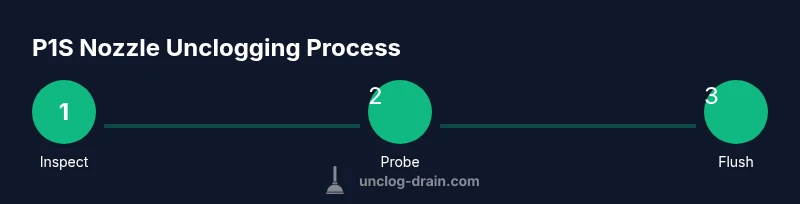
Visually check the bore for visible deposits or an obvious obstruction. Note whether the blockage is at the opening or deeper inside the lumen.
Tip: Use a flashlight at an oblique angle to reveal deposits you might miss with ambient light. - 3
Mechanical probing to loosen deposits
Gently insert the probing tool and rotate with light pressure to break up deposits. Avoid forcing; if resistance is strong, pause and re-evaluate.
Tip: Keep probes straight to minimize risk of gouging the bore. - 4
Clean with brushing and flushing
Swab the interior with a soft brush, then flush with warm water in short bursts. Repeat as needed until the flow improves.
Tip: Do not use boiling water; thermal shock can damage seals. - 5
Backflush selectively using controlled flow
If the design allows, use a syringe or bulb to apply gentle backpressure from the discharge end to push debris out.
Tip: Block other flow paths to prevent cross-flow.” - 6
Rinse, reassemble, and test
Reconnect parts, restore water supply, and run a test spray or flow. Check for leaks and ensure steady performance.
Tip: Test with clean water first, then gradually reintroduce normal use.
Common Questions
What is a P1S nozzle and where is it used?
A P1S nozzle is a small discharge component used in various fixtures to control spray or flow. It can clog due to mineral buildup, soap scum, or debris. Understanding its role helps tailor the cleaning approach to protect seals and function.
A P1S nozzle is a small spray part in fixtures, and it clogs from buildup. Knowing this helps you clean it safely.
Can I use household vinegar to unclog a P1S nozzle?
Vinegar can loosen mineral deposits but should be used cautiously and only if the nozzle materials are compatible. Rinse thoroughly afterward to prevent acid damage. Always consult the device manual before applying cleaners.
Vinegar can help with mineral buildup but check compatibility and rinse well afterward.
What tools are best for probing a P1S nozzle?
A flexible, non-metallic probe is best for delicate nozzles. Avoid rigid metal tools that could scratch the bore. A small paperclip or wire can work if carefully shaped and used with minimal pressure.
Use a flexible probe and avoid rough metal tools to prevent damage.
When should I stop and call a professional?
If probing or flushing causes cracks, leaks, or persistent reduced flow, or if the device is under warranty and requires disassembly you’re not comfortable with, seek professional service to prevent further damage.
If you see leaks or ongoing problems, stop and get a pro to help.
How can I prevent future clogs in the P1S nozzle?
Regular light cleaning, using filters if available, and avoiding overuse of strong cleaners can reduce buildup. Document maintenance and check seals periodically to keep performance consistent.
Regular light cleaning and maintenance helps prevent future clogs.
Watch Video
Key Points
- Identify the blockage level first to choose the right method
- Use gentle mechanical methods before chemicals
- Flush in short bursts to avoid forcing debris
- Avoid harsh cleaners that can damage seals
- Test thoroughly after reassembly to confirm clearance