How to Unclog a 0.2 mm Nozzle: A DIY Drain Guide
Learn safe, practical steps to unclog a 0.2 mm nozzle without damaging components. This guide covers causes, tools, step-by-step methods, safety tips, and maintenance to prevent future clogs.


By following a safe, methodical approach, you can unclog 0.2 mm nozzle components without damage. This guide covers why these tiny openings clog, the tools you need, and step-by-step actions to unclog 0.2 mm nozzle and restore flow. Prioritize low pressure, gentle cleaning, and re-inspection before use. Follow the checks in the Quick Steps below to ensure reliable results.
Why a 0.2 mm nozzle clogs and what makes it tricky
Tiny nozzles like the 0.2 mm opening are prone to blockages from mineral deposits, hair, fibers, and hardened residues. Because the aperture is so small, even tiny particles can restrict flow quickly, causing backpressure and inconsistent performance. According to Unclog Drain analysis, recurring clogs at micro-scale openings are often caused by mineral buildup and organic debris that hardens over time. In this guide, you'll learn practical, safe ways to address these blockages without damaging the nozzle or the surrounding hardware. We'll cover how to inspect, clean, and test the nozzle, plus maintenance steps to prevent future clogs.
Real-world drains and fixtures regularly encounter micro-nozzle challenges. The Unclog Drain team notes that attention to cleaning frequency and compatible cleaners dramatically reduces recurrence. This article uses neutral, drain-safe methods to protect seals, gaskets, and nearby plumbing while restoring proper flow.
Safety first: protecting yourself and your equipment
Safety is non-negotiable when tackling micro-nozzle clogs. Start by disconnecting power from any connected devices and shutting off water supply if applicable. Wear safety glasses and gloves to shield eyes and skin from splashes and sharp edges. Work in a well-lit, ventilated area and prepare a tray to catch waste. Opt for non-abrasive, drain-safe cleaners and avoid mixing chemicals. These precautions reduce the risk of chemical reactions, spills, and equipment damage. Your long-term success depends on controlled, cautious handling.
Tools and materials you’ll need
Having the right tools on hand minimizes guesswork and speeds up the process. See the Tools & Materials block for a full list, but plan for: safety gear (glasses, gloves), a soft brush, plastic picks or nylon filament for probing, a small flashlight, warm water, a mild, drain-safe cleaner, a plastic tweezer or hook for debris, and a tray to collect waste. Optional: a low-pressure air canister for gentle clearing. Using non-metal tools helps prevent scratching the nozzle and seals.
Common methods for clearing tiny nozzles
Tiny nozzles clog most often due to mineral buildup or stubborn debris. A gentle approach works best: soak the nozzle in a mild solution to loosen scale (5–10 minutes), then use a plastic tool to gently probe the outlet. Rinse with warm water at low pressure to flush loosened material. If deposits persist, repeat soaking and probing in small cycles. Avoid aggressive scrubbing or metal tools that could nick the nozzle. If available, a low-pressure air blast can dislodge stubborn particles without damaging components.
What to do if the clog persists
If probing and soaking fail to restore flow, there may be deeper deposits or a damaged seal around the nozzle. Stop using the device and check manufacturer recommendations regarding disassembly. Consider contacting a professional if you notice cracks, persistent leaks, or reduced performance after reassembly. The goal is to prevent further damage while safely restoring operation.
Maintenance to prevent future clogs
Preventive care is simpler than repeated cleaning. Establish a routine to flush the nozzle with warm water after heavy use, avoid disposing fibrous materials in the system, and periodically inspect for mineral buildup. Replacing worn seals or gaskets as needed keeps flow consistent. Document cleaning intervals so you can adjust your maintenance schedule based on actual use and observed clog frequency.
Troubleshooting and re-testing
After cleaning, reassemble the device carefully and run a controlled test with clean water. Check for abnormal sounds, leaks, or reduced flow. If the nozzle remains partially blocked, repeat the gentle cleaning cycle with fresh cleaning solution and a clean probe. Retest until you achieve steady, full flow. If flow remains inconsistent, reassess the entire path for secondary blockages.
Real-world quick checks and re-test
Before returning the nozzle to service, verify all connections are tight and the outlet is clear. Reintroduce normal operation gradually, monitoring for any signs of trouble. Document the results—what worked, what didn’t, and when the next check should occur. With consistent checks, you can prevent future clogs and extend the life of the nozzle.
Tools & Materials
- Safety glasses(Protect eyes from splashes and debris)
- Nitrile or rubber gloves(Keep hands clean and protected)
- Soft-bristled brush or pipe-cleaning brush(Gentle scrub without scratching nozzle)
- Small flashlight or headlamp(Better visibility inside small openings)
- Plastic pick or nylon filament(Gentle probing without metal damage)
- Tweezers (plastic preferred)(To remove visible debris)
- Warm water(For rinsing and flushing)
- Mild drain-safe cleaner (dilute)(For mineral buildup, follow product directions)
- Tray or bucket(Contain waste and avoid mess)
- Optional: compressed air canister on low pressure(Gentle air to dislodge debris)
Steps
Estimated time: Estimated total time: 30-40 minutes
- 1
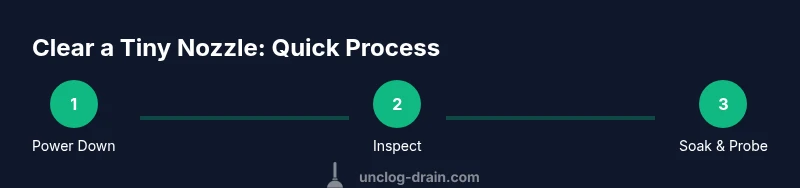
Power down and disconnect
Power off the device and disconnect it from any power source before touching the nozzle. This reduces the risk of electric shock or sudden activation during cleaning.
Tip: Double-check that power is fully disconnected before starting. - 2
Inspect the nozzle visually
Use a flashlight to look for obvious blockages or deformities around the opening. Note any signs of wear that might require replacement.
Tip: A magnified view helps identify hair or mineral scale you wouldn’t notice otherwise. - 3
Soak the nozzle in a mild solution
Soak for 5–10 minutes to loosen mineral deposits and dried matter. Avoid concentrated cleaners and ensure the material of the nozzle is compatible with the solution.
Tip: Rinse hands after handling cleaners and before probing. - 4
Gently probe with a plastic tool
Carefully insert a plastic pick or nylon filament to dislodge debris at the outlet. Do not apply force that could crack or scratch the nozzle.
Tip: If material resists, stop and re-soak rather than forcing it out. - 5
Rinse with warm water at low pressure
Flush the nozzle using warm water to carry out loosened debris. Use a gentle flow to avoid forcing material into seals.
Tip: Keep your finger near the outlet to feel for a steady flow. - 6
Reassemble and test flow
Reconnect power and test the nozzle with clean water. Observe for leaks, wobble, or reduced flow and adjust as needed.
Tip: Do not exceed recommended pressure during the initial test. - 7
Document maintenance
Record the cleaning date, observed causes, and any parts replaced to guide future maintenance.
Tip: A simple log helps you spot patterns and schedule timely cleanings.
Common Questions
What is a 0.2 mm nozzle and why does it clog?
A 0.2 mm nozzle is a tiny opening used in some precision devices and drain-cleaning tools. It clogs when mineral deposits or organic debris accumulate at the orifice, restricting flow. Regular cleaning helps prevent buildup and maintain performance.
A 0.2 mm nozzle is a tiny opening. It clogs when minerals or debris build up, but regular gentle cleaning helps prevent blockages.
Can I unclog without disassembling the device?
In many cases you can clear a micro-nozzle without full disassembly by soaking, probing, and flushing. If basic cleaning fails or you notice leaks or wear, stop and consult a professional. Avoid forcing parts apart.
Often you can clear it without disassembly, but if issues persist, seek professional help.
What safety gear should I wear?
Wear safety glasses and gloves to protect against splashes and sharp edges. Work in a well-ventilated area and handle cleaners with care. Safety gear reduces the risk of injury during cleaning.
Glasses and gloves keep you safe, especially around cleaners and small parts.
Should I use vinegar or baking soda for mineral buildup?
Mild, drain-safe cleaners are preferred. Vinegar can help with mineral buildup in some cases, but always test compatibility with your nozzle material and dilute appropriately. Baking soda is less common for micro-nozzles and may leave residues.
A mild cleaner is usually best; test first and avoid strong mixes.
When should I replace the nozzle or seals?
If the nozzle shows visible wear, cracks, or persistent leaks after cleaning, replacement is recommended. Replacing worn seals or gaskets helps restore efficiency and prevent future leaks.
If you see wear or leaks after cleaning, replace the component.
Watch Video
Key Points
- Identify micro-nozzle clog causes early to simplify cleaning.
- Use gentle, non-metal tools to avoid damage.
- Soak, probe, and rinse in controlled steps for best results.
- Maintain a log to prevent repeat clogs.