How to Unclog a Rust-Oleum Spray Paint Can
A practical, safety-first guide to unclogging a Rust-Oleum spray paint can nozzle, with tools, step-by-step methods, and prevention tips from Unclog Drain.


Goal: safely unclog a Rust-Oleum spray paint can nozzle and restore a smooth spray. You’ll need basic safety gear, a pin or needle, solvent, warm water, and a clean workspace. This steps-based guide, informed by Unclog Drain, walks you through diagnosing a clog, clearing the nozzle, and testing the can for reliable, even spray.
What is happening when a Rust-Oleum can clogs
A clogged nozzle on a Rust-Oleum spray paint can usually happens because dried pigment, propellant residue, or misaligned valve obstructs the tiny outlet. When the spray head is blocked, you’ll see uneven spray, a sputtering stream, or complete cessation of flow. The clog often forms at the nozzle orifice where paint needs to pass through two tiny holes. In many cases, the underlying can is fine; the problem is localized to the nozzle assembly. Understanding this distinction helps you choose the safest, most effective unclogging approach. According to Unclog Drain, the most reliable fixes combine mechanical clearing with gentle solvent interaction, avoiding forceful puncture or aggressive treatments that could damage the can or release solvent vapors in a confined space. For DIYers, start with minimal intervention and escalate only if necessary, keeping your workspace well-ventilated. The goal of this section is to set expectations: most nozzle clogs are solvable with careful cleaning, not a full can replacement, and this approach minimizes waste while preserving the finished look of your project. For ongoing projects, plan ahead to prevent clogs by storing cans upright and labeling them clearly.
Safety first: protect yourself and your workspace
Before you touch the can, set up a ventilated area, ideally near an open window or under a fume hood. Wear safety glasses and gloves to guard against accidental splashes and solvent exposure. Place a drop cloth or old newspaper on your work surface to catch drips, and protect nearby surfaces from solvent stains. Keep children and pets away, and never heat a pressurized can or leave it in direct sunlight. Solvents like acetone or mineral spirits can dissolve paint over time, so handle them with care and store them in a closed container when not in use. If you have a sensitivity to solvents or wear contact lenses, adjust your approach accordingly or choose a water-based alternative if compatible with your project. Unclogging rustoleum spray paint can should be performed in short, controlled intervals to avoid overheating the can.
Diagnosing: is it really clogged or is the can empty?
First, shake the can for 1–2 minutes to re-suspend pigment. If the can feels heavy or you hear only a hiss with no paint discharge, the can may be low or effectively empty. Do not attempt to revive an empty can by forcing more paint out, as this can lead to nozzle damage or pressure buildup. If the can feels full and you observe sputtering, observe the spray pattern closely. A clogged nozzle will often produce a misty spray with interruption or a single solid jet. Cleaning should focus on the nozzle. Determine whether the clog is within the nozzle or higher up in the valve stem by testing with the cap removed and the can pointed away from you. If the spray returns after clearing the nozzle, you can proceed with a test spray at a safe distance. This step reduces waste and preserves the quality of the coating for your project. The Unclog Drain approach emphasizes caution and controlled testing before taking more invasive actions.
Method A: Quick nozzle flush with warm water
For a mild clog, a simple flush often resolves the issue. Remove the spray head from the can if possible and rinse it under warm, running water (not hot). Use a gentle stream to push pigment particles out of the nozzle orifice. Reassemble the nozzle and test with a short spray on a scrap surface. If you still see sputtering, proceed to a deeper cleaning with solvent. The warm water flush helps soften dried paint without introducing harsh chemicals that could damage the nozzle. Remember to keep the can upright during the rinse to avoid forcing solvent into the can interior, which could alter the pressure dynamics. If your spray head is stubborn, move to the solvent soak method described next. The key is to avoid using excessive force which can bend or damage the nozzle.
Method B: Solvent soak and pin clearing
If warm water isn’t enough, submerge the nozzle in acetone or mineral spirits for 5–10 minutes. This helps dissolve dried pigment and resin deposits. After soaking, use a fine pin, needle, or a dedicated spray-nozzle cleaner to clear the orifice gently. Do not jam a sharp object into the nozzle; a light touch is enough to remove the obstruction. Rinse the nozzle again with warm water, dry it completely, and reattach it to the can. Perform a test spray from a safe distance. If particles still cling, repeat the soak for a longer period (up to 15 minutes) and re-clear. This method minimizes mechanical stress on the nozzle while delivering a thorough clean. Always work in a ventilated area and follow solvent safety guidelines. If oxidized or corroded components are present, consider replacing the nozzle.
Test spray and reassembly: validating success
With the nozzle cleaned, reattach it to the can and perform a short test spray away from your body and surroundings. If the spray pattern is smooth, consistent, and full, you’ve successfully unclogged the nozzle. If you still observe sputtering, consider repeating the soak and cleaning steps or testing with a replacement nozzle. Some Rust-Oleum spray cans use a standard nozzle that can be swapped; this can be a practical fix if the original head is structurally damaged or permanently clogged. After a successful test, wipe away any residual solvent and label the can with the date to track its usability. A final wipe-down ensures the can remains dry and ready for storage. Unclogging rustoleum spray paint can is a straightforward task when you follow careful steps and maintain a clean work environment.
When to replace the nozzle or abandon the fix
If repeated cleanings do not restore spray performance or if the nozzle shows signs of wear, replace the nozzle or discard the can according to local regulations. A stubborn clog may indicate internal valve damage or the presence of a compromised seal. In such cases, attempting to force spray can risk leaks or ruptures, which are safety hazards. Always consult the manufacturer’s guidelines for replacement parts and safe disposal practices. If you’re unsure, contact a local hardware store or a professional for advice. The goal is a safe, effective spray with minimal waste and maximum control over the outcome.
Preventive care: keeping spray cans clog-free for future projects
Store cans upright, away from heat sources, and in a dry, ventilated area. Shake well before use and clean the nozzle after every session to prevent pigment buildup. Wipe the exterior of the can to reduce solvent exposure on surfaces, and consider dedicating a small clean zone for spray work to minimize cross-contamination. If you work on multiple colors, label each can and rotate stock to ensure you’re using the freshest material. Regularly inspecting cans for signs of clogging encourages proactive maintenance and reduces downtime on future projects. By adopting these habits, you’ll minimize downtime and keep your Rust-Oleum cans ready for immediate use, even during busy DIY seasons.
Troubleshooting stubborn clogs: extra tips from the Unclog Drain approach
If a clog persists, don’t force the can. Instead, try a different solvent compatible with the paint type and finish. Some spray paints use water-based formulations; in those cases, water rinses may be sufficient. For solvent-based paints, acetone or mineral spirits are standard choices, but never mix solvents inside the can. A damaged valve or expired propellants can also cause clogs. In such scenarios, it’s safer to replace the nozzle or acquire a new can. The Unclog Drain guidance emphasizes patience, measured cleaning, and a stepwise escalation plan to avoid damage and waste. Remember: a well-maintained nozzle ensures consistent finish and less waste across your projects.
Tools & Materials
- Disposable nitrile gloves(protect skin from solvents and paint)
- Safety glasses(eye protection from splashes)
- Warm water(60-90°F; avoid hot water)
- Acetone or mineral spirits(solvent for soaking nozzle)
- Pin or needle (or spray-nozzle cleaner)(clear nozzle orifice)
- Small cup or jar(hold solvent for soaking)
- Paper towels or rags(cleanup and drying)
- Replacement spray head (optional)(for stubborn, damaged nozzles)
Steps
Estimated time: 40-60 minutes
- 1
Prepare workspace and safety gear
Set up a well-ventilated area with a drop cloth. Put on gloves and safety glasses, and gather all tools. Keep cans away from heat and flames. This preparation protects you and makes the process smoother.
Tip: Ventilate the space early; avoid breathing solvent fumes during cleaning. - 2
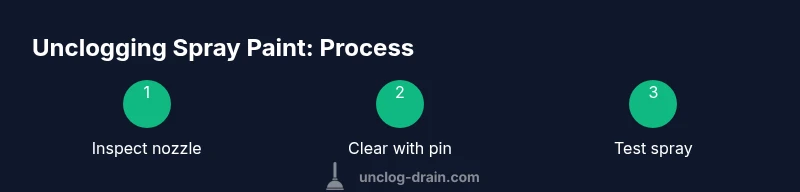
Inspect the nozzle and access
Remove the nozzle if possible and visually inspect for paint buildup, cracks, or corrosion. If the nozzle is attached firmly, try a gentle wiggling motion to see if it dislodges the obstruction without forcing.
Tip: A light touch is safer than forcing pieces apart. - 3
Clear debris with a pin
Gently insert a fine pin or needle into the nozzle orifice, lifting or loosening dried paint. Do not push hard; aim to lift away the clog, allowing a clear path for paint to pass through.
Tip: Keep the pin straight to avoid enlarging or damaging the opening. - 4
Flush with warm water
Rinse the nozzle under warm running water to push out loosened material. Reassemble carefully and test spray on a scrap surface. If still blocked, move to a solvent soak.
Tip: Avoid hot water; extreme heat can deform plastic components. - 5
Soak in solvent if needed
Submerge the nozzle in acetone or mineral spirits for 5–10 minutes, then re-test. After soaking, rinse again and dry completely before reattaching.
Tip: Do not mix solvents inside the can; use a dedicated soak container. - 6
Test spray and final checks
Attach the nozzle and perform a short spray on a test surface. If spray is smooth and consistent, you’ve succeeded. If not, repeat soaking or consider a replacement nozzle.
Tip: Keep tests pointed away from yourself and others. - 7
Prevent future clogs
Clean the nozzle after each project, store cans upright, and label colors. Regular maintenance reduces downtime and prolongs can usability.
Tip: A quick wipe-down after use keeps the nozzle clearer for next time.
Common Questions
Why is my spray paint can nozzle clogged?
Clogs are usually caused by dried pigment and resin in the nozzle. They can form at the orifice or within the valve stem and may require mechanical clearing plus a solvent soak.
Most clogs come from dried pigment near the nozzle. Gentle clearing and a soak usually fixes it.
Can I use water to unclog a Rust-Oleum nozzle?
Water helps with light buildup but solvent soaking is often more effective for oil-based paints. Do not use hot water and avoid soaking the entire can.
Water can help, but solvents work better for oil-based paints. Don’t soak the whole can.
Is it safe to use acetone with Rust-Oleum paints?
Acetone is commonly used for soaking nozzle parts but ensure compatibility with the specific paint and ventilation. Do not use acetone inside the can.
Acetone is often okay for nozzle parts, but keep it away from the can itself and work in a ventilated area.
What if the can leaks after cleaning?
If you notice a leak, stop using the can and seal the area. Leaks can indicate damaged seals or valves; discard or replace the nozzle as needed.
If you see a leak after cleaning, stop and replace the nozzle or discard the can.
Can I reuse the can if the nozzle is irreversibly clogged?
If the nozzle cannot be cleared and the paint remains unusable, replace the nozzle or consider buying a new can for consistent results.
If clearing fails, replace the nozzle or buy a new can for reliable results.
Should I store Rust-Oleum cans upright after unclogging?
Yes, store cans upright in a cool, dry place to reduce risk of clogs and pressure issues. Label colors and dates to stay organized.
Always store upright in a cool, dry place and label colors.
Watch Video
Key Points
- Identify whether the clog is nozzle-based before disassembly
- Use safe, stepwise cleaning methods to avoid damage
- Avoid extreme heat and puncturing the can
- Prevent future clogs with proper storage and maintenance
- If trouble persists, replace the nozzle or can