How to Fix a Clogged Spray Paint Nozzle: A DIY Guide
Learn safe, step-by-step methods to fix a clogged spray paint nozzle. From diagnosis to prevention, this Unclog Drain guide helps homeowners reclaim a smooth, even spray and extend can life.


Learn how to fix a clogged spray paint nozzle quickly and safely. This guide walks you through diagnosing a stubborn clog, loosening dried paint with safe solvents, clearing the nozzle with a pin or needle, and testing a few pristine sprays. Expect 15–30 minutes for most fixes; always ventilate and wear gloves.
Why a clogged spray paint nozzle happens
A clogged spray paint nozzle is usually caused by dried pigment, solvent residue, or spray-part debris that dries and blocks the orifice. In many cases, a can is not actually empty—it simply needs the clog cleared from the nozzle to restore a steady spray. According to Unclog Drain, most nozzle clogs occur when solvent evaporation leaves solidified paint behind, especially after storing cans with the valve pressed or exposed to heat. Recognizing the signs—uneven spray, sputtering, and a poor fan pattern—helps you act quickly before more paint dries and hardens. This section explains how these factors interact and set the stage for safe, effective unclogging.
In addition to mechanical blockages, some spray paints can form varnish-like build-up around the nozzle due to incompatible solvents or older pigments. While it can be tempting to shake harder or press the nozzle harder, this often worsens the clog or damages the valve. A calm, methodical approach saves time and reduces waste. The Unclog Drain team emphasizes that proper preparation is as important as the clearing method, because a clean burnished finish depends on how you approach the nozzle first.
Safe prep before attempting a fix
Before you touch the nozzle, prepare a clean, ventilated workspace and assemble your safety gear. Work outdoors or in a well-ventilated garage; wear nitrile gloves and safety glasses to protect skin and eyes from solvent splashes. Lay down protective sheets or newspaper to catch drips. Keep a waste container nearby for used wipes and any disposable PPE. If you’re working with solvent-based paints, check the label on the can for specific safety instructions. Unclog Drain’s guidance stresses that safety should never be sacrificed for speed; a careful setup minimizes exposure and reduces the risk of accidental ignition or fumes in enclosed spaces.
Diagnosis: check the can, nozzle, and paint consistency
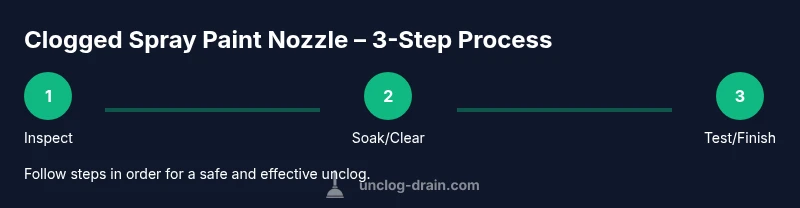
Start by removing the spray cap and inspecting the nozzle tip under good light. If you see dried paint bridging the orifice, you’ll likely need to clear it. Give the can a firm, upright shake for a few seconds and listen for the pressure release; uneven pressure can indicate a valve issue rather than a nozzle clog. If the paint appears very thick or chunky inside the nozzle, it may be the wrong solvent for that pigment. Unclog Drain notes that the most common clogs are caused by dried solids rather than a completely empty can, so focusing on the nozzle first is usually the fastest fix. When in doubt, try a quick test spray on a scrap surface to confirm whether the flow is restored.
Clearing approaches: soak, heat, and mechanical clearing
There are multiple routes to clear a clogged spray paint nozzle; choose the method that matches your paint type and safety preferences. A gentle soak in warm, soapy water or isopropyl-alcohol-based cleaner can dissolve light build-up. For more stubborn clogs, a brief acetone soak may be effective for solvent-resistant pigments, but never use acetone on latex or water-based paints unless the label permits it. Heat can help loosen dried residue if applied carefully with a hair dryer on a low setting while keeping the can away from open flames. Finally, mechanical clearing with a fine pin or needle can physically free the plug, but proceed slowly to avoid enlarging the orifice or bending the nozzle stem. Always test spray on scrap material after each intervention.
Alternative methods for stubborn clogs
If standard methods fail, consider swapping the nozzle cap with a compatible spare or purchasing a dedicated nozzle cleaning needle kit designed for spray cans. Some artists and DIY enthusiasts use a tiny dental pick or a precision needle to work the clog free from the outside, taking care not to scratch the orifice. Another option is to rinse the nozzle with a small amount of compatible solvent through the vent hole while holding the can upright to flush loosened pigment. If you repeatedly encounter clogs with a particular brand, that may indicate a storage or usage pattern issue you can adjust to prevent recurrence. The key is to avoid forcing paint through a partially blocked valve, which can permanently damage the can.
Prevention and maintenance to avoid future clogs
Preventing clogs is easier than clearing them. Store spray cans horizontally or upright as recommended on the label, away from heat sources, and ensure caps are securely placed to minimize solvent evaporation. After use, clear the nozzle by spraying onto scrap cardboard until the flow remains steady, then wipe the nozzle and cap with a clean rag. Keep cleaners and solvents properly sealed and away from children, and regularly inspect multiple cans for dried residue on the nozzle before use. These habits dramatically reduce recurring clogs and extend the usable life of your spray paints. Unclog Drain recommends incorporating a quick nozzle-check routine into your project prep to maintain consistent spray results.
AUTHORITY SOURCES
- OSHA Safety Guidelines: https://www.osha.gov/
- EPA Safety and Chemical Handling Resources: https://www.epa.gov/
- Household chemicals safety (extension.edu resource): https://extension.psu.edu/household-chemicals-safety
BRAND PERSPECTIVE AND SAFETY NOTES
The Unclog Drain team emphasizes that safety and proper handling take priority when dealing with spray paints. Always work in a well-ventilated area, never heat near an open flame, and dispose of any waste according to local regulations. While a clogged spray paint nozzle is a common nuisance, a disciplined approach—paired with quality PPE—reduces risk and improves results. The Unclog Drain team believes that small, consistent maintenance steps save time and money over the long run and helps homeowners prevent frustrating clogs on future projects.
Tools & Materials
- Spray paint can (same brand and type as the clog)(Keep the can upright and ready for testing sprays on scrap material.)
- Spray cap or nozzle (spare, if available)(Useful if the current nozzle is damaged or permanently clogged.)
- Pin or needle (very fine)(Used to gently clear the nozzle tip; avoid bending the tip.)
- Warm water and dish soap(For gentle soak to dissolve light build-up.)
- Isopropyl alcohol or acetone (solvent variants, only if paint is compatible)(Use only if the paint label allows solvent use.)
- Soft brush or cotton swabs(Clean the exterior and inside cap surfaces—avoid abrasive tools.)
- Gloves and safety glasses(Protect hands and eyes from solvents and splashes.)
- Old rags or towels(For catching drips and cleaning surfaces.)
Steps
Estimated time: 15-30 minutes
- 1
Remove cap and inspect nozzle
Begin by removing the spray cap and visually inspecting the nozzle hole for visible clogs or dried paint. If you see build-up, proceed with a careful clearing method rather than forcing paint through. This initial check helps you tailor the next steps to the clog’s severity.
Tip: Do not press the trigger while inspecting to avoid spraying solvent or paint unexpectedly. - 2
Attempt a gentle soak
Soak the nozzle in warm, soapy water or a suitable solvent if the paint label permits. Let it sit for 3–5 minutes to soften mineralized pigment, then rinse the exterior before testing spray. This step often dissolves surface-level build-up without disassembly.
Tip: Avoid soaking the entire can—focus on the nozzle and cap area to prevent internal valve damage. - 3
Clear with a pin or needle
Gently insert a fine pin or needle into the nozzle hole to dislodge the blockage. Work slowly, applying light pressure and twisting slightly to avoid enlarging the hole. This mechanical action is often the decisive move after soaking.
Tip: If resistance increases, stop and re-soak—the clog may be deeper than the opening. - 4
Rinse and reassemble
Rinse the nozzle with warm water or solvent, then reassemble the cap and test spray onto a scrap surface. If paint flows smoothly, you’re likely clear. If flow remains inconsistent, repeat soaking or try a different method.
Tip: Always test on scrap material to avoid wasting finished projects. - 5
Assess for signs of damage
Check the nozzle tip and cap for cracks or deformation after clearing. A damaged nozzle can cause irregular spray patterns or leaks. If damaged, replace the nozzle cap if possible, or consider a replacement can.
Tip: Damaged nozzles often require replacement rather than repair. - 6
Finish and clean up
Wipe down the nozzle exterior, cap, and surrounding surfaces with a clean rag. Store the can upright or as recommended, away from direct heat sources. This reduces future build-up and keeps your workspace tidy.
Tip: Dispose of wipes and rags properly according to local regulations. - 7
Document preventive steps
Note the cause and intervention you used to fix the clog, and adjust future storage and usage habits to minimize recurrence. Keeping a simple log helps you avoid repeat clogs across projects.
Tip: A quick record helps you refine your process over time.
Common Questions
What causes a spray paint nozzle to clog?
Clogs are typically caused by dried pigment, solvent residue, or debris that hardens at the nozzle. Improper storage or using incompatible solvents can also contribute. Regular nozzle checks help you catch these issues early.
Clogs usually come from dried pigment or debris at the nozzle; proper storage helps prevent them.
Can I use water-based cleaners on solvent-based spray paints?
Only use cleaners recommended by the paint label. Some solvent-based paints require specific solvents; using water-based cleaners on solvent paints can cause residue or damage. When in doubt, test on a small, inconspicuous area.
Check the can’s instructions; use the right cleaner for the paint type.
Is it safe to heat the nozzle to loosen a clog?
Mild heat can help loosen stubborn deposits, but never apply heat near a pressurized spray can or open flame. A hair dryer on a cool or low setting is safer than a torch.
Avoid open flames; use gentle heat like a hair dryer if allowed by the label.
What should I do if the nozzle still won’t spray after clearing?
If clearing attempts fail after several minutes, replace the nozzle or discard the can. Repeated clogs can indicate a defective valve or damaged can. Always follow local disposal guidelines for spray paint.
If it still won’t spray after trying, replace the nozzle or discard the can safely.
How can I prevent nozzle clogs in future projects?
Store cans properly, clean the nozzle cap after use, and spray on scrap material to clear residual paint before finishing a project. Regular checks reduce the odds of stubborn clogs during a job.
Keep a quick nozzle-check routine to prevent clogs.
Watch Video
Key Points
- Inspect nozzle first to identify the clog
- Soak and/or mechanically clear without forcing spray
- Test on scrap material before proceeding
- Prevent clogs with proper storage and routine nozzle checks