How to Unclog Windshield Washer Nozzle: A Practical DIY Guide
Learn a step-by-step method to unclog windshield washer nozzles safely, with essential tools, simple techniques, and maintenance tips to keep spray clear and reliable.


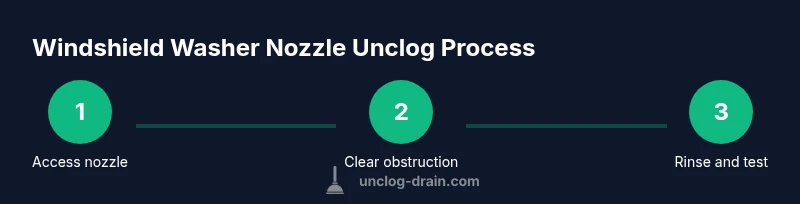
Access the nozzle, check for obstructions, and clear the jet with a fine needle. Rinse with clean water, then test the spray on glass and adjust the nozzle angle if needed. If caps are present, remove them with a small screwdriver. Follow these steps for a reliable fix. This method minimizes damage and works for most vehicles.
Understanding windshield washer nozzle clog: common causes and symptoms
Windshield washer nozzle clogs are a common car maintenance nuisance that can leave your windshield streaky and unsafe. The nozzle can become blocked by mineral deposits from hard water, dried washer fluid, dirt, or debris picked up from the road. In winter, freezing can crack or seal off the spray pattern. When a nozzle is blocked, you might notice a weak spray, an uneven fan, or nothing at all. According to Unclog Drain, most clogs originate in the tiny jets at the base of the spray head, not in the reservoir or pump, which helps narrow the fix to the nozzle itself.
Recognizing the signs early saves you from driving with reduced visibility. If you regularly fill the washer reservoir but still see poor spray, the nozzle is the most likely culprit. A successful unclog often restores the original spray pattern and ensures water hits the center of the windshield rather than the surrounding glass. In some vehicles, multiple nozzles share a single housing; if one is blocked, the others may continue to spray, creating an uneven pattern that is still noticeable. Regular checks contribute to safer driving in rain and snow.
Safety and prep: what you need before you start
Before you begin, set up a clean workspace and wear safety glasses to protect your eyes from splashes or debris. Park on a level surface and turn off the ignition to avoid accidental activation of the wipers while you work. Use a flashlight to illuminate the nozzle area, especially if you’re inspecting hard-to-see jets. Some vehicles have a removable cap or cover over the nozzle; photograph the location first in case you need to reassemble components in a specific orientation. Keep a towel handy for spills and any unexpected drips. By planning your approach, you minimize the risk of damaging plastic housings or severing wires near the washer pump.
Tools and materials for unclogging windshield washer nozzles
- Flathead screwdriver (essential) — to gently lift nozzle caps or trims if present
- Needle or pin (essential) — to tease blockages from the jet without enlarging the opening
- Clean water (essential) — for rinsing after clearing
- Soft-bristled brush (optional) — to scrub exterior debris
- Isopropyl alcohol (optional) — for quick exterior disinfection
- White vinegar (optional) — for descaling mineral buildup
- Cloth or paper towels (essential) — for drying and cleanup
- Safety glasses and gloves (optional) — for personal protection
Step-by-step: access the nozzle and inspect
- Locate the windshield washer nozzles on the hood edge near the windshield or behind the wiper blades. If necessary, gently lower the hood and use a flashlight to get a clear view. 2) If your model has a protective cap, carefully remove it with a small screwdriver or by hand, noting how it sits to avoid misplacement. 3) Visually inspect the nozzle openings for visible debris or crystals. A magnifying glass can help detect tiny clogs that aren’t obvious to the naked eye. 4) Test spray briefly by triggering the washer to see whether the pattern is uniform or if a single jet remains blocked.
Tip: Work slowly and avoid forcing tools into the nozzle; a light touch preserves the plastic housing and prevents cracks.
Step-by-step: clearing the clog without damage
- If you see a visible obstruction, insert a fine needle or pin into the jet and gently wiggle to loosen. Avoid metal objects that could scratch the plastic. 2) Retract the needle and rinse the nozzle with clean water to flush dislodged debris. 3) If stubborn buildup remains, moisten a cotton swab with isopropyl alcohol and lightly clean around the exterior. 4) For mineral buildup, you can soak the nozzle exterior with a small amount of white vinegar diluted in water for a few minutes, then rinse thoroughly. 5) Reinspect the nozzle and, if needed, reinsert the cap or reassemble any removed components.
Pro tip: Do not use excessive force; you risk damaging the nozzle or the wiring connected to the washer pump.
Step-by-step: re-test and adjust spray pattern
- Reconnect any removed caps and wipe the nozzle area dry. 2) Trigger the washer and observe the spray onto a vertical surface. If the spray is uneven, adjust the nozzle downward or outward to align with the windshield’s center. 3) Repeat rinsing and testing until the spray covers the desired area evenly. 4) If multiple nozzles share a housing, verify each one sprays similarly to ensure a balanced pattern. 5) Return the hood to its closed position and perform a final test in rain or with a spray bottle to confirm reliability.
Tip: Small adjustments make a big difference in coverage; test at close range first, then at a distance.
Common mistakes and how to avoid them
- Using metal tools: This can scratch or crack the nozzle or housing. Use plastic or soft tools and a gentle touch.
- Forcing blocks: If the jet is deeply clogged, forcing a pin can widen the opening and distort spray. Use a gradual steady touch.
- Neglecting the reservoir: Ensure the washer fluid level is adequate; a dry reservoir can cause inconsistent spray even after clearing the nozzle.
- Skipping safety: Eye protection minimizes splash-related injuries, especially if chemicals like vinegar or alcohol are used.
Maintenance tips to prevent future clogs
- Use filtered or distilled water in the reservoir to reduce mineral buildup.
- Regularly inspect and clean nozzles at least twice a year, especially before winter or wet seasons.
- Add a routine cleaning to your car care checklist: flush the reservoir and inspect hose connections for cracks or leaks.
- Replace worn nozzles: If spray remains misaligned after multiple adjustments, the nozzle itself may be worn and need replacement.
- Keep washer fluid fresh; avoid using old or contaminated fluid that can crystallize and clog the jet.
DIY safety considerations and when to see a professional
If you notice persistent clogs after two cleaning attempts, or if the nozzle is cracked, cracked hoses, or you detect leaks around the wiper system, seek professional help. A trained mechanic can diagnose pump pressure issues or reservoir leaks that may look like nozzle problems. Do not attempt to disassemble electrical components beyond simple nozzle access, as this can compromise the washer system’s safety and function. If in doubt, consult the owner’s manual for your vehicle’s specific nozzle layout and recommended maintenance intervals.
Tools & Materials
- Flathead screwdriver(To lift nozzle caps or trim gently if present)
- Needle or pin(Fine point to clear the jet without enlarging the opening)
- Clean water(For rinsing after clearing the nozzle)
- Soft-bristled brush(To scrub exterior debris gently)
- Isopropyl alcohol(For exterior disinfection)
- White vinegar(Optional descaling solution for mineral buildup)
- Cloth or paper towels(For drying and cleanup)
- Safety glasses(Eye protection during cleaning)
Steps
Estimated time: 20-30 minutes
- 1
Access the nozzle and inspect
Locate the nozzles along the hood edge or behind the wiper blades. Use a flashlight to inspect the opening for obvious debris and check for protective caps. If a cap exists, remove it carefully and set it aside for proper reassembly.
Tip: Work slowly to avoid snapping plastic or misplacing small parts. - 2
Identify the obstruction
Look for mineral buildup, dried fluid, or dirt at the jet. Use a magnifier if needed to confirm a blockage rather than only guessing.
Tip: A tiny blockage can cause a big spray problem; don’t assume it’s a system-wide issue. - 3
Clear the jet with a fine tool
Gently insert a needle or pin into the jet and wiggle to loosen the clog without enlarging the hole. Remove the tool and wait a moment before rinsing.
Tip: Avoid metal objects that could scratch or bend the nozzle. - 4
Rinse and wipe
Rinse the nozzle with clean water to flush out loosened debris. Wipe the exterior with a cloth to remove residue.
Tip: Static water pressure can push debris out; a clean cloth helps capture residues. - 5
Reassemble and test the nozzle
Reattach any caps, reset the wiper area, and trigger the washer to test spray on a vertical surface. Observe spray pattern and adjust angle if needed.
Tip: Make small angular adjustments and test after each small change. - 6
Finalize maintenance and precautions
Record a quick maintenance note and consider replacing worn nozzles if spray issues recur. Ensure you’re using proper washer fluid and keep the reservoir topped up.
Tip: Regular checks prevent future clogs and ensure visibility in poor weather.
Common Questions
Why is my windshield washer nozzle clogged?
Clogs are usually caused by mineral buildup from hard water, dried fluid, or road debris. In cold weather, the nozzle can freeze or crack, worsening the spray. Regular inspection helps detect issues early.
Clogs usually come from buildup or debris and can be fixed with a careful needle clean and rinse.
Can vinegar help unclog windshield washer nozzles?
Diluted vinegar can help dissolve mineral deposits around the nozzle. Rinse thoroughly with clean water after soaking to prevent residue in the reservoir.
Vinegar can dissolve mineral buildup; rinse well afterward to avoid residue.
Is it safe to remove the nozzle cap?
Yes, if your model has a cap. Use the proper small screwdriver or your fingers to avoid damage. Return the cap securely after cleaning.
Yes, carefully remove the cap and reattach it after cleaning.
What if cleaning doesn’t fix the problem?
If cleaning doesn’t restore spray, check the washer pump and reservoir for issues like low fluid or a leaking line. A professional can diagnose pump pressure or wiring problems.
If it still doesn’t work, the pump or reservoir might be the issue; a pro can check it.
How often should I inspect windshield washer nozzles?
Inspect seasonally or whenever you notice weak spray. A quick visual check can prevent larger issues during rain or winter.
Do a quick check at least twice a year, or when spray becomes weak.
Watch Video
Key Points
- Inspect nozzle for mineral buildup or debris
- Clear with a fine tool—no metal scrapes
- Rinse, re-test, and adjust spray pattern
- Maintain regular checks to prevent future clogs