Septic Outlet Pipe Blockage: Troubleshooting Guide
Urgent guide to diagnose and fix septic outlet pipe blockage fast. Learn signs, diagnostic flow, safe fixes, and prevention tips to stop backups and protect your septic system.


Most septic outlet pipe blockages come from solids buildup, root intrusion, or sludge choking the outlet. Start by reducing water use and inspecting the tank access; if safe, try enzyme-based cleaners or a plumbing auger. If backups persist, stop using the system and call a licensed plumber.
Understanding septic outlet pipe blockage
Septic outlet pipe blockage occurs when waste solids, toilet paper, oils, or roots progressively obstruct the line that transports wastewater from the septic tank to the drain field. When the outlet is restricted, the tank backs up, causing slow flushing, gurgling noises, and possible sewage odors near the tank or drains. According to Unclog Drain, quick action is essential to prevent groundwater contamination and costly repairs. The issue often masquerades as a tank problem or a clogged house drain, but the obstruction may be confined to the outlet pipe or a compromised outlet tee. Recognize urgency: if you see persistent backups across fixtures or rising water levels in the tank, treat it as an emergency and seek professional help before attempting invasive remedies. Early diagnosis helps minimize damage and downtime while preserving the biological balance inside the septic system.
Signs and quick checks you can perform safely
Watch for backups in multiple fixtures, frequent toilet gurgling, wet spots over the drain field, or a noticeable sewer odor near the tank. These are common indicators of an outlet blockage. Before any probing, ensure you have PPE and never enter the septic tank or tamper with electrical components unless you are trained. Avoid harsh chemical products; they can kill beneficial bacteria and worsen the problem. If the outlet lid is accessible, visually inspect for obvious debris, but do not pry the lid off if it’s heavy or restricted. Reduce water usage immediately to assess whether the issue is localized or widespread. If safe, you may inspect the cleanout area for obstruction but stop if you encounter resistance or unfamiliar smells.
Diagnostic flow for septic outlet issues
A systematic approach helps isolate the blockage: observe the symptoms, map probable causes, and apply targeted fixes. Unclog Drain analysis shows that root intrusion and solids buildup are the most frequent culprits, with old or damaged outlet components as a secondary risk. Start by checking for backups on nearby fixtures and the level in the septic tank. If backups persist after reducing usage, proceed to a formal diagnosis with a licensed plumber who can perform camera inspection and hydro-jetting if needed. Document what you observe and share it with the pro to speed up the process.
Step-by-step fix for the most common blockage
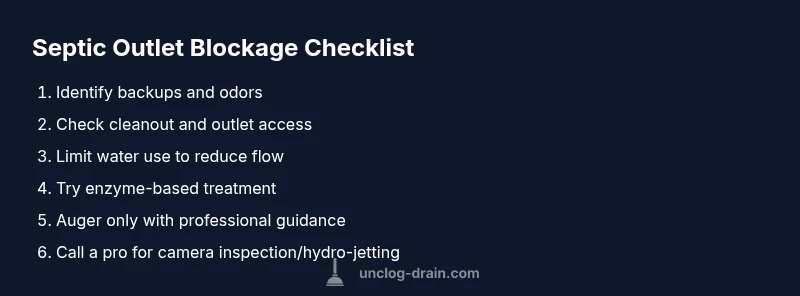
- Safety first: wear gloves, eye protection, and keep children/pets away. Stop flushing and limit water use to reduce flow through the system. 2) Locate and access the cleanout outlet or tank lid; verify the area is safe to inspect. 3) Try enzyme-based septic treatments as a gentle first pass, allowing time for microbes to digest solids. 4) If symptoms persist, carefully use a plumbing auger from the cleanout to break up the blockage; rotate steadily and avoid forcing beyond resistance. 5) If you can’t clear the line, contact a professional for camera inspection and hydro-jetting; they can clear roots and confirm line integrity.
Safety, risks, and professional help
Sewage exposure poses health hazards, and mishandling the system can worsen damage or cause flooding. Do not enter the septic tank or disturb electrical components. If you notice persistent backups after attempting safe fixes, or if you smell strong sewage near the tank, stop work and hire a licensed plumber. A pro can perform a formal diagnostic, remove blockages safely, and repair damaged outlet components. Regular maintenance by a professional helps prevent future blockages and preserves system longevity.
Prevention tips to keep septic outlet pipes clear
Schedule routine inspections and pump the tank as recommended by a qualified technician. Use water efficiently—spread large loads (laundry, dishwashing) out over the week. Avoid flushing non-biodegradable items, fats, or chemicals that harm beneficial bacteria. Keep the drain field free from heavy traffic and landscaping over the area, and trim roots near the perimeters of the septic system. Consider a professional camera inspection every few years to catch silent problems before they cause blockages.
Steps
Estimated time: 60-120 minutes
- 1
Shut down water use and prepare the area
Limit further wastewater input by halting nonessential water use. Put on protective gloves and eye protection, and clear the area around the access lid to avoid slips or spills. This reduces contamination risk while you assess the situation.
Tip: Keep kids and pets away and have absorbent towels ready for accidents. - 2
Locate access and inspect safely
Find the septic tank cleanout or outlet access. Do not force heavy lids; if the lid is stuck or you smell sewage, stop and call a pro. Visual cues like standing water near the outlet indicate a blockage.
Tip: Note the orientation and distance to the drain field for the professional later. - 3
Try gentle biological treatments
If the system is accessible and you’re confident, pour an enzyme-based septic treatment following the label directions. These products help break down organic solids without harming beneficial bacteria.
Tip: Avoid harsh chemical cleaners that can disrupt the septic ecosystem. - 4
Use a plumbing auger if safe
From the cleanout, gently feed the auger toward the outlet and rotate to break up the blockage. Do not force beyond resistance to avoid damaging the pipe. Stop if you meet a solid obstruction that won’t budge.
Tip: Wear protective gear and have a helper hold the auger for control. - 5
Call a professional for camera inspection
If the blockage persists or you see signs of root intrusion, professional hydro-jetting and camera inspection are recommended. A plumber can assess pipe integrity and replace damaged components if needed.
Tip: Ask for a written assessment and a scope of repairs before work begins.
Diagnosis: Sewage backup or slow drainage at multiple fixtures
Possible Causes
- highRoot intrusion into the outlet pipe
- highSolids buildup near the outlet
- lowDamaged outlet tee or cracked pipe
Fixes
- easySchedule a professional camera inspection to locate the blockage and assess pipe integrity
- easyAttempt enzyme-based treatments to rebalance anaerobic digestion and clear minor buildups
- hardUse a licensed plumber's auger or hydro-jetting to clear roots and compacted solids
Common Questions
What causes a septic outlet pipe blockage?
Blockages typically arise from root intrusion, solids buildup, or a damaged outlet. Poor maintenance or excessive water can accelerate the problem. A professional diagnosis helps determine the exact cause.
Blockages usually come from roots, solids, or outlet damage. A pro diagnosis helps identify the exact cause.
How can I tell if my septic outlet is blocked?
Backups in multiple fixtures, gurgling noises, or standing water in the tank area are common signs. A notched smell near the tank and slow drainage further point to an outlet issue.
Backups across fixtures and gurgling indicate a possible outlet blockage. A professional check is recommended.
Can I fix a blockage myself?
You can perform small, safe steps like limiting usage and trying enzyme treatments, but avoid aggressive methods near the tank. For root intrusion or persistent blockages, hire a licensed plumber for camera inspection and hydro-jetting.
You can try gentle steps, but if it persists, call a pro.
How long does professional treatment take?
Most inspections and initial clearances can be completed in a few hours, but complex root incursions or repairs may take longer. The plumber will provide an estimated timeline after assessment.
Most diagnostics take a few hours; complex fixes vary by the damage.
What is the typical cost range for this service?
Costs vary by region and extent of blockage, from basic diagnostics to full hydro-jetting. Expect a wide range; your pro will quote after inspection.
Costs depend on the blockage and region; you’ll get a quote after inspection.
How can I prevent future septic outlet blockages?
Pump the tank on schedule, limit water use, install root barriers if needed, and avoid flushing non-biodegradables. Regular professional checkups help catch problems early.
Regular maintenance and mindful usage prevent most blockages.
Watch Video
Key Points
- Act quickly on backups to reduce damage
- Identify whether the issue is the outlet or the tank
- Use enzyme products before aggressive mechanical methods
- Call a pro for camera inspection and hydro-jetting when needed