Waste Pipe Blocked: Urgent Troubleshooting and Fixes
Urgent guide to diagnose and fix a waste pipe blocked. Learn common causes, quick fixes, safety tips, and when to call a plumber. Clear steps for homeowners to prevent backups and protect your home.


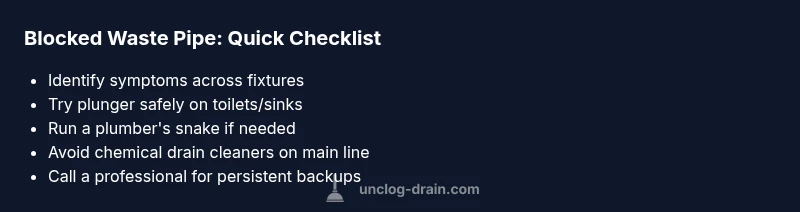
Most waste pipe blockages come from a main drain clog caused by grease, hair, soap scum, and non-dissolving items. Start with simple fixes: plunge affected fixtures, use a drain snake for toilets and sinks, and flush with hot water. If the blockage persists or there is sewer odor or multiple fixtures backing up, stop and call a licensed plumber.
What a Waste Pipe Blocked Looks Like
A blocked waste pipe often shows up as slow drainage across multiple fixtures, gurgling sounds in the drains, and sometimes a foul sewer smell. Toilets may back up after flushing, sinks drain slowly, and you might notice water pooling around floor drains. In many homes, the first sign is a single sink or tub that takes longer to drain, but if the main line is blocked, several fixtures will exhibit symptoms simultaneously. Recognizing these symptoms early helps prevent sewage backups and costly damage. In this guide, we’ll address the rapid actions you can take right now, the most common causes, and when to call in professionals. According to Unclog Drain, a blocked waste pipe is a common home maintenance issue, especially in kitchens and older plumbing systems.
Key Symptoms to Watch For
- Slow drainage in multiple fixtures (sink, tub, toilet)
- Gurgling noises from pipes when water drains
- Unpleasant sewer-like odor near drains
- Water pooling around floor drains after flush or heavy use
- Occasional toilet backups during showers or dishwashing
These signs indicate a potential blockage in the waste pipe or main sewer line and should be treated with urgency to prevent further damage. Remember, slow draining isn’t always a total blockage; it can begin as a partial clog that worsens with every use.
Common Causes of Blocked Waste Pipes
Blockages form for several reasons, and understanding them helps you choose the right fix. Common causes include grease and fat buildup from kitchen waste, hair and soap scum from showers and sinks, sanitary wipes or thick toilet paper that don’t break down, and foreign objects accidentally flushed down toilets. Over time, scale and mineral deposits can also reduce pipe diameter, especially in older homes. Tree roots seeking water can invade underground sewer lines, causing sudden backups. Venting problems, where the plumbing vent stack is blocked, can also lead to slow drainage and pressure-related backups. Identifying the root cause guides safer, more effective remediation.
Immediate Safety and Safe-Do-First Steps
Before you reach for tools, protect yourself and your home. Wear rubber gloves and eye protection. Never mix chemical drain cleaners with other cleaners or attempt to flush them through a blocked main line. Turn off water supply to affected fixtures to minimize overflow risk. If you see sewage backup, avoid using water elsewhere in the house and prepare for a potential clean-up. Safely open access cleanouts if you can locate them, but do not force fittings or push objects further down the pipe. If you’re unsure about the pipe layout or you encounter strong sewage odors, skip ahead to professional help.
DIY Techniques You Can Try (Within Reason)
Begin with non-invasive methods. A plunger can clear minor clogs in toilets and sinks, but use it correctly: ensure a good seal, and plunger with multiple firm strokes. A hand auger or toilet auger can reach blockages within the toilet trap and immediate drain line. For kitchen drains, a plumber’s snake can dislodge grease clogs beyond the trap. For persistent blockages, hydro-jetting is effective but typically requires a professional. Use hot water and a gentle amount of dish soap to loosen grease, but don’t rely on it for heavy, solid blockages. Always work patiently and avoid forcing pipes.
When to Call a Professional
If you notice sewage backflow into sinks or toilets, or if multiple fixtures drain slowly despite DIY efforts, it’s time to call a licensed plumber. A professional can perform camera inspection, hydro-jetting, and root intrusion clearing with specialized equipment, reducing the risk of pipe damage. Structural issues like cracked or collapsed pipes require repair or replacement by a pro. Delaying professional service after a major backup can lead to more extensive and costly damage.
Prevention: Keep Your Waste Pipe Clear
Prevention is cheaper than repair. Use strainers on all sinks and avoid flushing items that don’t belong in the sewer system. Regularly flush drains with hot water to melt grease and dirt before it solidifies. Periodic use of baking soda and vinegar can help maintain neutral pH and minimize buildup, followed by a hot water rinse. Schedule annual or semi-annual professional inspections if your home has older plumbing. A well-maintained system reduces the likelihood of future blockages and backups.
Steps
Estimated time: 45-90 minutes
- 1
Assess safety and prepare the area
Put on gloves and eye protection. Gather a bucket, towels, and a flashlight. Identify the affected fixtures and locate cleanouts. If you smell sewage or see active backup, evacuate the area and call a plumber.
Tip: Keep children and pets away from the working area to prevent exposure. - 2
Try a mechanical fix with a plunger
Seal the drain and give multiple firm plunges. For toilets, ensure the flange is fully covered and use a flange plunger. If the drain clears, run hot water to flush residuals.
Tip: Use a dedicated toilet plunger for toilets, and a sink plunger for sinks to avoid cross-contamination. - 3
Use a drain auger or toilet auger
Insert the auger into the drain and rotate while pushing gently to break up the clog. Retract slowly to pull debris out. Repeat as needed until water drains freely.
Tip: Do not force the auger; stop if you hit resistance that feels like pipe damage. - 4
Flushing and chemical considerations
Flushing with hot water and a small amount of dish soap can help break up grease. Avoid chemical drain cleaners, especially for main line backups, as they can damage pipes and create hazardous fumes.
Tip: Never mix cleaners or use them on a blocked main line without guidance from a plumber. - 5
Evaluate the need for hydro-jetting or camera inspection
If the clog persists after mechanical methods, a professional may perform hydro-jetting or camera inspection to locate and assess damage or root intrusion.
Tip: A professional can determine whether roots are the cause and advise on remediation options. - 6
Plan for prevention and follow-up
Install strainers, avoid flushing non-biodegradable items, and schedule periodic maintenance. Keep an eye on any recurring symptoms and escalate to a professional if they reappear.
Tip: Document maintenance dates to spot trends early.
Diagnosis: Waste pipe blocked
Possible Causes
- highGrease, hair, soap scum, and non-dissolving items accumulating in the main drain
- mediumVent stack blockage causing pressure buildup and poor drainage
- lowTree roots or damaged sewer laterals intruding into the main line
- mediumOld or narrow pipes restricting flow due to mineral buildup
Fixes
- easyUse a plunger on affected fixtures to dislodge minor clogs
- mediumRun a plumber's snake (auger) to clear the main line or affected trap
- hardConsider hydro-jetting or camera inspection for stubborn blockages or pipe damage
- mediumInspect and clear the vent stack if accessible, or consult a professional
Common Questions
What is the difference between a blocked waste pipe and a clogged drain?
A blocked waste pipe usually refers to a main drain line that affects multiple fixtures, whereas a clogged drain is typically localized to a single sink or tub. If several fixtures back up, the main line is likely involved and requires more thorough clearing.
A main line blockage affects multiple fixtures. If only one drain is slow, it's a localized clog. For multiple backups, seek professional help.
Can chemical drain cleaners fix a waste pipe blocked?
Chemical cleaners can damage pipes and may not reach main line blockages effectively. They should be avoided for main drain backups and used only with caution for minor, localized clogs as a last resort.
Chemicals can damage pipes and aren’t reliable for main line blocks. Use mechanical methods first and call a pro if it’s stubborn.
Should I attempt hydro-jetting myself?
Hydro-jetting is a high-pressure service typically performed by professionals. DIY jetting can be dangerous and may cause pipe damage if misused. If your basic methods fail, contact a plumber for this option.
Hydro-jetting is best left to pros due to high pressure and risk of damage.
When is it essential to call a licensed plumber?
Call a licensed plumber if you notice sewage backflow, if multiple fixtures backup, or if you cannot clear the blockage with mechanical methods. A professional can assess pipe damage and perform camera inspection.
Call a plumber if backups persist or you smell sewage. They can inspect and repair damaged pipes.
Can tree roots cause a waste pipe to block?
Yes, roots can intrude into sewer lines, causing slow drainage or backups. Root intrusion often requires professional repair and sometimes trenching or pipe replacement.
Tree roots can block sewer lines; professionals usually handle root intrusion.
What maintenance prevents future blockages?
Use strainers, avoid flushing non-dissolving items, flush hot water regularly, and schedule periodic professional inspections if you have older plumbing.
Install strainers and flush with hot water to prevent buildup; get periodic checks.
Is a backup a sign of a failing sewer line?
Backups can indicate a failing sewer line, especially if multiple fixtures back up simultaneously. A professional can determine if there is pipe damage or root intrusion.
Multiple backups can mean sewer line damage; have a pro assess it.
What safety precautions should I take during DIY fixes?
Wear gloves and eye protection, avoid mixing cleaners, and ventilate the area. If you’re unsure, pause and call a professional to avoid injury or exposure.
Wear protection and avoid dangerous chemicals; ask a pro if unsure.
Watch Video
Key Points
- Identify blockage signs early to prevent backups.
- Start with safe, mechanical fixes before chemicals.
- Reserve professional help for persistent or multi-fixture backups.
- Prevent blockages with regular maintenance and strainers.