Septic Tank Clogged: Quick Troubleshooting Guide
Urgent, step-by-step troubleshooting for a clogged septic tank. Learn safe checks, diagnostic flow, proven fixes, and prevention tips from Unclog Drain to protect your system.


If your septic system is clogged, act quickly but safely: stop using water, avoid flushing, and start with low-risk checks before calling a pro. The fastest path is to inspect obvious blockages and reduce flow to the tank, then pump if needed. Avoid chemical cleaners that can kill bacteria and worsen the problem.
Why a septic tank clogged is urgent
A septic tank clogged isn't just an annoyance—it threatens your home's plumbing, your health, and your wallet. Backups can flood floors, contaminate sinks and tubs, and create sewage odors that linger for days. According to Unclog Drain, acting fast reduces the risk of costly repairs and prevents spread of waste through the drain field. Early, calm action helps you manage the situation without invasive digging. In most homes, clogs come from everyday habits that overwhelm the tank or block the outlet, not from a mysterious mechanical failure. Understanding these signs sets you up for safe, effective fixes and better prevention in the future.
Immediate Safety Steps You Should Take
Safety comes first. Immediately stop using water in the home and avoid flushing any fixtures if you suspect a septic clog. Keep children and pets away from the affected area and never pour chemical drain cleaners into the system; they can kill beneficial bacteria and worsen the blockage. If you notice sewage backing up, foul odors, or standing water near the septic lid, evacuate the space and call a licensed septic professional. When you resume work, gather gloves, a flashlight, a bucket, and a sturdy scoop. Protect yourself and your family while you diagnose the problem, and document any unusual signs to share with the pro.
Common Causes of Septic Tank Clogs
Most clogs arise from simple, avoidable habits rather than a failed tank. Common culprits include flushing wipes, sanitary products, or paper towels; excessive water use that overwhelms the tank; a blocked or bent inlet/outlet or baffle inside the tank; and a clogged drain field from overloading the system. In some cases, chemical cleaners disrupt the natural breakdown process and create long-term slowdowns. By understanding these causes, you can tailor fixes and prevention strategies. As the Unclog Drain team notes, addressing everyday disposal habits is often the fastest route to lasting relief.
Diagnostic Flow: Symptom to Solution
Begin with the symptom: backups, slow drains, and odors. Map the likely causes from most to least probable—overfill or buildup inside the tank is usually high likelihood, while field failure is lower unless backed by other signs. Decide whether you can safely reduce usage, inspect the cleanout, or pump the tank. If backups persist after pumping, the issue likely lies with the drain field or piping, requiring professional assessment. This diagnostic approach helps you decide what you can safely do and when to call in a licensed pro.
Step-by-Step: Quick Fixes You Can Try Now
This section provides practical, low-risk actions you can take before pumping or calling a pro. Start with the simplest options and work toward more involved steps if needed. Remember: safety first, and never attempt to enter a tank. If you suspect a major fault or if you smell rotten eggs around the tank, contact a professional immediately.
Prevention Techniques to Avoid Future Clogs
Prevention matters as much as fixes. Practice septic-safe habits: only flush human waste and toilet paper, avoid flushing wipes or non-dispersible items, and use septic-safe cleaners. Space out water usage to prevent overload, and schedule regular pumping based on household size and usage. Protect the drain field by avoiding heavy traffic or construction over it. With consistent maintenance, you’ll reduce the chance of future clogs and keep your system running smoothly.
When to Call a Pro and What to Expect
If backups persist after basic checks and pumping, or if you notice repeated odors or standing wastewater, call a licensed septic professional. A pro will inspect the tank and the drain field, check the baffles, and pump the tank if needed. They’ll also review your usage patterns and provide a maintenance plan tailored to your home. In Unclog Drain’s experience, professional pumping and evaluation are the fastest way to restore normal operation and prevent recurring problems.
Tools, Safety & Best Practices
Use proper PPE (gloves, boots) and ensure good ventilation when inspecting or handling any septic components. Never enter the septic tank or submerge yourself in the tank environment. Keep power away from wet areas and avoid mixing household chemicals with septic waste. Store chemicals away from the drain field and follow local codes for any temporary handling or pumping services. Regular inspection and careful disposal habits reduce both risk and cost over time.
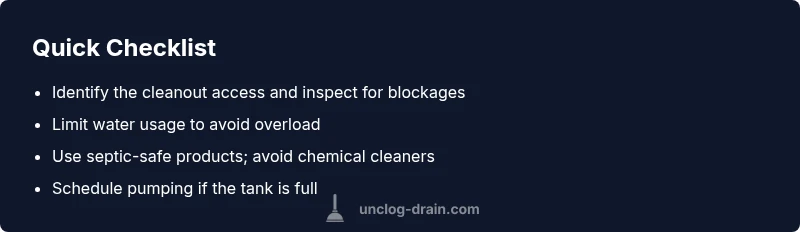
Quick Troubleshooting Checklist
- Stop adding waste and limit water use
- Locate and inspect the cleanout for visible blockages
- Check house drains for slow flow or gurgling
- Avoid chemical cleaners; switch to septic-safe products
- Schedule pumping if the tank is full or if odors/backups continue
- Document signs and timing to share with a pro
Do's and Don'ts for a Clogged Septic Tank
Do: Keep records of pumping and maintenance, use septic-safe products, and pump at recommended intervals. Don't: Flush non-biodegradable items, pour chemical cleaners, or overload the system with water. Do seek professional help when you notice persistent backups or field issues.
Steps
Estimated time: 60-90 minutes
- 1
Power down and isolate the area
Turn off electrical power to the septic pump and any nearby equipment if safe. Do not run fixtures while diagnosing, and wear PPE to protect yourself from sewage exposure.
Tip: Lockout/tagout procedures prevent accidental startup during maintenance. - 2
Locate the cleanout access
Find the septic tank cleanout or access port. If visible, inspect for obvious blockages near the pipe exit and remove lightweight obstructions with a pipe magnet or gloved hand.
Tip: Only reach into accessible areas; never enter the tank. - 3
Check inlet and outlet screens
Remove any screens or baffles you can safely access and look for excessive buildup. Do not force parts; if resistance is strong, stop and call a pro.
Tip: Record what you see to share with the technician. - 4
Schedule pumping if needed
If the tank is full or solids have accumulated beyond safe levels, arrange pumping with a licensed service. Do not attempt to emulsify solids with household cleaners.
Tip: Request a full tank pump and filter inspection during service. - 5
Test the system after pumping
After pumping, slowly restore use and monitor for backflow or new gurgling. If symptoms return, the field or piping may be compromised.
Tip: Gradually bring fixtures back online to avoid sudden load spikes. - 6
Document maintenance and plan ahead
Keep a note of pumping dates, usage patterns, and any recurring signs. Schedule regular maintenance with a pro and adjust household habits to reduce future clogs.
Tip: Set reminders for routine inspections and pumping.
Diagnosis: Toilet or sink backups with gurgling sounds and foul odor
Possible Causes
- highOverfilled or slowly accumulating solids in the tank
- mediumBlockage at the inlet/outlet or baffle inside the tank
- lowSoil absorption field at or beyond capacity
- lowChemical cleaners or inappropriate waste entering the system
Fixes
- easyLimit water usage and avoid flushing until issue is diagnosed
- easyInspect and access the septic tank cleanout for visible blockages
- mediumSchedule professional septic pumping if tank is full or solids are high
- hardHave a pro assess the drain field and inlet/outlet piping if backups persist
Common Questions
What are the first signs of a septic tank clogged?
Backups in toilets and sinks, slow drains, and foul odors around the system are typical early indicators. Don’t ignore them—address promptly to avoid bigger problems.
Common early signs include backups and smells; act quickly to prevent more extensive damage.
Can I unclog a septic tank myself?
You can perform basic checks like reducing usage and inspecting the cleanout, but major clogs, pumping needs, or field issues require a licensed pro for safe, effective resolution.
Basic checks are okay, but serious clogs require a pro.
Are chemical drain cleaners safe for septic systems?
Most chemical cleaners disrupt the bacteria that break down waste and can create longer-term problems. Avoid them and use septic-safe products instead.
No. They can harm the septic bacteria; use septic-safe products.
How long does septic tank pumping take?
Pumping can take a few hours depending on tank size and crew efficiency. The process is typically quick but may require planning to minimize disruption.
Pumping usually takes a few hours; exact time varies by tank size.
What maintenance helps prevent future clogs?
Pump on a regular schedule, only flush toilet paper and human waste, use septic-safe products, and protect the drain field from heavy traffic and chemicals.
Regular pumping and mindful disposal keep septic systems healthy.
Watch Video
Key Points
- Stop using the system and prioritize safety first.
- Identify whether the issue is tank-based or field-based.
- Pump if the tank is full and symptoms persist.
- Avoid chemical cleaners that harm septic biology.
- Schedule regular maintenance to prevent future clogs.