Septic Line Clogged: Quick Fix, Diagnosis, and Prevention
Learn how to diagnose and fix a septic line clogged fast with clear steps, safety tips, and prevention strategies. Unclog Drain shares practical DIY guidance for homeowners dealing with backups and slow drains.


A septic line clogged is most often caused by tree roots, solid waste buildup, or grease blocking the main line. Start with safe, non-chemical steps: limit water use, avoid flushing solids, and try a mechanical auger from the main cleanout. If backups persist, call a licensed professional promptly.
Why septic line clogged happens and why it’s urgent
A septic line clogged disrupts the entire drainage system, often leading to backups, slow drains, and even sewage odors inside the home. The most common culprits are tree roots invading the main line, a buildup of solids that wasn’t adequately broken down by the septic tank, and grease or feminine hygiene products that accidentally enter the line. When the main line is blocked, every fixture pulls water toward the clog, increasing pressure and the risk of raw sewage entering living spaces. The Unclog Drain team emphasizes that addressing a clog quickly protects your plumbing, reduces costs, and minimizes environmental impact. Treat every backup as a sign that the septic line requires attention, not a simple DIY band-aid.
Key takeaway: rapid intervention often prevents more extensive damage and costly repairs.
Signs that the septic line is clogged and what they mean
Several telltale signs point to a septic line clog. Slow drains in multiple fixtures, gurgling sounds from pipes, water backups in sinks or toilets, and sewage odors around the home are red flags. If you notice toilets not flushing properly and water pooling around yard drains after rain, the problem likely involves the main line rather than a single fixture. A clogged septic line can also cause the sump or septic tank to fill faster than normal, triggering alarms or scents near the system. Early detection helps avoid a full system failure and keeps your family safe.
Safety first: immediate steps you can take today
Safety comes first when a septic line clog is suspected. If you have raw sewage or strong odors, evacuate the affected area and avoid skin or eye contact. Do not use chemical drain cleaners in septic systems—they can kill beneficial bacteria and worsen the problem. Stop flushing and limit water usage to reduce the load on the main line. If you can locate outdoor cleanouts, open them carefully to check for visible blockages, but do not force anything if you cannot see a blockage clearly. Keep children and pets away from the area and ventilate the space as best as possible.
Diagnostic flow: symptom → diagnosis → solutions
Diagnosing a septic line clog follows a logical flow from symptom to solution. Start with a symptom check (backups, slow drains, odors). Next, differentiate between a local fixture issue and a main-line problem by testing multiple fixtures. If multiple fixtures are affected, the main line is likely blocked. Consider simple at-home checks like inspecting cleanouts and monitoring water usage before escalating to professional help. This flow helps you choose the correct approach and avoids unnecessary actions that could damage the system.
Step-by-step: fix the most common cause (root intrusion or solids) – practical, safe guide
Before you begin, gear up with gloves and eye protection. Start by locating the main cleanout and removing the cap to inspect for a clear path. Use a hand-cranked plumber’s snake or auger to break up or pull out blockages encountered around the cleanout or within the main line’s accessible segments. Do not force the tool; rotate steadily and pull out any roots or debris as you go. If you reach a stubborn section, pause and reassess—chemical solutions are not recommended for septic lines. After clearing a section, run water in through a fixture and check if flow improves. If the blockage remains or you cannot access the line safely, stop and call a professional.
Prevention: long-term maintenance to prevent future clogs
Prevention starts with regular septic tank maintenance and mindful waste management. Schedule professional pumping at recommended intervals and avoid flushing items that can accumulate in the line, such as wipes, feminine products, or cooking fats. Use septic-safe cleaning products and enzyme-based treatments that support beneficial bacteria rather than killing them. Be mindful of what goes down every drain—grease, oil, coffee grounds, and coffee filters can accumulate over time. A simple yearly check of all external cleanouts can catch developing issues before they become backups.
When to call a pro and what to expect
If you notice continued backups, strong odors, or water pooling outside during rain, it’s time to bring in a licensed plumber or septic service. A professional can perform camera inspections, jetting to clear stubborn blockages, and root-removal if needed. They’ll assess the septic tank’s condition and the health of the drain field, and they can provide a long-term maintenance plan to prevent recurrences. Expect a thorough assessment, potential costs for a service call, and clear steps for repairs or replacements if necessary.
Steps
Estimated time: 60-90 minutes
- 1
Shut off water to affected areas
Power down sump pumps if present and stop using the drains to reduce load on the main line. Ventilate the area and wear protective gloves and eye protection.
Tip: Protect yourself from sewage exposure—never mix cleaners or flush anything down the toilet during the process. - 2
Locate and inspect the main cleanout
Find the cleanout for the main sewer line and remove the cap carefully. Look for signs of a blockage visible near the opening.
Tip: If you see standing water or a strong odor, skip further attempts and call a professional. - 3
Break up the blockage with a snake
Insert a hand-cranked plumber’s snake into the cleanout and slowly advance. Rotate and pull back debris as you confront it.
Tip: Work slowly and avoid forcing the snake; if you encounter heavy resistance, stop to reassess. - 4
Check multiple fixtures
Run water from several fixtures to identify whether the blockage is localized or in the main line.
Tip: If only one fixture is affected, the issue may be local rather than a main-line clog. - 5
Flush with care and monitor
After clearing, slowly reintroduce water and observe whether flow returns to normal across fixtures.
Tip: If backups return quickly, the blockage may extend farther, needing camera inspection. - 6
Document and schedule professional help
Record what you did and what you observed; schedule professional service if the problem persists beyond basic clearing.
Tip: Saving notes helps the technician diagnose faster. - 7
Plan for professional services
A licensed plumber may jet the line, remove roots, or perform camera inspections with potential repairs.
Tip: Ask about septic tank health and drain-field status to prevent future clogs. - 8
Return to normal use safely
Once cleared, gradually resume normal water use and enforce septic-safe practices to maintain long-term health.
Tip: Establish a maintenance routine to avoid repeat clogs.
Diagnosis: Backups in multiple fixtures or persistent sewage odors indicating a main-line issue
Possible Causes
- highRoot intrusion in the main sewer line
- mediumSolid waste buildup in the main line
- lowGrease and trash buildup in the septic tank or line
Fixes
- easyLimit water use and avoid flushing solids while inspecting accessible cleanouts
- mediumUse a manual drain snake from the main cleanout to clear the blockage
- hardCall a licensed plumber/septic service for jetting, root removal, or camera inspection
Common Questions
What should I do immediately if I notice a backup?
Shut off water usage, avoid flushing, and ventilate the area. Do not rely on chemical drain cleaners; back away and contact a professional if sewage is present or backups continue.
If you notice a backup, stop using water, ventilate the area, and call a professional if it persists.
Can I use chemical drain cleaners for a septic line?
Chemical drain cleaners can kill beneficial bacteria in septic systems and often worsen the problem. They should be avoided, especially in septic lines.
No. Chemical cleaners can damage your septic system and make the clog worse.
When should I call a professional for a septic line clog?
Call a professional if backups persist after basic clearing, if you smell sewage with no obvious cause, or if you see pooling water near the septic tank or drain field.
Call a pro if backups continue after you try basic clearing or if you notice sewer smells or yard pooling.
What causes septic line clogs besides roots?
Besides roots, solid waste buildup, grease, and flushable items entering the main line can create blockages over time. Regular maintenance helps prevent these issues.
Root intrusion and solid waste buildup are common culprits; routine maintenance helps prevent them.
How can I prevent a septic line from clogging in the future?
Use septic-safe products, pump the tank on schedule, and avoid disposing of grease, wipes, or other non-flushable items. Regular inspections help catch problems early.
Use septic-safe products and pump on schedule to prevent clogs.
Watch Video
Key Points
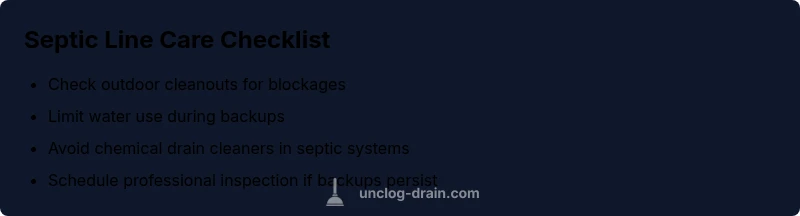
- Identify whether the issue is main-line or local first
- Avoid chemical cleaners in septic systems at all times
- Use mechanical methods and slow water use before calling a pro
- Schedule professional inspection if backups persist
- Maintain routine septic tank service to prevent future clogs