Pipe from House to Septic Tank Clogged: Troubleshooting and Fixes
Urgent troubleshooting guide to diagnose and fix a pipe from house to septic tank clogged. Safe steps, when to call a pro, and prevention tips to stop backups before they happen.


First, a clogged pipe from house to septic tank is usually a main-line blockage caused by solid buildup, roots, or grease near the septic inlet. Begin with quick checks: limit water use, locate the outdoor cleanout, and try a safe snaking from the cleanout. If the clog persists, escalate to professional service to avoid backups.
Why the pipe from house to septic tank clogged matters
When the main drain line between your home and septic tank becomes blocked, wastewater can back up into sinks, toilets, and even the yard. This isn't just inconvenient; it poses health risks and can cause costly damage to your plumbing and septic system. In many homes, the most effective fix starts with careful diagnostics and patient, stepwise action. According to Unclog Drain, treating suspected clogs early helps prevent sewage backups and keeps your system running smoothly. Start by reducing water usage and avoiding flushes that push waste toward the blockage. Small actions now can stop a bigger mess later and save you money on emergency repairs.
Common causes of clogs in the pipe from house to septic tank
Clogs along the path from the house to the septic tank can arise from several culprits. Solid waste that shouldn’t go down the drain—such as sanitary wipes, grease, and food scraps—accumulates and forms a stubborn jam. Root intrusion from nearby trees can infiltrate underground pipes, widening the block as it grows. A collapsed or misaligned main line is another serious cause that requires professional attention. In some homes, a full septic tank or a saturated drain field can back up the whole system, making clear pipes from the house to the tank difficult until the tank is pumped and the field restored.
How to spot the signs before a full backup
Watch for signs that indicate a developing blockage. Slow drainage across multiple fixtures, gurgling noises from drains, and sewer odors near the yard cleanout signal trouble ahead. If water in sinks or showers drains unusually slowly, or if toilets flush with difficulty, treat this as a warning. Do not ignore a backup in one area; the problem is often connected to the main line to the septic system. Early detection plus measured action reduces the risk of a complete sewage backup inside your home.
Quick checks you can do safely (no tools yet)
Begin with noninvasive steps before pulling out a tool kit. Conserve water by taking shorter showers and avoiding laundry cycles. Locate the outdoor cleanout access—usually a capped pipe near the foundation or in the yard—and note its position. Check for any visible signs of damage around that area and ensure there are no leaks. Do not dump chemical cleaners into the system; these can disrupt beneficial bacteria and damage the septic process. If you can, observe whether bathroom sinks and toilets all drain together or if a single fixture seems more affected, which can help pinpoint where the blockage lies.
When to use professional help and how to prepare
If simple steps don’t restore drainage, it’s time to call a licensed plumber or septic service. A professional has the tools to perform camera inspections, hydro jets, and, if needed, pipe repair or replacement. Before they arrive, record recent usage patterns, note the most affected fixtures, and list any odors or wastewater backups you’ve observed. Gather any relevant service records for your septic system so the technician can tailor the approach. Preparing in advance reduces inspection time and speeds up the fix.
Preventive maintenance to avoid future clogs
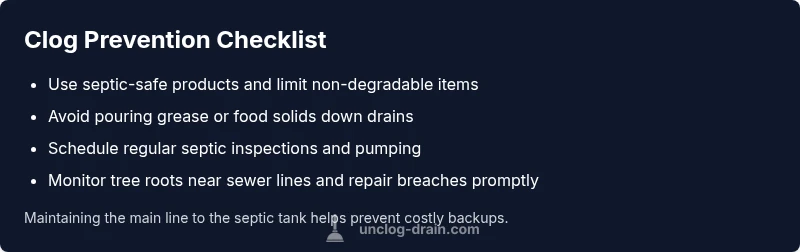
Once you restore normal drainage, establish routine maintenance to prevent future clogs. Use a septic-safe detergent, avoid flushing non-degradable items, and consider enzyme-based treatments that support healthy bacteria in the septic tank. Schedule regular professional inspections and tank pumping as recommended by your local guidelines and system size. A proactive plan minimizes surprises and helps preserve the life of your septic system.
Steps
Estimated time: 60-90 minutes
- 1
Shut off water use and locate cleanout
Limit all water usage to avoid pushing more waste toward the blockage. Find the outdoor cleanout—often a capped pipe in the yard or near the foundation—and note its exact location for the upcoming snaking step.
Tip: If you’re unsure where the cleanout is, a quick exterior search around the home’s perimeter usually reveals it near the drainage zone. - 2
Gather safe tools
Prepare a plumber’s auger (snake) and a bucket. Wear gloves and eye protection. Remove the cleanout cap carefully and inspect for any obvious debris before proceeding.
Tip: Never force the auger; apply steady pressure and avoid prying the pipe, which could cause damage. - 3
Snaking from the cleanout
Insert the auger into the cleanout and push toward the main line while rotating the handle. When you feel resistance, try short, deliberate pushes to break the clog. Withdraw slowly to assess if the path clears.
Tip: If you meet persistent resistance near a bend, stop and call a pro to avoid damaging the pipe. - 4
Flush and monitor
Run water from a sink or tub at a low rate to gauge whether drainage improves. If the flow returns, continue to drain gradually and avoid heavy loads until you confirm the line is clear.
Tip: Do not use brute force flushing; this can push waste into the drain field. - 5
Assess septic health
If the line clears, check the septic tank status. If the tank is near full or you observe effluent in the yard, plan a pumping service. A full tank can cause recurring backups even after clearing the pipe.
Tip: Keep a maintenance log with pumping dates and inspection results. - 6
Consider camera inspection
If clogs recur or the flow doesn’t improve, a camera inspection can identify root intrusion or pipe collapse. This step helps decide between repair options or pipe replacement.
Tip: Camera reports guide precise repairs and prevent unnecessary digging. - 7
Test and document
Run several slow drains to verify consistency. If everything drains smoothly, note the improvements and monitor for any changes over the next weeks.
Tip: A simple post-fix check reduces the chance of a second call for the same issue.
Diagnosis: Slow drainage or sewage backup along the main line from the home to the septic tank
Possible Causes
- highClogged main line between house and septic tank
- mediumRoot intrusion or collapsed pipe along the drainage path
- lowFull septic tank or flooded drain field
Fixes
- easyOpen outdoor cleanout and attempt safe snaking with a plumber's auger from the cleanout toward the septic line
- mediumFlush with water and use enzyme-based products to gradually break down organics (avoid chemical cleaners)
- hardCall a licensed plumber or septic service for camera inspection and potential pipe replacement or septic pumping
Common Questions
What are signs of a clogged pipe from house to septic tank?
Signs include slow drainage in multiple fixtures, gurgling drains, and sewage odors near the cleanout or yard. If you notice backups, treat it as an urgent issue and start troubleshooting promptly.
Common signs are slow draining, gurgling sounds, and sewer smells. If backups appear, address it quickly.
Can I fix a clogged septic pipe myself?
You can perform safe checks like snaking from a cleanout and reducing water use, but more complex issues like root intrusion or pipe collapse usually require a licensed pro.
You can try basic snaking and reducing water use, but complex problems need a professional.
How often should septic tanks be pumped?
Pumping frequency depends on tank size, household usage, and waste. Consult your local guidelines and a septic professional to set a maintenance schedule.
Pumping depends on usage and tank size; ask a pro for a maintenance schedule.
Should I use chemical drain cleaners?
Avoid chemical cleaners in septic systems. They can kill beneficial bacteria and contaminate groundwater, worsening long-term problems.
No—chemical cleaners can harm septic bacteria and the environment.
When is it time to call a professional?
If snaking fails, backups persist, or you notice root intrusion or a potential pipe collapse, contact a licensed plumber or septic service for advanced diagnostics.
If the clog persists after basic steps, call a pro for camera inspection and repairs.
Is it safe to inspect septic components myself?
Avoid deep digging or entering septic pits. Only trained professionals should access septic components to prevent injury and contamination.
Don’t attempt dangerous inspections; leave it to professionals.
Watch Video
Key Points
- Identify the main cause early to prevent backups
- Start with simple checks before professional help
- Avoid chemical cleaners that harm septic systems
- Schedule regular septic maintenance to prevent future clogs